Unveiling the Secrets of the Past: 12 Ancient Relics
Ancient relics have long been a source of fascination for historians, archaeologists, and the general public alike. These artifacts, often discovered in unexpected places, provide a unique window into the lives and cultures of our ancestors. From mysterious statues to intricate jewelry, each relic tells a story of the people who created it, used it, and ultimately lost it to the sands of time. In this article, we will delve into the world of 12 ancient relics, exploring their history, significance, and the secrets they hold.
The Discovery of Ancient Relics
The discovery of ancient relics is often a thrilling experience, as it can shed new light on a previously unknown or misunderstood period in history. Archaeologists use a variety of techniques to locate and excavate these artifacts, including aerial photography, ground-penetrating radar, and careful digging. Once discovered, the relics are carefully extracted, preserved, and studied to learn more about the culture and people who created them. The discovery of ancient relics is not only exciting but also crucial in helping us understand our shared human history.
1. The Antikythera Mechanism
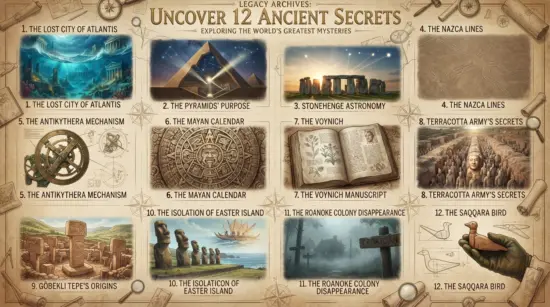
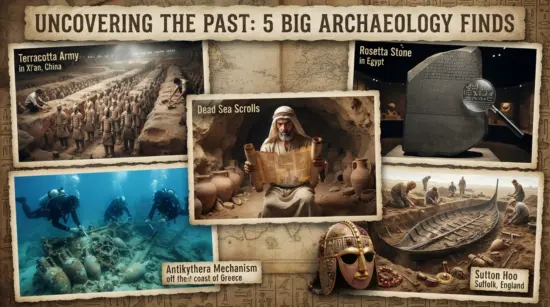
The Antikythera Mechanism is an ancient Greek relic that has been dubbed the “first computer.” Discovered in a shipwreck off the Greek island of Antikythera, this intricate device is believed to have been used to calculate astronomical positions and predict eclipses. The mechanism is made up of over 30 gears and is remarkably sophisticated, considering it was created over 2,000 years ago. The Antikythera Mechanism is a testament to the ingenuity and innovation of the ancient Greeks.
2. The Rosetta Stone
The Rosetta Stone is one of the most famous ancient relics in the world. Discovered in Egypt in 1799, this stone slab features an inscription in three languages: ancient Greek, demotic script, and hieroglyphics. The stone was instrumental in deciphering the hieroglyphics of ancient Egypt, allowing scholars to finally understand the language and culture of the pharaohs. The Rosetta Stone is a significant artifact that has helped us unlock the secrets of ancient Egyptian history.
3. The Terracotta Army
The Terracotta Army is a collection of over 8,000 life-sized clay soldiers that were buried with the first emperor of China, Qin Shi Huang. Discovered in 1974, the army is a testament to the advanced craftsmanship and organization of the ancient Chinese. Each soldier is unique, with different facial expressions and clothing, and is arranged in military formation. The Terracotta Army is an awe-inspiring relic that provides a glimpse into the grandeur and sophistication of ancient Chinese culture.
4. The Dead Sea Scrolls
The Dead Sea Scrolls are a collection of ancient texts that were discovered in a cave near the Dead Sea in 1947. The scrolls include biblical texts, apocryphal works, and other writings that provide valuable insights into the history and culture of the ancient Near East. The scrolls are significant not only for their historical value but also for their religious importance, as they include some of the oldest known copies of biblical texts. The Dead Sea Scrolls are a remarkable relic that has shed new light on the history of Judaism and Christianity.
5. The Lycurgus Cup
The Lycurgus Cup is a stunning example of ancient Roman glasswork. Discovered in the 19th century, the cup is made of dichroic glass, which appears green when lit from the outside and red when lit from the inside. The cup is decorated with intricate scenes of the mythological figure Lycurgus and is believed to have been created in the 4th century AD. The Lycurgus Cup is a remarkable relic that showcases the advanced craftsmanship and artistry of ancient Roman glassmakers.
6. The Sutton Hoo Helmet
The Sutton Hoo Helmet is an ancient Anglo-Saxon relic that was discovered in a ship burial in Suffolk, England. The helmet is a masterpiece of ancient metalwork, featuring intricate designs and decorations. The helmet is believed to have been worn by a high-ranking warrior or king and is one of the most significant discoveries in British archaeology. The Sutton Hoo Helmet is a testament to the skill and craftsmanship of ancient Anglo-Saxon metalworkers.
7. The Moai Statues
The Moai statues are a collection of giant monolithic human figures that were created by the early inhabitants of Easter Island. The statues are believed to have been carved between 1200 and 1500 AD and are thought to represent ancestral figures or deities. The Moai statues are a remarkable relic that provides a glimpse into the culture and traditions of the ancient Rapa Nui people. The statues are not only impressive in their size and scale but also in their intricate carvings and details.
8. The Viking Ulfberht Sword
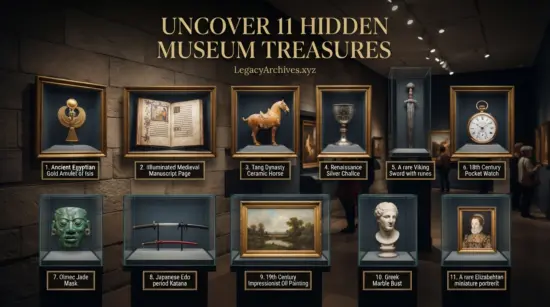
The Viking Ulfberht sword is a rare and highly prized ancient relic that was discovered in Norway. The sword is believed to have been forged in the 10th century AD and is one of the finest examples of Viking metalwork. The sword features intricate patterns and decorations and is remarkably well-preserved, considering its age. The Viking Ulfberht sword is a testament to the skill and craftsmanship of Viking swordsmiths.
9. The Indus Valley Seal
The Indus Valley seal is an ancient relic that was discovered in the Indus Valley region of modern-day Pakistan. The seal features intricate carvings and symbols and is believed to have been used for trade and commerce. The seal is significant not only for its historical value but also for its cultural importance, as it provides a glimpse into the daily life and traditions of the ancient Indus Valley civilization.
10. The Egyptian Golden Mask
The Egyptian Golden Mask is a stunning example of ancient Egyptian funerary art. Discovered in the tomb of Tutankhamun, the mask is made of solid gold and features intricate decorations and symbols. The mask is believed to have been placed over the face of the pharaoh to protect him in the afterlife. The Egyptian Golden Mask is a remarkable relic that showcases the advanced craftsmanship and artistry of ancient Egyptian goldsmiths.
11. The Roman Mosaic
The Roman mosaic is an ancient relic that was discovered in the ruins of a Roman villa in Italy. The mosaic features intricate patterns and designs, made up of thousands of tiny tiles. The mosaic is significant not only for its beauty and craftsmanship but also for its historical value, as it provides a glimpse into the daily life and traditions of ancient Roman society.
12. The Chinese Oracle Bones
The Chinese Oracle Bones are a collection of ancient relics that were used for divination and fortune-telling in ancient China. The bones feature intricate carvings and symbols and are believed to have been used by royalty and nobility to guide their decisions. The Chinese Oracle Bones are a remarkable relic that provides a glimpse into the spiritual and cultural practices of ancient Chinese society.
Conclusion
Ancient relics are a window into the past, providing a glimpse into the lives and cultures of our ancestors. From the Antikythera Mechanism to the Chinese Oracle Bones, each relic tells a unique story of the people who created it, used it, and ultimately lost it to the sands of time. By studying these artifacts, we can gain a deeper understanding of human history and the cultures that have shaped our world. Whether you are an archaeologist, historian, or simply someone fascinated by the past, ancient relics are a source of endless fascination and discovery.
FAQs
What is the significance of ancient relics?
Ancient relics are significant because they provide a window into the past, allowing us to learn about the lives and cultures of our ancestors. They can also help us understand the historical context of a particular period or event, and can even provide clues about the technological, artistic, and social developments of ancient civilizations.
How are ancient relics discovered?
Ancient relics are often discovered through a combination of archaeological excavation, aerial photography, and ground-penetrating radar. Archaeologists use these techniques to locate and excavate artifacts, which are then carefully extracted, preserved, and studied to learn more about the culture and people who created them.
What is the oldest known ancient relic?
The oldest known ancient relic is the Makapansgat pebble, which is estimated to be around 2.5 million years old. The pebble is a small stone that was discovered in South Africa and features a series of scratches and markings that are believed to have been made by early humans.
How are ancient relics preserved?
Ancient relics are preserved through a variety of techniques, including cleaning, consolidation, and conservation. Archaeologists and conservators use specialized materials and techniques to stabilize and protect the artifacts, preventing further deterioration or damage. The relics are then stored in controlled environments, such as museums or archives, where they can be safely displayed and studied.
Can anyone own an ancient relic?
In most cases, ancient relics are considered cultural or historical artifacts and are protected by laws and regulations. In many countries, it is illegal to own or sell ancient relics without proper authorization and documentation. Additionally, many museums and cultural institutions have strict guidelines and protocols for the acquisition, conservation, and display of ancient relics, to ensure their preservation and protection for future generations.