Antique Collector Optimization: The Ultimate Guide to Maximizing Value, Storage, and Display Efficiency
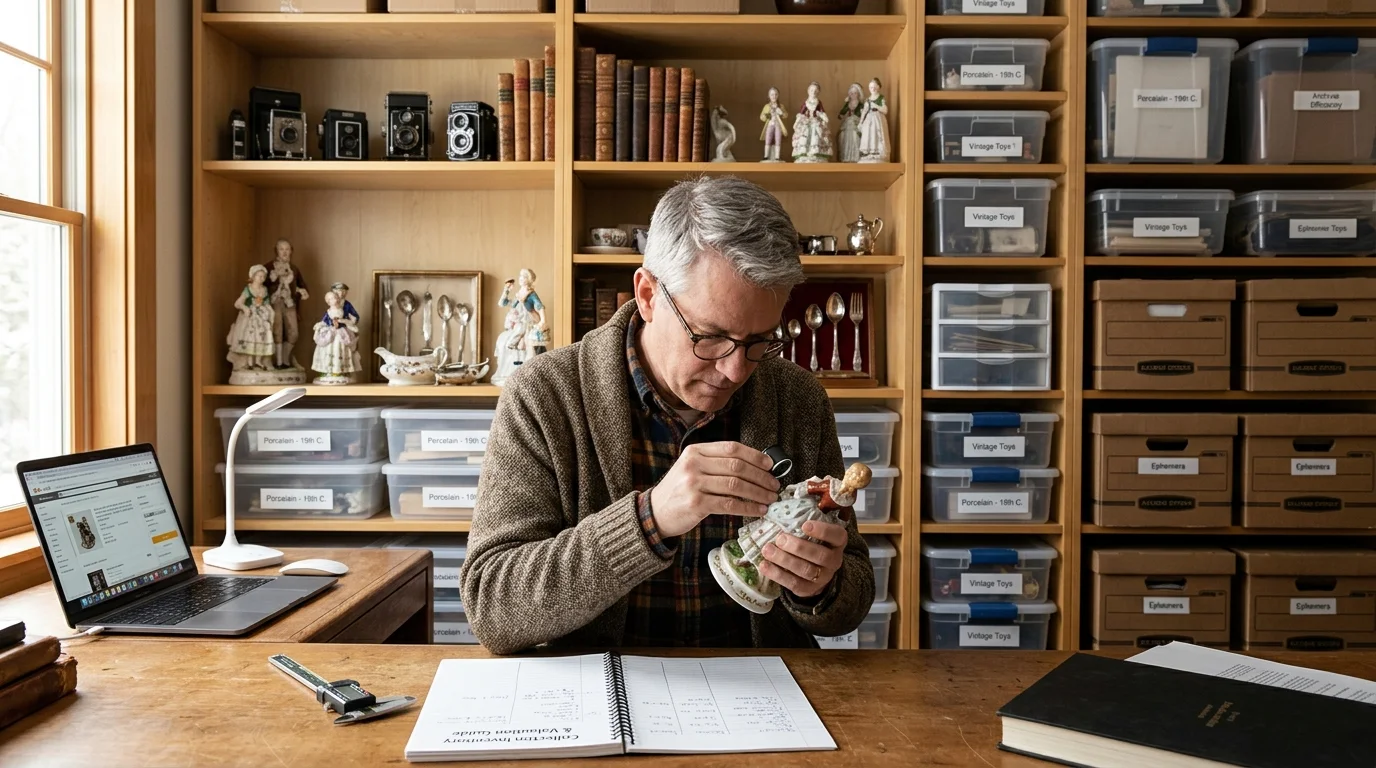
Table of Contents
- What is Antique Collector Optimization?
- Why Optimization Matters in Antique Collecting
- Key Pillars of Antique Collector Optimization
- How to Digitize and Catalog Your Collection
- Space Optimization for Antique Storage and Display
- Financial Optimization: Tracking Value and ROI
- Preservation Optimization: Climate, Light, and Handling
- Acquisition and Deaccession Strategies
- Frequently Asked Questions (FAQs)
- Final Checklist for Antique Collector Optimization
1. What is Antique Collector Optimization?
Antique collector optimization refers to the systematic process of organizing, preserving, valuing, and managing an antique collection to achieve maximum aesthetic pleasure, financial return, and historical integrity. It goes beyond simple cataloging—integrating digital tools, environmental controls, space planning, and data-driven acquisition strategies.
2. Why Optimization Matters in Antique Collecting
Unoptimized collections lead to lost value, damaged items, insurance disputes, and missed sales opportunities. Optimization ensures:
- Accurate appraisals for insurance and resale
- Reduced deterioration from poor storage
- Efficient use of display and warehouse space
- Faster retrieval and documentation for estate planning
- Higher returns when selling or auctioning
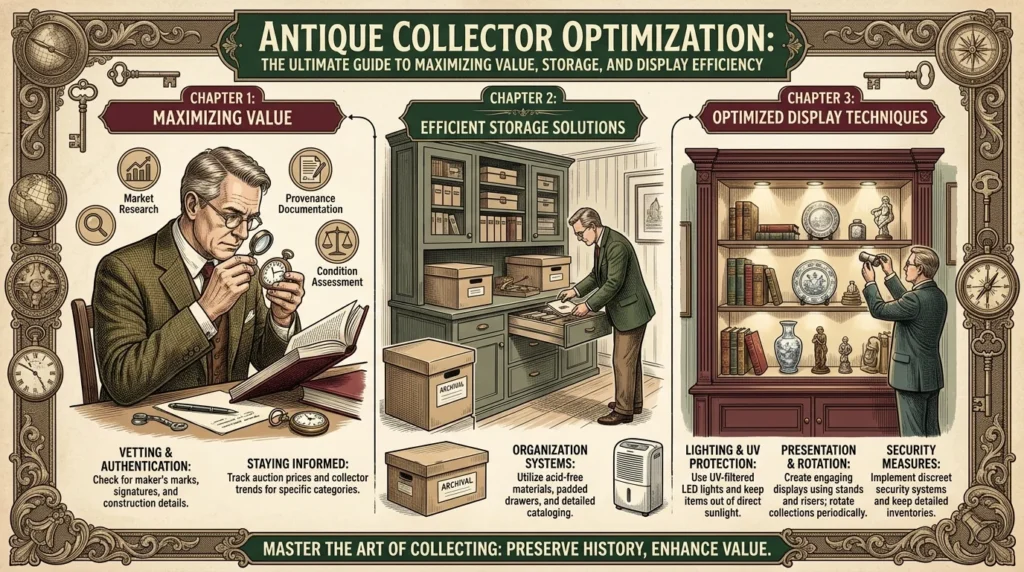
3. Key Pillars of Antique Collector Optimization
| Pillar | Description | Tools/Methods |
|---|---|---|
| Cataloging | Digital record of each item | Spreadsheets, Collector Systems, Memento Database |
| Valuation | Real-time market pricing | WorthPoint, LiveAuctioneers, professional appraisers |
| Preservation | Controlling environment & handling | Hygrometers, UV-filter glass, acid-free materials |
| Space Planning | Vertical storage, modular shelving, rotation systems | Adjustable racks, shadow boxes, museum rails |
| Financial Tracking | Purchase price, insurance value, sale history | Airtable, Excel, QuickBooks for collectibles |
| Legal & Provenance | Ownership history, export licenses, authenticity certificates | Blockchain ledgers, PDF archives, notarized docs |
4. How to Digitize and Catalog Your Collection
Optimization starts with a complete digital inventory. Follow these steps:
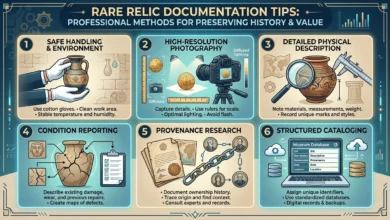
- Photograph each item from three angles + close-ups of marks/signatures.
- Assign a unique ID (e.g., CLK-2024-001 for clocks).
- Record metadata: period, material, dimensions, condition score (1-10), purchase date, price, current appraised value, location.
- Use cloud backup (Google Drive, Dropbox) + offline external hard drive.
- Add QR codes to item tags linking to digital records.
Recommended software: Collector Systems (web-based), Memento Database (mobile), or AirTable (customizable).
5. Space Optimization for Antique Storage and Display
Maximize square footage while protecting items:
- Wall-mounted glass cabinets for small ceramics and silverware.
- Rolling compact shelving for high-density storage of flat items (prints, maps).
- Adjustable padded racks for fragile textiles and lace.
- Climate-controlled display zones – separate from general storage.
- Seasonal rotation system – display 30% of collection at a time to reduce light exposure and dust.
Do not stack items. Use silicone-coated supports for porcelain. Hang heavy frames on anchored cleats.
6. Financial Optimization: Tracking Value and ROI
Treat your collection as an asset class. Use a spreadsheet with these columns:
- Item ID
- Purchase cost (including tax & shipping)
- Date of purchase
- Current fair market value (updated annually)
- Insurance value (usually 120% of FMV)
- Last sale price (if flipped)
- Holding period (years)
- Annualized ROI = ((Current Value / Purchase Cost)^(1/Holding Period)) – 1
Set alerts for auction results on similar items via LiveAuctioneers or Invaluable. Reappraise every three years or after major market shifts.
7. Preservation Optimization: Climate, Light, and Handling
| Factor | Optimal Range | Tool |
|---|---|---|
| Temperature | 60-70°F (15-21°C) | HVAC with backup |
| Relative Humidity | 45-55% | Dehumidifier + humidistat |
| Light (lux) | 50 lux for photos/textiles, 200 for ceramics | UV-filter sleeves, motion-sensor LEDs |
| Pollutants | <10 µg/m³ VOCs | Activated carbon filters |
Never use rubber bands, newspaper, or regular tape on antiques. Acid-free tissue and polyethylene bags are standard.
8. Acquisition and Deaccession Strategies
Optimization includes knowing when to buy and sell.
- Buy low: Estate sales, off-season auctions (July/December), poorly listed online items.
- Sell high: Spring/fall major auction houses, specialized dealer networks, after restoration.
- Deaccession rule: Every 5 years, remove bottom 10% of items by condition or relevance. Donate to museums (tax deduction) or sell via auction.
Provenance adds 30-80% value. Always request original receipts, exhibition labels, or letters of authenticity.
9. Frequently Asked Questions (FAQs)
Q1: What is the best software for antique collector optimization?
A: For most collectors, Collector Systems or Memento Database offers the best balance of features and cost. Airtable is excellent for custom workflows.
Q2: How often should I update my antique collection valuation?
A: Annually for high-value items (over $5,000) and every 3 years for general collection. After any major market event (e.g., a record auction for a similar piece), update immediately.
Q3: Can I insure an unoptimized antique collection?
A: Yes, but claims will be difficult without a detailed inventory and proof of value. Optimization directly lowers insurance disputes.
Q4: What is the cheapest way to optimize storage space for antiques?
A: Use vertical wall space with museum-style hanging rails and add adjustable shelf risers inside existing cabinets. Cost under $100.
Q5: Does digital cataloging increase resale value?
A: Indirectly yes. Buyers pay 15-25% more for items with documented provenance, condition reports, and professional photos—all outputs of optimization.
10. Final Checklist for Antique Collector Optimization
- Every item has a unique ID and digital record
- High-resolution photos stored in cloud + offline
- Current market value and insurance value recorded
- Climate and humidity within target ranges
- No direct sunlight on sensitive antiques
- Storage uses acid-free, padded, non-reactive materials
- Deaccession list reviewed annually
- Auction alerts set for comparable items
- Professional appraisal done within last 36 months