Rare Historical Collectibles USA: A Complete Guide to America’s Most Valuable Treasures
The world of rare historical collectibles in the United States represents a fascinating intersection of American history, investment potential, and collecting passion. From unique presidential gold medals to extraordinary paper currency and early American coinage, rare collectibles offer tangible connections to pivotal moments in the nation’s past. This comprehensive guide explores the most significant categories of rare historical collectibles in the USA, their market values, identifying features, and expert collecting strategies. Whether you are a seasoned collector or someone who suspects there might be hidden treasures in an attic or basement, understanding what makes certain items valuable is essential. This guide draws on the latest market data from 2025 and 2026 to provide current, actionable information for collectors at every level.
Understanding What Makes a Historical Collectible Rare
Before diving into specific categories, it is important to understand the factors that determine rarity and value in historical collectibles. The most valuable items typically possess several key characteristics. First, limited production numbers or survival rates create scarcity. Second, historical significance ties the item to important events, figures, or periods in American history. Third, exceptional condition preserves the item’s original appearance and integrity. Fourth, clear provenance, meaning documented ownership history, establishes authenticity and often adds substantial value. Finally, market demand from collectors willing to pay premium prices drives valuations upward. The items that combine all these factors command the highest prices at auction .
The table below outlines the major categories of rare historical collectibles in the USA and their key characteristics.
| Category | Notable Examples | Key Value Factors | Recent Auction Highlights |
|---|---|---|---|
| Presidential Gold Medals | William Henry Harrison Congressional Gold Medal | Historical figure association, precious metal content, survival rarity | Unique Harrison medal, first auction appearance, 7.6 troy ounces gold |
| Rare Paper Currency | 1928 $5,000 Federal Reserve Note | Extreme denomination, low print runs, condition grade | $360,000 for Series 1928 Chicago district note, only fourth known example |
| Early US Gold Coins | 1796/5 Half Eagle, 1879 Flowing Hair Stella | Age, mintmark varieties, preservation level | 256,200forfinestknown1796/5HalfEagle;201,300 for 1879 Stella |
| Vintage Collectibles | First-edition books, vinyl records, vintage toys | Original packaging, condition rarity, nostalgic appeal | First-edition Charlie and the Chocolate Factory can sell for $1,000+ |
| Historic Medals | Libertas Americana medal (1781) | Direct connection to Founding Fathers, documented origin | £82,000 ($104,000+) for Benjamin Franklin-commissioned silver medal |
Presidential and Historical Medals
Among the most prestigious categories of American historical collectibles are Congressional Gold Medals presented to military and political figures. These medals represent the highest civilian honor awarded by the United Congress and were struck in substantial gold. A unique William Henry Harrison Congressional Gold Medal, presented at the White House in 1825 to recognize Harrison’s victory at the Battle of the Thames during the War of 1812, represents the pinnacle of this category .
This particular medal holds extraordinary significance for several reasons. First, it is one of only ten surviving War of 1812 Congressional Gold medals, and only three of those remain in private hands rather than institutional collections. Second, it is the only Congressional Gold medal ever presented to a president of the United States, and it was actually owned by two presidents, William Henry Harrison and his grandson Benjamin Harrison. Third, the medal is massive, struck in 7.6 troy ounces of fine gold. Fourth, it was passed down through the Harrison family for generations before being acquired by a private collector. When Stack’s Bowers Galleries offered this medal at auction in August 2021, it marked the first time this treasure had ever appeared at public auction .
For collectors interested in historical medals, provenance is the most critical factor. The Harrison medal was accompanied by its original US Mint box and slipcase, a rare feature among early American medals. The medal’s edge is neatly drilled in five places, with holes at the top clearly designed to allow for a chain or strap to pass through for suspension. These authentic period modifications add to the medal’s historical character rather than detracting from its value .
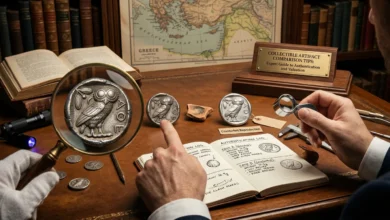
Another historic medal that surfaced recently is the Libertas Americana silver medal dated 1781. Commissioned by Benjamin Franklin and produced in Paris in 1782, this medal commemorates the birth of the United States and the American victories at Saratoga and Yorktown, which secured French support during the Revolutionary War. A member of the public discovered one such medal in Tynemouth, unaware of its rarity or value, and brought it to auctioneers Anderson & Garland. The medal sold for £82,000 (approximately $104,000), drawing significant international attention and multiple telephone bidders. Struck in silver, these medals were reserved for dignitaries including George Washington and senior French officials, making any surviving example a direct connection to the Founding Fathers .
Rare US Paper Currency
The market for collectible US paper money has demonstrated remarkable resilience and continued growth from February 2025 to February 2026. Collectors and investors have witnessed significant price movements across various note types, driven by rarity, historical significance, and shifting collector preferences .
Ultra-rare US paper currency remains exceptionally strong. Heritage Auctions’ October 2025 US Currency Signature Auction realized 11.6millionfromjustover2,100lots,withthetopthreeitemsalone,all5,000 Federal Reserve notes, fetching 924,000.ThestarofthesalewasaSeries1928Chicagodistrict5,000 Federal Reserve note, only the fourth known example, which sold for $360,000. These notes were primarily used for transactions between banks and serve as a reminder of an era when notes were redeemable in gold coin .
Small size gold certificates, which experienced dramatic appreciation in recent years, are now reaching more stable pricing levels. A 1928 500goldcertificateinChoiceUncirculatedconditionsoldfor93,000 in October 2025, a significant increase from the $58,750 it commanded in 2014. This category exemplifies how certain note types can surge dramatically before settling into more sustainable valuations .
National bank notes with territorial provenance continue to attract serious collectors. An Arizona territorial 5notefrom1875,thehighestgradedexampleandoneofonlyfourknownfirstcharternotesfromtheterritory,soldfor192,000. Historical notes with connections to specific states, territories, or regions consistently command premiums over notes without such provenance .
For collectors interested in paper currency, certification grades are extremely important. Professional grading services evaluate notes on a scale from Poor to Gem Uncirculated, with higher grades commanding substantially higher prices. Collectors increasingly focus on notes with clear rarity, strong certification grades, and compelling historical narratives .
Rare US Coins
The US coin market delivered powerful results in Heritage Auctions’ March 2026 US Coins Signature Auction, which realized $11,948,630 in total sales. Early US gold, classic rarities, and historic shipwreck bullion led the charge, with collectors competing aggressively for top-tier coins .
Early US Gold Coinage
The top lot of the March 2026 sale was a 1796/5 BD-1 Half Eagle graded MS64 by NGC, which realized $256,200. This coin stands among the most important issues in early US gold coinage. Numismatic expert John W. Dannreuther estimates a mintage between 1,057 and 2,000 pieces. However, only 80 to 100 examples survive today across all grades. This specific specimen ranks as the finest example ever offered at auction, surpassing all previous Heritage offerings by two full grade points. Its strong result reflects both rarity and exceptional quality .
An 1825 BD-2 Quarter Eagle graded MS66 by NGC achieved $164,700. Quarter eagles from 1821 to 1834 were struck only in small quantities upon depositor request, meaning surviving examples remain scarce. The Bass-Dannreuther estimate suggests just 80 to 100 survivors for the BD-2 variety, and this example ranks as the second finest known, or third when including the Smithsonian proof .
A 1920-S Indian Head Eagle graded MS63 by PCGS realized 146,400.Withamintageof126,500,mostexampleswerelatermeltedduringthe1930sGoldRecall.Consequently,the1920−SremainsoneofthekeyconditionraritiesintheIndianHead10 series. This demonstrates how government melt programs can dramatically increase the scarcity and value of surviving examples .
The Iconic Flowing Hair Stella
The 1879 Flowing Hair Stella remains one of the most iconic coins in American numismatics. Although technically a pattern coin, it has long transcended that category. Approximately 425 examples were struck between October 1879 and May 1880. These coins were reportedly part of three-coin goloid pattern sets distributed to members of Congress. Because of its unusual four-dollar denomination, elegant design, and limited production, the Stella continues to attract intense collector demand .
In the March 2026 Heritage auction, an 1879 Flowing Hair Stella graded PR65 Cameo by NGC brought 201,300.Anotherexampleinthesamesale,aPR50PCGSspecimen,realized94,550, further confirming sustained interest in the type. For collectors, the Stella represents a coin that is both historically fascinating and consistently valuable .
Shipwreck Treasure: S.S. Central America Gold Ingots
Historic bullion from the S.S. Central America, the famous “Ship of Gold” that sank in 1857, continued to command strong bidding in 2026. These ingots formed a major portion of privately assayed gold aboard the ship, and their recovery from the ocean floor adds romantic appeal to their already significant historical value .
An 18.60-ounce Justh & Hunter gold ingot realized 146,400, while a 26.30-ounce Kellogg & Humbert gold ingot also brought 146,400. Another Kellogg & Humbert ingot weighing 26.55 ounces realized $140,300. Of the 343 ingots recovered from the shipwreck, 80 originated from the K&H-02 mold, representing the largest single assayer group from the shipwreck. For collectors, shipwreck ingots combine precious metal content with unparalleled historical narrative .
Rare Proof Gold and Pattern Coins
A 1904 Proof Liberty Double Eagle graded PR64 Cameo by PCGS realized $109,800 in the March 2026 sale. The Philadelphia Mint struck just 98 proof double eagles in 1904, and today experts estimate that only 50 to 65 examples survive. Because of this extreme scarcity, collectors pursued the issue aggressively. Proof coins, struck with specially prepared dies and polished planchets, represent the finest quality coins produced by the US Mint and are highly sought after by advanced collectors .
Hidden Treasures in Attics and Basements
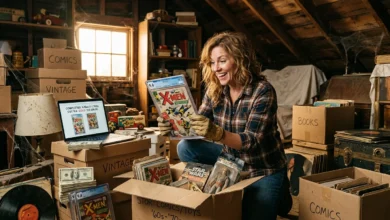
Not all valuable historical collectibles are found at prestigious auctions. Many ordinary household items, when preserved in good condition, can be worth substantial sums. Understanding what to look for can help identify hidden treasures in attics, basements, and estate sales .
Pre-1940s Typewriters
Manual typewriters have made a massive comeback as writers and decorators seek out tactile, retro aesthetics. While late-model electric versions usually hold little value, heavy iron models from before World War II are highly desirable. Early 1900s models in working condition can sell for 200to1,000. Look for brand names like Underwood, Royal, or Remington, as these iconic manufacturers draw the most interest from serious collectors. Check that the keys move freely and inspect the ribbon spool for rust, as restoration costs can be high .
Vinyl Records
Vinyl records are currently enjoying a massive resurgence. While not every scratched record from the 1970s is valuable, specific albums can command thousands of dollars. Rock and roll classics, obscure jazz recordings, and early pressings from bands like The Beatles or Pink Floyd often fetch high prices. Condition serves as the most critical factor. Scratches, warped discs, or torn sleeves will drastically lower the value. If the vinyl looks glossy and the cover art remains vibrant, it is worth researching the specific catalog number online .
Vintage Pyrex and Jadeite Kitchenware
That milky green glassware known as Jadeite, produced heavily in the 1940s and 1950s, has become a darling of the farmhouse decor movement. Even small pieces like salt and pepper shakers can sell for close to 50,whilelargeritemslikemixingbowlscanreach150 or more. Jadeite is identified by its distinct opaque green color and heavy feel. Fire-King, McKee, and Jeannette are the three main companies that produced it .
Vintage Pyrex bowls and casseroles have a feverish following. The colorful patterns from the 1950s through the 1970s, such as Pink Daisy, Butterprint, or Gooseberry, are highly prized. A complete set of nesting mixing bowls in a rare pattern can sell for several hundred dollars. The finish is critical; if bowls were washed in a dishwasher, the paint often becomes chalky or faded, which ruins the value. Bright, shiny paint is what you want to see .
First-Edition Books
Old bookshelves might harbor literary gold. First-edition copies of classic novels, especially beloved children’s books, are extremely collectible. A first edition of Charlie and the Chocolate Factory or The Velveteen Rabbit can sell for between 100and1,000, depending on condition and printing number. Identifying a first edition usually involves checking the copyright page for a specific number sequence or printing year. The presence of an original dust jacket significantly increases the value. Never attempt to repair tears yourself, as this can inadvertently lower the worth .
Vintage Toys and Video Games
Vintage toys from the 1970s and 1980s, especially those still in original packaging, are highly valuable. Star Wars action figures, Hot Wheels cars, G.I. Joe figures, and early LEGO sets attract dedicated collectors. The key is the packaging, an unopened toy is far more valuable than one that has been played with. A rare, boxed toy can be worth thousands of dollars .
Retro video games from the 1980s and 1990s are now considered vintage artifacts. Cartridges for systems like the Nintendo Entertainment System (NES), Super Nintendo, or Nintendo 64 are highly liquid assets. If you find the games in their original cardboard boxes with the instruction manuals, the value skyrockets. Even loose cartridges are worth researching on eBay .
Vintage Advertising Signs
Metal signs that once hung in gas stations, general stores, or soda shops are prime decor for basements and garages. Authentic signs from major brands like Coca-Cola, John Deere, or oil companies can be worth up to $300 or more. The larger and more graphic the sign, the better. Rust is expected and sometimes adds to the appeal, but severe corrosion that obscures the image is a negative. Be wary of modern reproductions; originals can usually be identified by the weight of the metal and the quality of the paint application .
Costume Jewelry
Vintage costume jewelry, particularly signed pieces from designers like Miriam Haskell, Trifari, or Chanel, can be surprisingly valuable. Massive rhinestone necklaces, brooches, and clip-on earrings from the mid-century era are popular for their craftsmanship and style. Look for a maker’s mark on the back of the piece or on the clasp. Even unmarked pieces can be valuable if they feature high-quality stones and intricate settings. Do not clean vintage jewelry with harsh chemicals, as this can damage the foil backing of rhinestones or strip the plating .
The Importance of Provenance
Provenance, the documented history of ownership of an object, is essential for establishing authenticity and understanding the history of collecting. In a collecting institution such as the Cleveland Museum of Art, provenance research is a core activity, and it is critical that both institutions and private collectors pursue the history of their collections and disseminate research findings .
The Getty Research Institute has been a global leader in provenance research for over 40 years. Its Provenance Index contains over 12 million records drawn from rare primary source materials such as archival inventories, auction catalogs, and dealer stock books dating as far back as the 16th century. By documenting the transfer of ownership of artworks, this resource plays an essential role in understanding the movement of objects across time and geography, offering critical insights into the history of collecting and the art trade .
For collectors, provenance can dramatically increase an item’s value. The Harrison Congressional Gold Medal’s documented descent through the Harrison family added immeasurably to its significance and price. Similarly, the Libertas Americana medal’s connection to Benjamin Franklin made a silver medal found in a family home worth over $100,000. When evaluating potential purchases or discovering items in attics, any documentation of ownership history, including letters, receipts, or family stories, should be preserved and investigated .
Market Trends and Future Outlook
The collectible paper money market benefits from growing interest in tangible assets amid economic uncertainty. Collectors increasingly focus on items with clear rarity, strong certification grades, and compelling historical narratives. While some categories have cooled after rapid appreciation, the overall market remains healthy, supported by limited supply and sustained collector engagement heading into 2026 .
Heritage Auctions’ March 2026 results reaffirm strong collector demand across multiple segments including early US gold coinage, classic pattern issues, shipwreck treasures, and high-grade 20th-century coins. The auction demonstrated depth across multiple segments of the rare coin market, showing that quality and rarity continue to drive prices at the highest levels of numismatics .
For those discovering items in attics, several categories are particularly promising. First-edition books, vintage comic books from the Golden, Silver, and Bronze Ages (1930s-1970s), vintage musical instruments from renowned brands, unopened toys, and mid-century modern furniture from designers like Charles and Ray Eames are all showing strong appreciation. The key is condition, originality, and avoiding amateur restoration attempts that can destroy value .
Frequently Asked Questions (FAQs)
Q1: How can I determine if a historical collectible I found is valuable?
Start by identifying any markings, signatures, stamps, or labels on the item. Research these identifiers online or through reference books. For coins and currency, check dates, mintmarks, and condition. For other items, look for brand names, designer signatures, or manufacturer marks. Consider having the item professionally appraised if initial research suggests potential value. Never clean or restore an item before appraisal, as this can significantly reduce its value.
Q2: What should I do if I think I have a valuable historical collectible?
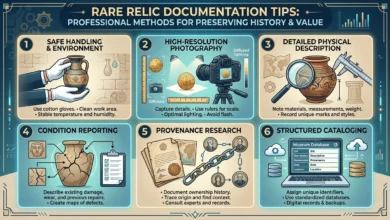
Photograph the item from all angles, including close-ups of any markings or damage. Research the item online using sold auction listings to gauge potential value. If the item appears valuable, consult a professional appraiser who specializes in that category. Reputable auction houses like Heritage Auctions, Stack’s Bowers, or Sotheby’s offer free preliminary evaluations. Keep detailed records of where and how you acquired the item.
Q3: Are reproductions and fakes common in the historical collectibles market?
Yes, reproductions are common, especially for popular categories like vintage advertising signs, coins, and historical medals. Be wary of items that look too perfect or new for their claimed age. Modern reproductions often have different weight, different materials, or telltale manufacturing marks not present on originals. Purchase from reputable dealers and auction houses that guarantee authenticity. For coins and currency, buy only certified pieces from professional grading services.
Q4: How important is condition to the value of a historical collectible?
Extremely important. For most categories, condition is one of the primary value determinants. A first-edition book with its original dust jacket can be worth ten times the value of the same book without the jacket. A coin in Mint State condition can be worth hundreds or thousands of times more than a worn example. For paper currency, even minor folds or stains significantly reduce value. However, for extremely rare items where only a handful of examples survive, even poor condition examples can be valuable.
Q5: What are the best resources for researching historical collectibles?
For coins, The Handbook of United States Coins (The Official Blue Book) provides current wholesale values and grading information. For paper currency, track Heritage Auctions and Stack’s Bowers auction results. For general antiques, the Pictorial Price Guide to American Antiques showcases approximately 4,000 objects with recent auction prices. Online resources include the Getty Provenance Index for ownership history research, and auction result databases on sites like LiveAuctioneers and Invaluable .
Q6: Is it better to sell historical collectibles at auction or to a dealer?
Auction houses typically achieve higher prices for rare, desirable items because they reach a global audience of competing bidders. However, auction houses charge commissions to both buyers and sellers (typically 15-25% of the hammer price). Dealers offer immediate payment but typically pay wholesale prices (30-50% of retail value). For extremely rare items with broad appeal, auction is usually superior. For common items or those with limited demand, a dealer may be more efficient.
Q7: What types of modern items are becoming collectible?
Early technology gadgets including first-generation Apple computers, early mobile phones, and vintage gaming consoles are increasingly recognized as valuable. First-edition video games from the 1980s and 1990s, particularly those still sealed in original packaging, can sell for thousands of dollars. Limited edition sneakers and streetwear from the 2000s are developing active collector markets. Items from the 1990s and early 2000s that represent significant cultural or technological shifts are gaining attention from younger collectors.
Q8: How should I store and preserve historical collectibles?
Store paper items including currency, documents, and books in archival-quality, acid-free folders and boxes. Keep storage areas cool and dry with stable temperature (60-70°F) and relative humidity (35-50%). Avoid basements, attics, garages, and exterior walls. For coins and medals, use inert holders that do not contain PVC. Handle items with clean, dry hands or cotton gloves. Never use adhesives, tape, or paper clips on historical documents. For display, use UV-filtering glazing and avoid direct sunlight.