Forgotten Historical Items: Rediscovering Lost Artifacts, Obsolete Tools, and Erased Cultural Heritage
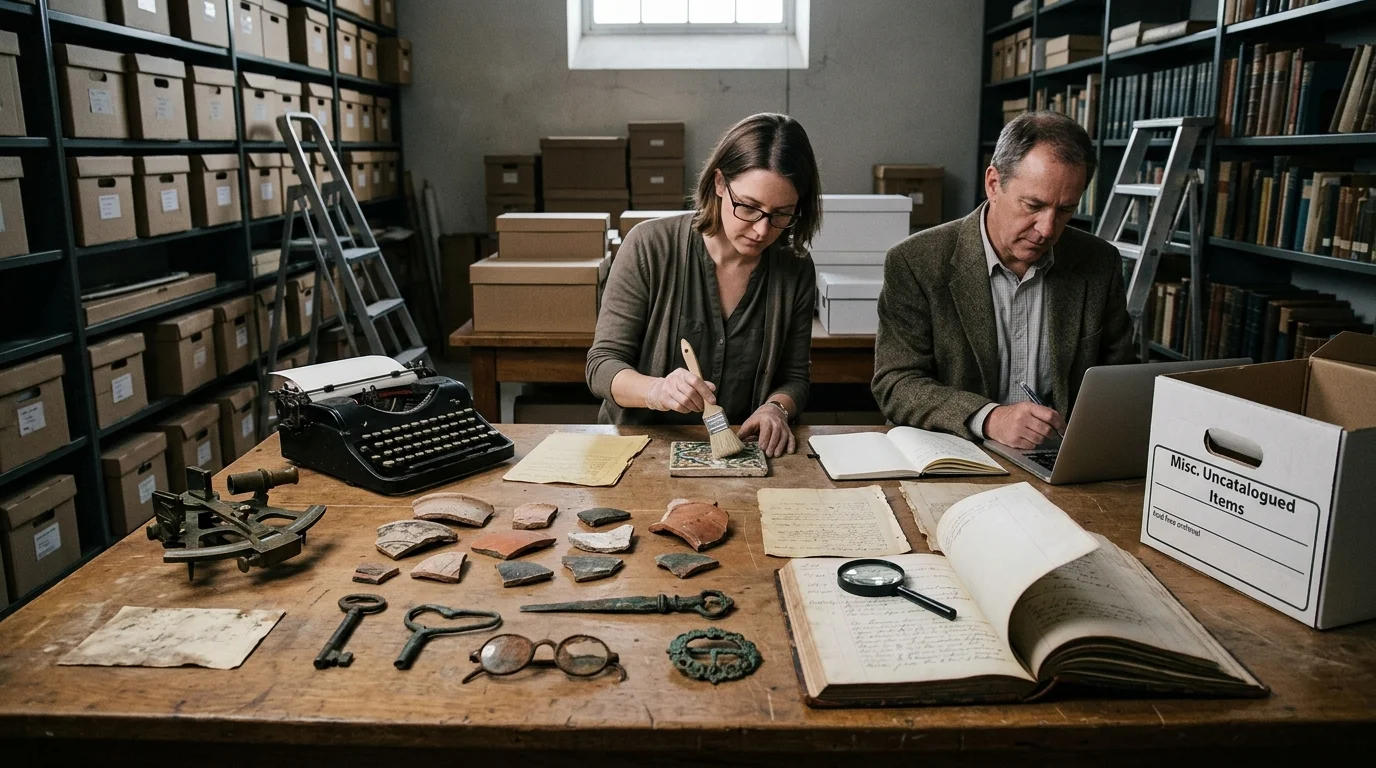
Table of Contents
- What Are Forgotten Historical Items?
- Why Certain Historical Items Become Forgotten
- Categories of Forgotten Historical Items
- Detailed Table of Notable Forgotten Items Across Eras
- How to Identify a Forgotten Historical Item in Your Attic
- Preservation and Documentation Techniques
- The Value of Forgotten Items: Monetary vs. Cultural
- Digital Rediscovery: Online Databases and Communities
- Frequently Asked Questions (FAQs)
- Ethical Considerations in Collecting Forgotten History
1. What Are Forgotten Historical Items?
Forgotten historical items are objects, tools, documents, or artifacts that once held significant utility, cultural meaning, or economic value but have since fallen out of common knowledge, museum rotations, or academic focus. Unlike deliberately destroyed relics, these items survive in attics, estate lots, abandoned buildings, and unmarked archive boxes—waiting for rediscovery.
Examples include pre-electric medical devices, Victorian hair art, wartime propaganda tokens, obsolete farming implements, and early computing punch cards. Their obscurity does not diminish their power to rewrite history.
2. Why Certain Historical Items Become Forgotten
Several forces push artifacts into obscurity:
- Technological obsolescence – Slide rules, telegraph keys, darning eggs
- Social taboo shifts – Lead coffins, mourning caps, chastity belts
- Material degradation – Wax cylinders, nitrate film, early rubber
- Political erasure – Colonial administrative seals, disputed religious icons
- Overproduction – Mass-produced wartime souvenirs with no unique story
A forgotten item is not necessarily worthless. Often, its very absence from mainstream history makes it a key to underrepresented narratives.
3. Categories of Forgotten Historical Items
| Category | Examples | Era Peak | Why Forgotten |
|---|---|---|---|
| Medical & Surgical | Scarificators, leech jars, tongue scrapers | 18th-19th C | Replaced by modern sterile tools |
| Domestic & Kitchen | Butter churns, haybox cookers, foot-powered grindstones | 19th C | Electrification |
| Communication | Pneumatic tube canisters, heliograph mirrors, telex machines | 1880-1980 | Digital networks |
| Occupational | Loom shuttles, typesetting sticks, milk delivery churns | Industrial Rev | Automation |
| Mourning & Death | Hair wreaths, post-mortem photo props, funeral trade tokens | Victorian era | Changing death rituals |
| Military | Trench periscopes, signal lamps, propaganda hand fans | WWI-WWII | Archival neglect |
| Childhood | Tin litho toys, school slates, clay marbles | 1800-1950 | Plastic & digital entertainment |
| Agricultural | Scythe stones, horse-drawn cultivator parts, flax breaks | Pre-1930 | Mechanized farming |
4. Detailed Table of Notable Forgotten Items Across Eras
| Item Name | Original Use | Approx. Date Range | Current Rarity | Rediscovery Potential |
|---|---|---|---|---|
| Vesper bells (ship’s) | Fog signaling on small vessels | 1850-1920 | High | Found in coastal barns |
| Quill cutter | Trimming feather quills for writing | 1600-1850 | Very high | Desk drawers, writing boxes |
| Candle snuffer with wick trimmer | Extinguishing and maintaining tallow candles | 1700-1850 | Medium | Estate sales, silverware lots |
| Sugar nips | Breaking sugar cones into lumps | 1750-1900 | Medium | Kitchen antique lots |
| Boot jack | Removing tall boots without assistance | 1800-1920 | Low | Entryway boxes, mudrooms |
| Tape measure in fruit shape | Novelty sewing accessory | 1880-1930 | Medium | Sewing baskets, flea markets |
| Letter copying press | Creating duplicate copies of handwritten letters | 1780-1920 | High | Law offices, attics |
| Phrenology head | Pseudoscientific personality mapping | 1840-1910 | Medium | Medical oddity collections |
| Argand lamp | High-intensity oil lamp for reading | 1780-1840 | Very high | Church basements, lighthouses |
| Tramp art crucifixes | Whittle-carved religious folk art | 1870-1940 | Medium | Rural estate auctions |
5. How to Identify a Forgotten Historical Item in Your Attic
Follow this five-step field test:
Step 1 – Material check
Wood, iron, brass, ceramic, or early plastic (Bakelite, celluloid) suggests pre-1950. No barcodes or injection mold seams.
Step 2 – Absence of modern markings
No UL label, no “Made in China” in modern font, no metric-only measurements.
Step 3 – Function guessing game
If you cannot guess its use within 30 seconds, it is likely forgotten. Look for patent dates (e.g., “May 12, 1885”).
Step 4 – Compare with online forgotten item databases
Use Obsolete Technology Old Machinery (OTOM) or The Lost Knowledge Archive.
Step 5 – Consult a specialized appraiser
General antique dealers may reject forgotten items. Seek industrial or folk art specialists.
6. Preservation and Documentation Techniques
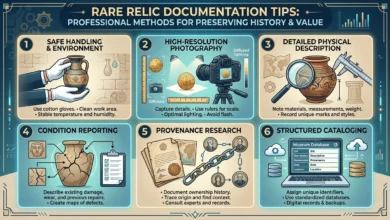
Forgotten items are often fragile due to neglect. Follow these rules:
- Do not clean aggressively – Patina and original dirt can be provenance. Use soft brush only.
- Stabilize before restoring – Humidify cracked wood (slowly), deacidify paper, freeze textiles to kill pests.
- Photograph in raw format – Capture all sides, markings, and defects.
- Write a condition report – Use standard terminology: intact, flaking, warped, oxidized, sun-faded.
- Store in microclimate boxes – Archival corrugated plastic with silica gel for metal items.
Do not oil old mechanisms unless you are a conservator. Do not glue broken ceramics with hardware store epoxy.
7. The Value of Forgotten Items: Monetary vs. Cultural
| Type of Value | Description | Example |
|---|---|---|
| Monetary | Auction price or insurance replacement | Rare early telephone receiver: $2,000-8,000 |
| Research | Historical data not found in texts | Farmer’s daily log of 1870s weather |
| Provenance | Links to a specific person or event | Hand-drawn map by a Civil War soldier |
| Cultural | Represents marginalized or erased history | Freedmen’s Bureau labor contract |
| Educational | Teaches obsolete skills or lost trades | Complete blacksmithing swage block |
A forgotten item with no monetary value may still be priceless to a local historical society or university special collections department.
8. Digital Rediscovery: Online Databases and Communities
Platforms dedicated to forgotten historical items:
- The Internet Archive – 78rpm records and ephemera – Free digitized audio and paper.
- Museum of Obsolete Objects (MOO) – Virtual exhibit of vanished tech.
- Reddit r/forgottenitems – Crowdsourced identification (120k+ members).
- Lost Art Internet Database – Nazi-looted and displaced objects.
- Bureau of Lost Cultural Heritage – GIS mapping of abandoned sites with artifact potential.
Upload your discovery to at least one academic repository. Add EXIF metadata with GPS coordinates (approximate for security).
9. Frequently Asked Questions (FAQs)
Q1: How do I know if a forgotten historical item is worth money?
A: Check eBay sold listings using very specific keywords (e.g., “patent 1867 apple parer” not “old kitchen tool”). Then search LiveAuctioneers for similar. If zero results, consult a specialist.
Q2: Can I sell a forgotten historical item found on my property?
A: Yes for most personal property. However, human remains, Native American artifacts (NAGPRA), and shipwreck items have legal restrictions. Check your country’s heritage laws.
Q3: What is the most valuable forgotten historical item category?
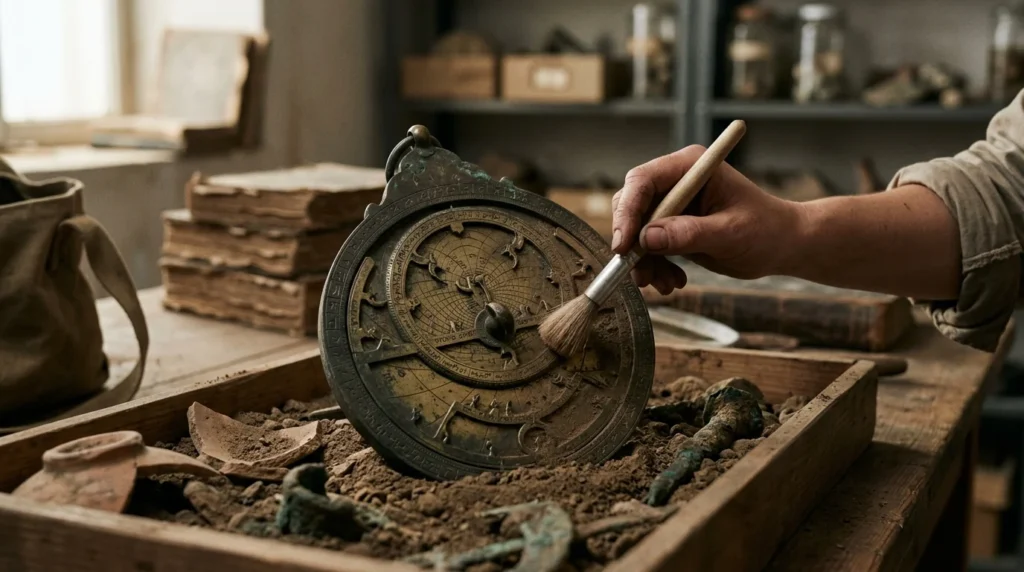
A: Early scientific instruments (astrolabes, microscopes pre-1800) and pre-Columbian everyday tools often exceed $10,000. Industrial Revolution prototypes also command high prices.
Q4: Should I donate or sell a forgotten item?
A: Donate if the item has strong local or ethnic significance. Sell if it has no direct community tie but has collector demand. Never discard without documentation.
Q5: How can I learn to identify forgotten items faster?
A: Study trade catalogs from 1880-1930 (available on HathiTrust). Visit agricultural and industrial museums. Join the Early American Industries Association (EAIA).
10. Ethical Considerations in Collecting Forgotten History
- Do not remove items from archaeological sites or battlefields.
- Respect grave goods and sacred objects – repatriate if possible.
- Avoid buying items with missing provenance after 1945 (potential Nazi-era looting).
- Share digital photos with origin countries for colonial-era objects.
- Publish findings openly – forgotten history belongs to everyone.