Rare Historical Relic Guide: Identification, Authentication & Preservation of Ancient Treasures
Introduction
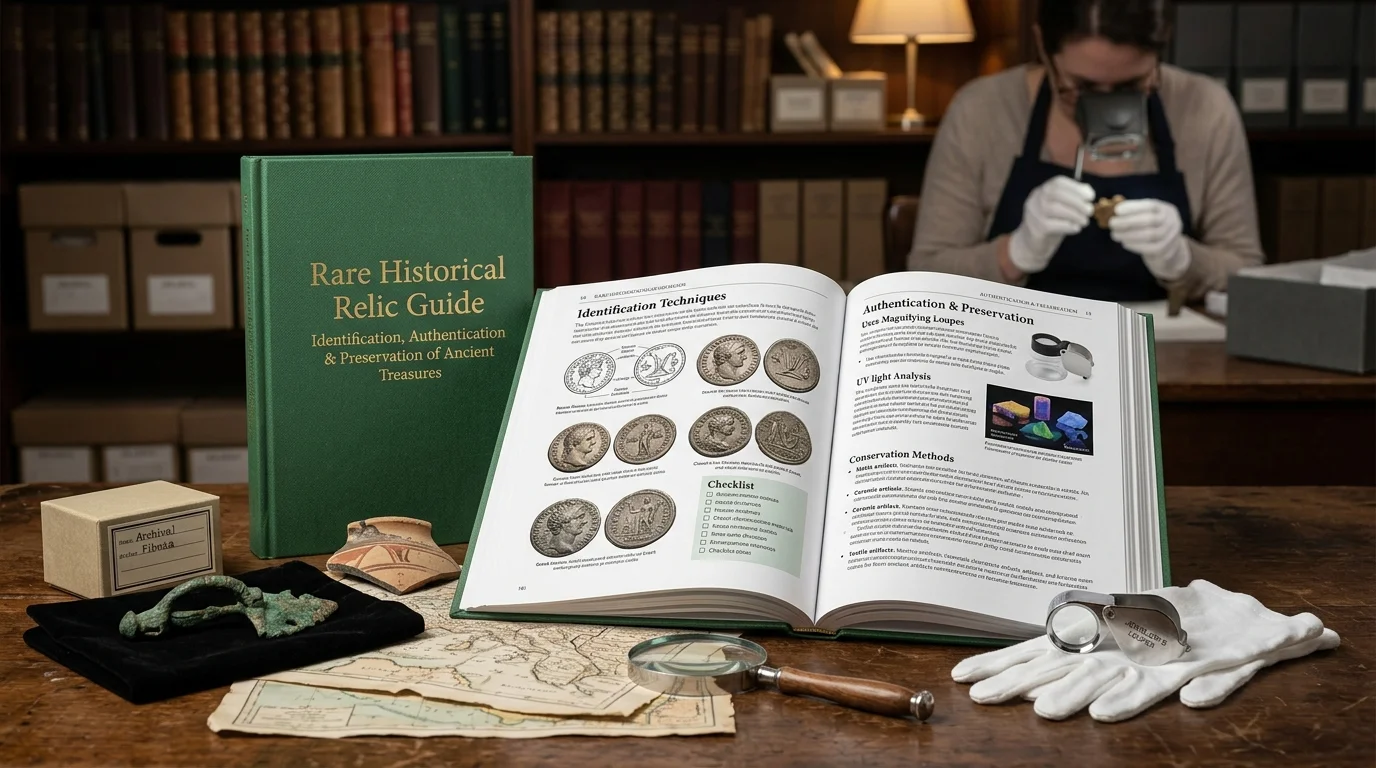
A rare historical relic is more than an old object. It is a reluctant witness to the past, carrying evidence of ancient societies, technologies, and beliefs within its physical fabric . From the golden mask of Tutankhamun to medieval coins verified by neutron beams, each relic tells a story that written history cannot capture alone. This rare historical relic guide provides a professional framework for understanding, authenticating, and preserving these irreplaceable artifacts. Whether you are a collector, student, or history enthusiast, the methods presented here draw from archaeology, conservation science, and museology to help you engage with relics responsibly.
What Defines a Rare Historical Relic
A relic is any object of archaeological or historical significance that has survived from a past era. Rarity derives from multiple factors: limited original production, exceptional preservation, documented provenance, or cultural importance. The world’s most valuable relics, such as those from Tutankhamun’s tomb, combine all these elements .
The study of relics requires a structured approach. Christopher Caple’s influential work “Objects: Reluctant Witnesses to the Past” outlines four key analytical perspectives: cultural interpretation (what the object meant to its makers), forensic analysis (physical evidence of use and age), technical study (materials and manufacturing methods), and biographical documentation (the object’s journey through time) .
Major Categories of Rare Historical Relics
| Category | Description | Notable Examples | Primary Value Drivers |
|---|---|---|---|
| Funerary Relics | Objects buried with the dead for afterlife | Tutankhamun’s mask, Terracotta Army | Intact context, ritual significance |
| Numismatic Relics | Coins and currency | 1943 copper penny, Fatimid gold dinars | Mint condition, historical period |
| Maritime Treasures | Shipwreck recoveries | San José galleon, Black Swan coins | Preservation in water, cargo volume |
| Royal Collections | Crown jewels and regalia | British Crown Jewels, Russian Diamond Vault | Provenance, gemstone size |
| Religious Relics | Sacred objects associated with faith | Holy relics, manuscript fragments | Spiritual significance, age |
| Natural Relics | Petrified wood, fossils, meteorites | Black Eagle meteorite | Scientific rarity, natural beauty |
The World’s Most Significant Relic Discoveries
Tutankhamun’s Tomb (1922)
Discovered by Howard Carter in Egypt’s Valley of the Kings, this remains the only intact pharaonic tomb ever found. Over 10,000 objects accompanied the young king, including the iconic 11-kilogram solid gold funerary mask. The discovery transformed modern understanding of ancient Egyptian material culture and remains the benchmark against which all relic finds are measured .
The San José Galleon (2015)
Often called the “Holy Grail” of shipwrecks, this Spanish treasure ship sank off Colombia in 1708 carrying gold, silver, and emeralds valued at approximately $20 billion. Located by underwater robots in 2015, the wreck raises complex questions about ownership and cultural heritage. The Colombian government now plans systematic recovery operations .
The Środa Treasure (1985-1988)
Discovered during building renovations in Poland, this medieval hoard contains over 3,000 items including gold coins, royal jewelry, and precious stones from the 14th century. Valued at approximately $120 million, many items were initially looted before archaeologists could secure the site. Recovered pieces now reside in Polish national museums .
The Fatimid Gold Dinars (2015)
A scuba diver off the coast of Caesarea, Israel, discovered approximately 2,000 gold coins from the Fatimid caliphate (909-1171 AD). Subsequent archaeological excavation recovered another 1,000 coins, making this the largest gold hoard found in the Eastern Mediterranean. The discovery provides unprecedented evidence of medieval maritime trade routes .
Scientific Authentication Methods for Relics
Modern relic authentication employs multiple scientific techniques to verify age and origin.
Neutron Imaging for Metal Relics
Researchers at the National Institute of Standards and Technology (NIST) have developed neutron-based methods to authenticate historic coins. Unlike X-rays, neutron beams penetrate heavy metals and interact strongly with corrosion byproducts. In a 2025 study, scientists examined two Korean copper coins—one authentic from the 1800s and one modern replica .
The authentic coin showed corrosion that had penetrated deep within the metal body, indicating gradual degradation over decades. The replica showed corrosion confined to the surface, consistent with rapid artificial aging. Additionally, pore size within the metal provided another authentication marker: authentic coins develop micrometer-to-nanometer scale pores over time, while replicas retain larger millimeter-scale pores .
These methods have applications beyond coins. Neutron imaging can authenticate metallic artifacts from diverse cultures and assist conservation efforts by mapping corrosion locations requiring protective coatings .
Technical Studies and Material Analysis
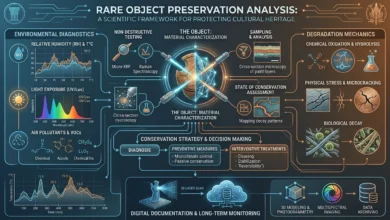
The University of Melbourne’s Technical & Authenticity Studies group conducts interdisciplinary research on materials, aging characteristics, and novel conservation techniques. Their work spans Middle Eastern manuscripts, Sidney Nolan paintings, and the 1297 Inspeximus issue of Magna Carta. They employ minimally invasive analytical methods including infrared reflectography and portable X-ray fluorescence instruments to probe beneath surface layers without damaging artifacts .
Determining Relic Stability and Condition
Proper assessment of a relic’s condition is essential before any handling or preservation work. The Society for Historical Archaeology provides guidelines for identifying stable versus deteriorating materials :
| Material Type | Signs of Deterioration | Stability Indicators |
|---|---|---|
| Iron | Red/brown voluminous corrosion, flaking, spalling | Stable black patina, no active flaking |
| Copper Alloy | Blue/green powdery corrosion, obscured morphology | Even green or brown patina |
| Bone | Dry, brittle, flaking or spalling sections | Smooth surface, no cracking |
| Leather | Extreme brittleness, fiber loss, white bloom | Flexible, no surface powdering |
| Wood | Dry or moldy surfaces, shrinkage, warping | Stable form, no active insects |
| Glass | Iridescent surfaces, active flaking | Clear or stable iridescence |
| Ceramics | Powdery glazes, white salts, cracks | Intact glaze, no salt efflorescence |
For composite objects, conservators assess the most fragile material first. Two or more materials may be separating or staining one another, requiring specialized intervention .
Professional Preservation Standards for Relics
The Secretary of the Interior’s Standards for the Treatment of Historic Properties (1995) identifies four distinct approaches to relic preservation, widely adopted by museums and conservation professionals :
Preservation maintains the existing integrity and character of a relic. This treatment precludes major additions or alterations. It is the preferred approach for most relics where stability has been achieved.
Rehabilitation maintains existing integrity but allows major additions or alterations to accommodate compatible contemporary use. This applies primarily to historic buildings rather than portable relics.
Restoration reestablishes the form, features, and character of a relic at a specific past period. The National Park Service permits restoration only when essential for public understanding and achievable with minimal conjecture based on sufficient data .
Reconstruction produces a new replica of a relic that no longer exists. This is rarely permitted and is not recommended for most historic resources.
For movable relics, the principle of minimal intervention prevails. Stabilization takes priority over aesthetic improvement. Any intervention should be reversible and documented.
Chinese Preservation Standards and the “No Change to Original State” Principle
The Principles for the Conservation of Heritage Sites in China (revised 2015) emphasize the core principle of “no change to the original state” as fundamental to relic preservation. This principle holds that the original condition of a relic, including its materials, structure, and historical modifications, is the primary carrier of value and must be preserved to the greatest extent possible .
The standards require that preservation work follow established procedures: investigation, assessment, designation of protection level, planning, implementation, and regular inspection. Research must permeate the entire process, with careful documentation maintained throughout. The principle of minimal intervention dictates that only necessary work should be performed, and traditional materials and techniques should be used whenever possible .
In practice, this means that a cracked ceramic bowl with honest wear is more valuable than one that has been overpainted or aggressively restored. The “no change” principle aligns with international best practices for preserving the authenticity of historical relics.
Environmental Requirements for Relic Storage
The suitability of a storage environment largely determines a relic’s long-term survival. A building survey should assess factors including temperature stability, humidity control, light exposure, pollution levels, and pest presence .
| Feature | Good Conditions | Poor Conditions |
|---|---|---|
| Site | Well-drained, sheltered | Low-lying, poorly drained |
| Building | Damp-proof course, watertight, good ventilation | Rising damp, draughty |
| Roof | Pitched roof, external rain disposal | Flat roof, internal pipes |
| Environment | Stable RH and temperature | Fluctuating or extreme conditions |
| Maintenance | Regular checks and rapid repairs | Poor repair, no disaster plan |
Recording devices should be placed throughout storage areas for a full calendar year to understand seasonal effects. An external sensor provides essential baseline data. As an immediate response, the most sensitive relics should be placed in the most stable zones—typically rooms near the building’s center .
Cataloging and Documentation for Relic Collections
Professional cataloging preserves the information value of each relic. The recommended method involves applying a small dot of white enamel paint to an inconspicuous area, then writing a unique number in permanent black ink once dry. Each number corresponds to a catalog entry containing :
- Object identification (what it is)
- Provenance (where it came from, excavation or acquisition context)
- Material composition
- Dimensions and weight
- Condition assessment
- Date of acquisition and purchase price (if applicable)
- Photographs from multiple angles with scale
For fossils and geological relics, additional information includes geological age, scientific name, and formation location. For archaeological relics, include cultural affiliation, estimated date range, and associated site information .
Computerized databases enable efficient searching and retrieval. Free cataloging software options include Carles Millan’s collection management tool and Geology365’s specimen labeling system. A computerized database allows collectors to pull up specific subsets for display or research purposes .
Ethics of Relic Collecting and Ownership
The 1970 UNESCO Convention requires signatory countries to return cultural property stolen or illegally exported after that date. For relics discovered or acquired earlier, ethical considerations still apply. Many museums and ethical collectors voluntarily repatriate items to descendant communities or countries of origin.
When a relic’s provenance includes a gap during known periods of conflict (1933-1945 for Nazi-era plunder, 1945-1960 for Soviet confiscation), additional research is required. Databases including the ERR (Einsatzstab Reichsleiter Rosenberg) looted art records and the Art Loss Register help identify potentially stolen objects.
Some relics cannot be legally collected at all. Human remains, items from protected archaeological sites, and artifacts from federal or state lands without permits are generally off-limits. Always verify local, state, and federal regulations before acquiring any relic .
Display and Exhibition of Rare Relics
Proper display balances public access with preservation. Light levels must be controlled: textiles and paper relics require no more than 50 lux, while metals and ceramics can tolerate higher levels. UV-filtering acrylic or glass is essential for any display case.
Riker mounts—cardboard boxes with cotton filling and a glass top held by pins—provide affordable display options for smaller relics. For valuable items, museum-quality cases with climate control and security features are recommended .
When displaying, rotate items periodically to limit cumulative light exposure. Document display conditions including duration, light levels, and any changes observed. The same principles apply to home collections as to museum exhibitions, though the scale and budget may differ.
The Relic as Reluctant Witness
Every relic carries evidence of its past. Tool marks reveal manufacturing techniques. Wear patterns indicate use. Corrosion documents environmental history. Repairs tell stories of value and care. The biography of an object—from creation through use, loss, discovery, and preservation—constitutes its full significance .
DNA can sometimes be obtained from organic relics. Trace element analysis can determine the geological source of metal objects. X-ray imaging reveals hidden structures and previous restorations. Each scientific technique adds another chapter to the object’s biography .
The study of relics is never complete. New technologies reveal previously invisible evidence. New research questions demand new examinations. The relic remains a witness, waiting for future investigators to ask better questions.
Conclusion
This rare historical relic guide has covered authentication science, preservation standards, major discoveries, and ethical collecting practices. Whether examining a ancient coin, a medieval manuscript, or a fossil from a prehistoric sea, the same principles apply: respect the object’s integrity, document everything, prioritize preservation over restoration, and always consider the cultural context from which the relic emerged. The relics we preserve today become the teachers of future generations.
Frequently Asked Questions (FAQs)
Q1: What is the difference between a relic and an antique?
A: A relic typically has historical, archaeological, or cultural significance beyond its age. An antique is generally defined as an object over 100 years old. All relics may be antiques, but not all antiques are relics. Relics carry specific historical importance or association.
Q2: How can I tell if a relic is authentic?
A: Authentication requires scientific analysis including material testing, corrosion pattern examination (using neutron imaging or X-ray fluorescence), and provenance verification. For valuable relics, consult a professional conservator or accredited appraiser. Many fakes fail corrosion pattern analysis .
Q3: What should I do if I discover a potential relic?
A: Do not clean or handle the object excessively. Photograph it in place with a scale reference. Note the exact location. Report the find to local archaeological authorities or museum curators. In many jurisdictions, removing relics without permission is illegal.
Q4: Can I keep a relic I find on my own property?
A: Laws vary by country and sometimes by state or province. In some jurisdictions, all archaeological materials belong to the state regardless of land ownership. In others, landowners may retain rights to certain categories of finds. Always research local laws before removing any object from the ground.
Q5: What is the most valuable relic ever discovered?
A: The Tutankhamun collection is often considered the most valuable single discovery, with over 10,000 objects including the solid gold funerary mask. The San José shipwreck, valued at approximately $20 billion, may represent the highest monetary value of a single find .
Q6: How do museums decide whether to restore or preserve a relic?
A: Professional standards prioritize preservation over restoration. The “no change to original state” principle and minimal intervention guidelines mean that most relics are stabilized rather than restored. Restoration is reserved for cases where it is essential for public understanding and can be accomplished with minimal conjecture .
Q7: Are neutron imaging methods available to private collectors?
A: Neutron imaging requires access to a research reactor or neutron source. These facilities are typically available only to researchers and museums through collaborative agreements. Private collectors should rely on professional conservators who have access to appropriate analytical facilities .
Q8: How should I store a small relic collection at home?
A: Use archival-quality boxes (acid-free, lignin-free) with individual compartments or padding so relics do not touch each other. Maintain stable temperature (65-70°F) and humidity (45-50% RH). Keep away from direct sunlight. Label each item with a number linked to a catalog. Avoid attics, basements, and garages where conditions fluctuate dramatically .
Final Recommendation for Action
Select one relic in your possession or a nearby museum collection. Research its material composition. Assess its condition using the deterioration signs table. Document everything you find. If any questions remain unanswered, consult a professional conservator or academic specialist. The relic has waited centuries to tell its story. Learn to listen.