Rare Object Preservation Analysis: A Scientific Framework for Protecting Cultural Heritage
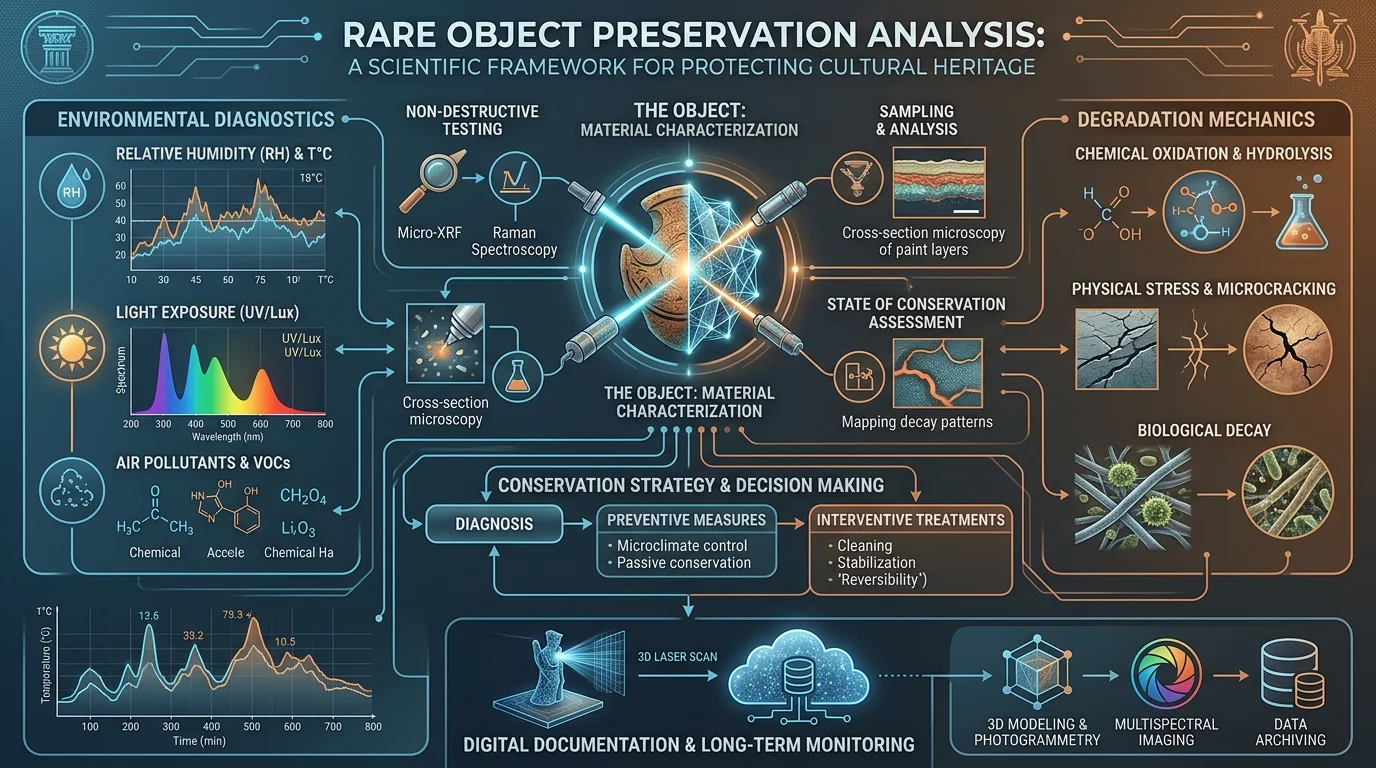
The preservation of rare objects represents one of the most complex and demanding challenges in cultural heritage management. Unlike ordinary collectibles, rare objects often possess unique material compositions, historical significance, and vulnerability to deterioration that require specialized scientific approaches. This comprehensive rare object preservation analysis draws from cutting-edge research in conservation science, including studies of amber deterioration, non-invasive spectroscopic analysis, digital documentation, and material-specific preservation protocols. Understanding these advanced strategies enables collectors, curators, and conservators to protect irreplaceable artifacts for future generations.
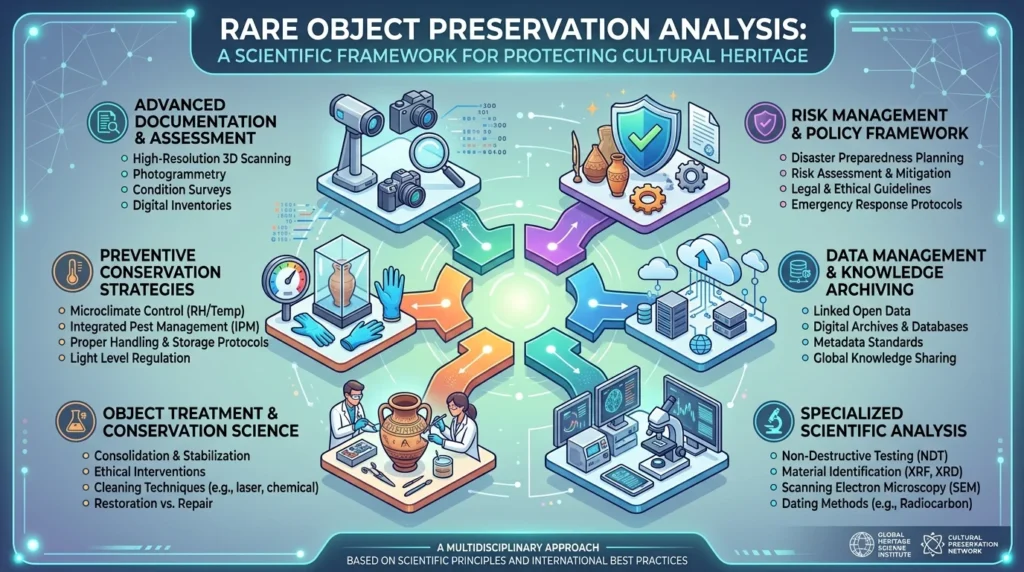
Understanding the Fundamental Principles of Rare Object Preservation
Preservation science has evolved significantly from traditional approaches focused solely on visible condition. Modern preservation analysis recognizes that deterioration begins the moment an object is excavated or removed from its original environment . For organic materials such as amber, fossilized resin, and textiles, exposure to light, atmospheric oxygen, and fluctuations in temperature and relative humidity initiates immediate degradation processes .
The core principle underlying all preservation strategies is preventive conservation—intervening in the storage and display environment to minimize deterioration before it occurs. This approach is far more effective than remedial conservation, which attempts to reverse damage after it has happened. Preventive strategies focus on controlling four primary environmental factors: light exposure, temperature stability, relative humidity, and atmospheric pollutants.
For rare objects, the preservation analysis must begin with a thorough understanding of material composition and deterioration mechanisms. Different materials react differently to environmental stressors, and inappropriate preservation strategies can cause more damage than doing nothing at all. The following sections provide material-specific preservation protocols derived from recent scientific research.
Material-Specific Preservation Analysis
Amber and Fossilized Resins
Amber presents unique preservation challenges due to its organic polymer structure and sensitivity to environmental conditions. Research on Early Cretaceous amber collections has revealed that deterioration occurs through multiple mechanisms including oxidation, depolymerization, and pyrite decay .
Ultraviolet radiation is the most harmful component of the light spectrum for amber. Prolonged UV exposure causes darkening of amber surfaces through destruction of carbon-carbon bonds and formation of dark-colored quinones . This darkening is irreversible and represents permanent loss of visual and scientific information. The most effective prevention is complete darkness—keeping amber specimens in storage or display cases that block all UV radiation.
Surface cracking represents another major deterioration pathway resulting from interaction with atmospheric oxygen. Oxidative radical reactions break the polylabdanoid chains comprising amber’s polymer structure, causing depolymerization of the external surface . Preventing oxygen contact is challenging but achievable through anoxic environments, including embedding specimens in epoxy resin or placing them inside nitrogen-filled enclosures.
Pyrite decay, also known as “pyrite disease,” affects amber specimens containing iron sulfide inclusions from sedimentary rock remains. The oxidation and hydration of pyrite produce hydrated iron sulfates and acid, with the volume of sulfates being several times greater than the initial sulfide volume . This volume expansion creates mechanical pressure that cracks the surrounding amber, potentially causing complete disintegration. Relative humidity above 60 percent provides sufficient moisture for sulfide oxidation to occur, making humidity control absolutely critical for pyrite-bearing amber collections .
Optimal storage conditions for amber:
- Temperature: 16-25°C (61-77°F)
- Relative humidity: 35-60 percent
- Daily variations: not exceeding 2°C in temperature and 4 percent in relative humidity
- Light exposure: complete darkness preferred; UV filtration required if display necessary
Silver and Metal Artifacts
Ancient and historic silver artifacts face deterioration challenges from both environmental corrosion and material embrittlement. A study of a rare Chinese Liao dynasty silver reliquary (907-1125 AD) revealed severe embrittlement and yellowing of silver foils that compromised structural integrity .
Analysis of this reliquary demonstrated that copper precipitation in silver alloy can be a primary cause of corrosion and embrittlement. Two distinct embrittlement mechanisms have been identified: intergranular corrosion in mechanically worked and annealed finds, and synergistic corrosion-induced and microstructural embrittlement in cases with significant retained cold work .
Non-destructive characterization using X-ray photoelectron spectroscopy (XPS) and X-ray powder diffraction (XRPD) on micro-fragments provides insight into the original alloy composition and deterioration pathways without damaging the artifact. This information is essential for developing appropriate restoration methodologies that respect the artifact’s structural limitations.
For silver preservation, stable temperature and humidity are critical, with optimal conditions of 19-24°C and approximately 45 percent relative humidity . Fluctuations are more damaging than stable conditions outside the ideal range.
Paper-Based Archives and Documents
Paper artifacts present preservation challenges related to both visible deterioration and hidden content. Modern non-invasive analytical techniques have revolutionized the study of archival documents, enabling conservators to access information without physical intervention.
Micro-spatially offset Raman spectroscopy (micro-SORS) has emerged as a breakthrough method for probing below opaque material substrates non-invasively . This technique has successfully reconstructed hidden iron gall ink text in sealed 18th-century letters without opening them, and mapped vermilion pigment in historical playing cards through intervening paper layers .
The technique works by shining a laser into the document and analyzing changes in wavelength that occur when light is reflected from subsurface layers. These changes indicate the presence of different chemical components, including pigments, inks, and degradation products .
For iron gall ink documents, X-ray fluorescence (XRF) analysis reveals characteristic elements including iron, potassium, and sulfur associated with the ink composition . Multiband imaging in the infrared range can also reveal variations in ink absorption, helping to decipher obscured text without physical sampling.
Fluid-Preserved Biological Specimens
Natural history collections contain over 100 million fluid-preserved specimens worldwide, many of which have unknown preservation fluids that pose risks to both the specimens and researchers . Historic preservation fluids include concentrated alcohols (methanol or ethanol), formalin (formaldehyde solution), and hazardous compounds containing mercury or picric acid that can become explosive .
A groundbreaking application of spatially offset Raman spectroscopy (SORS) has enabled analysis of Darwin’s original HMS Beagle specimens without opening their 200-year-old preservation jars . The technique correctly identified preservation fluids in approximately 80 percent of tested cases and partially identified another 15 percent, while also determining the types of glass or plastic containers used .
This non-invasive approach is transformative because opening jars risks evaporation, contamination, and environmental damage to specimens. Knowing the exact composition of preservation fluids is essential for monitoring specimen condition and intervening before problems arise .
The research revealed that preservation methods differed by species and era. Mammals and reptiles were typically fixed in formalin and stored in ethanol, while invertebrates might be kept in formalin, buffered solutions, or mixtures containing additives like glycerol .
Asian Lacquerwares
Lacquerwares represent some of the most prized Asian artworks in museum collections globally, but their conservation presents considerable challenges due to the intricate organic nature of urushi lacquer . A comprehensive analytical protocol combining non-invasive techniques—including fiber optic reflectance spectroscopy (FORS) and external reflectance Fourier transform infrared spectroscopy (ER-FTIR)—with micro-invasive methods on naturally detached fragments successfully identified artistic techniques, lacquer types, pigments, and restoration materials .
This integrated approach enables conservators to determine the geographic origin of artifacts based on identified materials and design appropriate conservation strategies without extensive sampling.
Simulacra and Composite Religious Artifacts
Complex composite artifacts such as the simulacrum of Saint Vincent Martyr require multi-analytical approaches combining imaging techniques with material analysis. Digital radiography and borescope inspection assess structural integrity and internal skeletal arrangement, while optical microscopy and scanning electron microscopy with chemical analysis examine textiles, metal threads, and degradation patterns .
Fourier-transform infrared spectroscopy (FTIR) characterizes adhesives, coatings, and pigments, while chromatographic techniques identify dyes in garments and wax components on other surfaces . This comprehensive analysis revealed photochemical damage, textile decay, and structural alterations, with radiography identifying misaligned skeletal remains.
Non-Invasive Analytical Technologies
Optical Coherence Tomography
Optical Coherence Tomography (OCT), originally developed for medical ophthalmology, has been adapted for cultural heritage applications. Ultra-high resolution OCT provides real-time, non-invasive visualization of subsurface microstructure in paintings, enabling conservators to see varnish layers, preparatory sketches, and subsurface cracks without sampling .
This technique guided the Louvre’s restoration of Leonardo da Vinci’s “Saint John the Baptist,” where OCT imaging revealed the layered structure of varnish, allowing conservators to meticulously remove nearly half of the original 15 varnish layers without damaging the underlying painting . The success led to OCT being incorporated into routine conservation practice for varnished paintings across over 1,200 museums in France.
Remote Spectral Imaging
The PRISMS remote spectral imaging system allows simultaneous reflectance spectral imaging at sub-millimeter resolution combined with 3D mapping, at stand-off distances of tens of meters . This system is specifically designed for automated high-resolution spectral imaging of large paintings, murals, and architectural interiors to identify materials and record preservation states.
At the Mogao Caves UNESCO World Heritage Site in Dunhuang, China, this technology enabled non-invasive dating of Buddhist wall paintings to the late 12th-13th century, resolving longstanding questions about the site’s chronology .
Microfade Spectrometry
Microfade spectrometry measures the light sensitivity of museum collections to determine optimal exhibition conditions. This technique balances the competing needs of public display (adequate illumination for visitor experience) and preservation (minimizing light-induced damage) .
At the Tate Modern, microfade testing of Henri Matisse’s “Acanthes” provided confidence to loan the piece for major exhibitions, while at English Heritage’s Audley End House, microfade surveys of 18th-century royal bed hangings informed display policies protecting these irreplaceable textiles .
Digital Documentation and Reconstruction
For fragile organic artifacts where physical reconstruction is unfeasible due to degradation or fragmentation, digital documentation offers an alternative preservation strategy. A state-of-the-art review of digital practices for materials such as leather, textiles, and wood recommends combining close-range photogrammetry, laser scanning, and AI-driven methods including Neural Radiance Fields (NeRF) and Gaussian Splatting .
These digital approaches produce replicable, transparent workflows for non-invasive documentation and digital reassembly of fragile artifacts. The findings underscore the need for methodological transparency, data traceability, and ethical considerations in the digital management of vulnerable cultural heritage .
Preventive Conservation Protocols
Environmental Monitoring and Control
The foundation of rare object preservation is stable environmental conditions. For most materials, temperature should be maintained between 18-22°C (64-72°F) with relative humidity between 45-55 percent. Daily fluctuations should not exceed 2°C and 4 percent RH respectively .
Light exposure requires management through multiple strategies. UV radiation should be eliminated entirely using filtration on all light sources. Visible light levels should be limited to 50 lux for sensitive materials (textiles, watercolors, photographs) and 200 lux for more robust materials . Total annual light exposure should be calculated and tracked, with rotation of sensitive objects on display.
Integrated Pest Management
Biological threats including insects, rodents, and mold require systematic prevention through Integrated Pest Management (IPM). This approach emphasizes prevention through environmental control rather than chemical intervention, which can damage objects and pose health risks.
Emergency Preparedness
Rare object preservation requires comprehensive emergency planning for fire, flood, and other disasters. Essential elements include prioritized salvage lists, emergency contact information for conservators, and pre-positioned supplies including plastic sheeting, absorbent materials, and temporary storage containers.
Preservation Analysis Comparison Table
| Material Category | Primary Deterioration Risks | Optimal RH Range | Optimal Temp Range | Key Non-Invasive Analysis Tool |
|---|---|---|---|---|
| Amber | UV damage, oxidation, pyrite decay | 35-60% | 16-25°C | Micro-SORS, XRF |
| Silver/Alloys | Corrosion, embrittlement, intergranular attack | 40-50% | 18-22°C | XPS, XRPD, SEM-EDS |
| Paper Archives | Oxidation, acid hydrolysis, iron gall ink corrosion | 30-50% | 15-20°C | Micro-SORS, MA-XRF, IR imaging |
| Fluid-Preserved Specimens | Fluid evaporation, contamination, hazardous chemicals | N/A (sealed) | 10-15°C (cool storage) | SORS |
| Lacquerware | Cracking, moisture sensitivity, UV degradation | 50-60% | 18-22°C | FORS, ER-FTIR, Py-GC-MS |
| Textiles | Light fading, pest damage, mechanical stress | 45-55% | 18-20°C | Microfade spectrometry, OCT |
| Composite Artifacts | Differential material reactions, structural instability | 45-50% | 18-20°C | Digital radiography, borescope, FTIR |
| Wall Paintings | Salt crystallization, moisture migration, biological growth | 40-60% | 18-22°C | PRISMS remote spectral imaging |
Frequently Asked Questions
Q: What is the difference between preservation, conservation, and restoration?
A: Preservation refers to all activities that minimize deterioration, including environmental control and preventive measures. Conservation encompasses both preservation and specific interventions to stabilize condition. Restoration focuses on returning an object to a previous state, often involving visible treatment. For rare objects, preservation is prioritized over restoration unless absolutely necessary.
Q: How can I tell if my amber specimen is suffering from pyrite decay?
A: Pyrite decay appears as white, yellow, or brown crystalline efflorescence on or within amber, often accompanied by cracking and surface powdering. If you observe any crystalline growth or unexplained cracking, consult a conservator immediately. Relative humidity above 60 percent accelerates this process, so humidity control is critical for prevention .
Q: Is it safe to open fluid-preserved specimen jars to check their contents?
A: No. Historic preservation fluids may contain hazardous chemicals including formaldehyde, mercury compounds, or picric acid that can become explosive. Opening jars also risks evaporation, contamination, and environmental damage to specimens. Non-invasive SORS analysis can identify preservation fluids without opening containers .
Q: What are the most important environmental factors for rare object preservation?
A: Four factors are critical: light exposure (particularly UV radiation), temperature stability, relative humidity, and atmospheric pollutants. Light and pollutants cause chemical deterioration, while temperature and humidity fluctuations cause physical damage through expansion and contraction. Stability is more important than specific values.
Q: How does Optical Coherence Tomography help in art conservation?
A: OCT provides non-invasive cross-sectional imaging of layered structures in paintings, enabling conservators to see varnish layers, preparatory sketches, and subsurface cracks without sampling. This guided the Louvre’s restoration of Leonardo da Vinci’s “Saint John the Baptist,” where OCT revealed varnish layers for selective removal .
Q: Can digital documentation replace physical preservation?
A: No. Digital documentation provides valuable records and enables research access without physical handling, but it cannot replace the preservation of original objects. Original artifacts contain material evidence, chemical signatures, and structural information that cannot be fully captured digitally. Digital methods should complement rather than replace physical preservation.
Q: What should I do if I discover a rare object in poor condition?
A: Document the object thoroughly with photographs and notes. Do not attempt cleaning or restoration without professional guidance. Maintain stable environmental conditions. Contact a professional conservator through organizations like the American Institute for Conservation or the International Institute for Conservation. Avoid any treatment that is not reversible.
Q: How often should rare objects be inspected for deterioration?
A: Conduct visual inspections at least annually, with more frequent checks for sensitive materials or objects in active display. Document any changes in condition. For fluid-preserved specimens, monitor fluid levels and appearance without opening containers. Use non-invasive analytical methods to detect invisible deterioration before it becomes visible.