Human history is punctuated by phantom metropolises. Long before concrete skyscrapers pierced our modern skylines, ancient civilizations constructed sprawling urban centers complete with intricate indoor plumbing, paved road networks, multi-story residences, and soaring monuments. Tens of thousands of people lived, traded, fell in love, and built complex societies within these walls. Then, almost overnight in the grand scheme of geological time, the lights went out. The residents walked away, or were swallowed by earth, sand, ocean, and jungle, leaving behind empty plazas and silence.
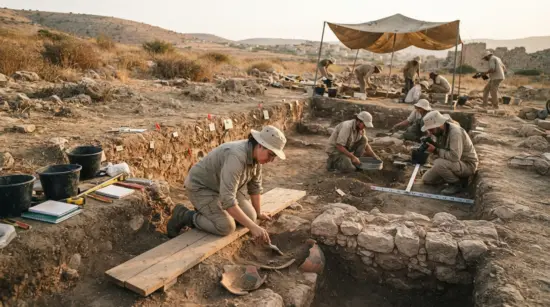
For centuries, stories of these vanished places survived only as fireside legends, bedtime stories, or cryptic footnotes in dusty historical texts. Today, modern technology like satellite imaging and light detection and ranging aerial scans are bringing these forgotten ruins back into the light. Yet, the central mystery remains tantalizing: why did these thriving communities vanish without a trace? Here is a deep dive into some of the most extraordinary lost cities in human history, the secrets they held, and the compelling theories behind their sudden, silent demises.
Mohenjo-Daro and Harappa: The Forgotten Engineers of the Indus Valley
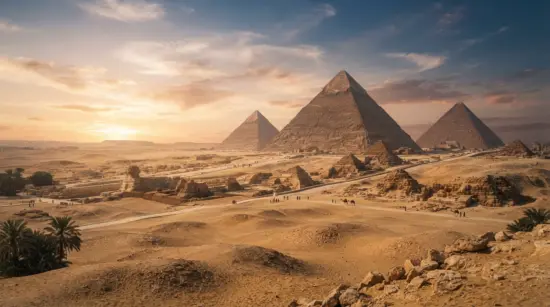
Around 2500 BCE, while the ancient Egyptians were raising the Great Pyramids and the inhabitants of Mesopotamia were carving out early empires, a sophisticated urban culture was flourishing along the floodplains of modern-day Pakistan and northwest India. Known as the Indus Valley Civilization, its crowning jewels were the twin cities of Mohenjo-Daro and Harappa.
These were not crude settlements of mud huts. Mohenjo-Daro was a masterpiece of civil engineering. The city boasted a meticulous grid pattern, standardized baked-brick construction, multi-story homes, covered public drains, and a public bathing facility known as the Great Bath. Its citizens possessed advanced metallurgy, standardized weights and measures, and an intricate writing system that remains untranslated to this day. Unlike their contemporaries in Egypt and Mesopotamia, the Indus people built no grand royal palaces or warrior monuments, suggesting an unusually egalitarian society focused on commerce, sanitation, and community life.
The Disappearance
By 1900 BCE, this vast civilization began to unravel. Within a few generations, the great metropolises were completely deserted. For decades, early 20th-century scholars hypothesized that violent Aryan invasions had wiped out the inhabitants, but modern archaeological excavations have largely debunked this violent myth. No mass graves or evidence of battle trauma have been uncovered.
The current leading theory points toward environmental collapse. Geological evidence indicates that shifts in tectonic plates altered the courses of major rivers, including the sacred Ghaggar-Hakra river system, which dried up entirely. Paired with changing monsoon patterns that crippled local agriculture, the city dwellers were likely forced to abandon their engineered wonder in search of reliable water sources, scattering into smaller rural communities until the memory of their urban marvel faded into the earth.
Cahokia: The Forgotten Native American Megacity
When people think of ancient urban centers, their minds rarely wander to the floodplains of the Mississippi River, just across from present-day St. Louis, Missouri. Yet, around 1050 CE, a bustling metropolis named Cahokia emerged as the largest urban settlement in North America north of Mexico.
At its peak, Cahokia was home to an estimated 10,000 to 20,000 people—a population density that rivaled contemporary Paris or London. The city spanned over six square miles and contained more than 120 massive earthen mounds. The largest of these, Monks Mound, stands ten stories high and covers an area larger at its base than the Great Pyramid of Giza. Cahokia featured wide public plazas, sophisticated astronomical observatories constructed from wooden posts (nicknamed Woodhenge), and a far-reaching trade network that stretched from the Great Lakes to the Gulf of Mexico.
The Disappearance
By 1350 CE, Cahokia was entirely abandoned. Long before European explorers set foot in the American heartland, the great wooden palisades had rotted, and the plazas stood empty. Native American tribes who later inhabited the region had no direct oral tradition accounting for who had built the massive mounds.
Researchers believe Cahokia suffered a complex domino effect of resource depletion and environmental instability. To fuel their fires and construct their massive wooden defenses, the Cahokians deforested the surrounding hillsides. This severe deforestation led to massive soil erosion and catastrophic localized flooding, which ruined crop yields. Combined with political unrest, nutritional stress, and a prolonged period of regional drought brought on by the Little Ice Age, the citizens simply packed up and dispersed into smaller tribal groups throughout the Midwest.
Thonis-Heracleion: Egypt’s Sunken Gateway
Before Alexandria was founded in 331 BCE, Thonis-Heracleion was the undisputed trade hub of the Mediterranean world. Located at the mouth of the Nile River, this ancient Egyptian port city was a thriving maritime customs station where all foreign ships were required to dock, pay taxes, and unload their cargo before proceeding into the heart of Egypt.
Historical accounts from ancient Greek writers like Herodotus described a grand city centered around the great Temple of Amun-Gereb. For centuries, however, mainstream historians questioned whether Thonis-Heracleion actually existed as described, or if it was merely a mythical exaggeration, because no land-based archaeological trace of it could be found anywhere along the Egyptian coast.
The Disappearance
The mystery was finally solved in the late 1990s when underwater archaeologists utilizing high-resolution sonar technology discovered the submerged city four miles off the modern coast, resting under thirty feet of water and several feet of sediment in Abu Qir Bay.
Unlike cities that crumbled to dust, Thonis-Heracleion was swallowed whole by the sea during the 2nd century BCE. A series of natural catastrophes struck the region: severe earthquakes triggered localized tsunamis, while the heavy stone temples, built on unstable clay soils, caused the ground to undergo a process known as soil liquefaction. The earth literally turned to liquid mud under the weight of the monuments, sliding the entire central district into the Mediterranean Sea within a matter of hours.
Kuhikugu and the Lost Amazonian Metropolises
For centuries, popular Western imagination viewed the Amazon rainforest as a pristine, untamed wilderness—a vast, green wall incapable of supporting dense human populations. Early Spanish explorers returned from the region with wild tales of massive, golden cities lining the banks of the Amazon River, but later expeditions found only dense jungle and hunter-gatherer tribes, writing off the early claims as feverish hallucinations born of tropical disease.
However, recent discoveries in the Xingu region of Brazil have proven that those early accounts were far closer to the truth than modern historians ever realized. Archaeologists have uncovered the remains of Kuhikugu, an ancient urban network that flourished between 800 and 1600 CE.
Kuhikugu was not a single, centralized megacity, but rather a sophisticated cluster of fortified towns, villages, and garden cities linked by wide, straight causeways and complex canal networks. The inhabitants manipulated the rainforest landscape, engineering rich black earth known as terra preta to farm sustainable crops within the jungle canopy, and building large fish ponds and defensive moats.
The Disappearance
The sudden collapse of Kuhikugu is one of the most tragic stories in human history. The city did not fall to warfare, climate change, or natural disasters. Instead, it fell to invisible invaders. When European explorers made initial contact along the South American coasts, they introduced Old World diseases like smallpox, measles, and influenza to which Indigenous populations had zero immunity.
These pathogens traveled along indigenous trade networks far faster than the conquistadors themselves. Within a short period, up to 90 percent of the Amazonian population was wiped out. Without human hands to clear the vegetation, maintain the earthen causeways, and tend the rich agricultural plots, the relentless Amazon rainforest reclaimed the cities within a few decades, burying complex urban engineering beneath a impenetrable blanket of green.
Ubar: The Atlantis of the Sands
Deep within the unforgiving, sun-scorched expanse of the Rub’ al Khali desert in modern-day Oman lies the site of Ubar, famously dubbed “The Atlantis of the Sands” by T.E. Lawrence (Lawrence of Arabia). Mentioned in ancient texts and desert lore, Ubar was famed as an immensely wealthy trading post that controlled the lucrative frankincense trade route across the Arabian Peninsula.
Frankincense, a fragrant resin harvested from desert trees, was worth its weight in gold in the ancient world, used in religious rituals from Rome to Persia. Ubar became an oasis of incredible wealth, surrounded by high walls, fortified towers, and rich trade depots. Yet, according to legend, the city vanished overnight without a trace, giving rise to myths that it was struck down by divine wrath and buried beneath shifting sand dunes.
The Disappearance
In the early 1990s, an expedition utilizing high-resolution radar satellite data from the Space Shuttle pinpointed ancient camel caravan tracks converging on a single spot in the Omani desert near the small village of Shisr. Excavations revealed the ruins of a impressive fortress and trade complex dating back over two thousand years.
The city’s dramatic disappearance turned out to be a self-inflicted geological disaster. Ubar was built over a massive underground limestone cavern that contained a major freshwater spring—the very water source that made the city an oasis in the first place. As the city grew and its population drew more and more water from the aquifer, the water pressure inside the cavern dropped dramatically. Eventually, the ceiling of the limestone cavern weakened and collapsed completely, sinking the central fortress and major trading structures into a massive sinkhole beneath the sand.
Nan Madol: The Stone Venice of the Pacific
Located off the eastern shore of the island of Pohnpei in Micronesia, Nan Madol stands as one of the most mysterious engineering feats in the world. Built atop a coral reef in a shallow lagoon, Nan Madol is a city composed of roughly 90 artificial islets linked by a network of natural and man-made canals, earning it the nickname “The Venice of the Pacific.”
Constructed between the 8th and 13th centuries CE as the ritual and political seat of the Saudeleur Dynasty, the city’s walls and structures were built using massive columnar basalt rocks, some weighing up to 50 tons. Scholars estimate that total weight of the stone used to build Nan Madol exceeds hundreds of thousands of tons. Transporting these enormous, heavy stones across open water without modern machinery, draft animals, or metal tools represents a monumental achievement of human organization.
The Disappearance
By the 16th century, the Saudeleur Dynasty was overthrown, and Nan Madol was completely abandoned. Local islanders avoided the site, viewing it as sacred ground inhabited by spirits, which helped preserve its stone walls for centuries.
The city suffered from severe logistical vulnerabilities. Built on a coral reef surrounded by salt water, Nan Madol had no natural source of fresh water and no capacity to grow food. All freshwater and agricultural supplies had to be boated in from the main island by servants and commoners. When political power shifted and the autocratic regime collapsed, maintaining the complex logistical network required to feed and supply the remote stone city became unsustainable. The elite inhabitants abandoned the islets, leaving the basalt structures to be engulfed by mangrove trees.
Why Lost Cities Continue to Fascinate Us
The enduring mystery of vanished cities taps