Introduction to the History Timeline
The history timeline is a chronological representation of the events that have shaped human civilization. It is a vast and complex tapestry that weaves together the stories of countless cultures, empires, and individuals who have left their mark on the world. From the earliest recorded events to the present day, the history timeline is a rich and fascinating subject that continues to captivate and inspire us. In this article, we will explore the history timeline in depth, highlighting key events, periods, and figures that have helped shape the world we live in today.
The Ancient World
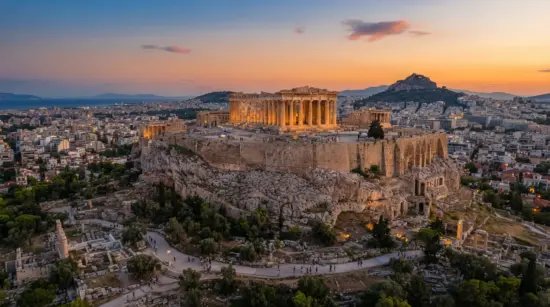
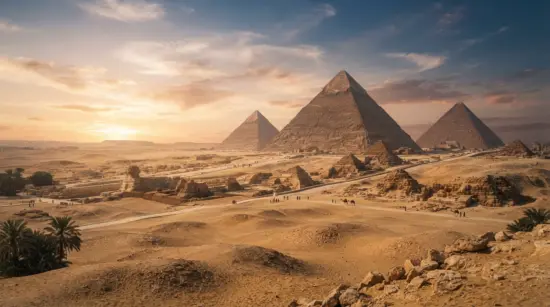
The ancient world is the earliest period of human history, spanning from the emergence of the first civilizations to the fall of the Roman Empire. This period saw the rise and fall of numerous empires, including ancient Egypt, Mesopotamia, Greece, and Rome. Each of these civilizations made significant contributions to the development of human society, including advances in technology, art, architecture, and governance. The ancient world was also marked by significant events, such as the construction of the Great Pyramid of Giza, the Battle of Marathon, and the conquests of Alexander the Great.
Some of the key figures of the ancient world include:
- Socrates, the Greek philosopher who laid the foundations of Western philosophy
- Leonidas, the Spartan king who led the famous 300 at the Battle of Thermopylae
- Cleopatra, the last pharaoh of ancient Egypt, who played a significant role in the Roman Empire’s expansion
- Julius Caesar, the Roman general and statesman who transformed the Roman Republic into the Roman Empire
The Middle Ages
The Middle Ages, also known as the medieval period, spanned from the 5th to the 15th century. This period saw the rise of Christianity as a dominant force in Europe, as well as the emergence of feudalism and the development of trade and commerce. The Middle Ages were marked by significant events, such as the Crusades, the Black Death, and the Hundred Years’ War. This period also saw the rise of powerful kingdoms and empires, including the Byzantine Empire, the Holy Roman Empire, and the Mongol Empire.
Some of the key figures of the Middle Ages include:
- Charlemagne, the Frankish king who united much of Western Europe and promoted education and the arts
- William the Conqueror, the Norman king who conquered England and introduced feudalism
- Richard the Lionheart, the English king who led the Third Crusade and fought against Saladin
- Joan of Arc, the French heroine who led the French army to victory during the Hundred Years’ War
The Early Modern Period
The early modern period, which spanned from the 16th to the 18th century, saw significant advances in science, technology, and culture. This period saw the emergence of the Renaissance, the Protestant Reformation, and the Enlightenment, which had a profound impact on Western society. The early modern period also saw the rise of powerful nation-states, including Spain, France, and England, which competed with each other for colonial empires and trade routes.
Some of the key figures of the early modern period include:
- Leonardo da Vinci, the Italian polymath who made significant contributions to art, science, and engineering
- Martin Luther, the German theologian who sparked the Protestant Reformation
- Galileo Galilei, the Italian astronomer who challenged the geocentric model of the universe
- Isaac Newton, the English physicist who developed the laws of motion and universal gravitation
The Modern Period
The modern period, which spans from the 19th century to the present day, has seen significant advances in technology, politics, and culture. This period has been marked by two world wars, the rise of communism and fascism, and the emergence of the United States and the Soviet Union as superpowers. The modern period has also seen significant social and cultural changes, including the civil rights movement, the women’s liberation movement, and the rise of globalization.
Some of the key figures of the modern period include:
- Abraham Lincoln, the American president who led the country through the Civil War and abolished slavery
- Marx and Engels, the German philosophers who developed the theory of communism
- Albert Einstein, the German physicist who developed the theory of relativity
- Martin Luther King Jr., the American civil rights leader who fought for racial equality
Conclusion
The history timeline is a rich and complex subject that spans thousands of years and countless events. From the ancient world to the modern period, human civilization has been shaped by a wide range of factors, including politics, culture, technology, and social change. By studying the history timeline, we can gain a deeper understanding of the world we live in today and the forces that have shaped it.
What is the significance of the history timeline?
The history timeline is significant because it provides a framework for understanding the development of human civilization. By studying the events and periods that have shaped the world, we can gain insights into the causes and consequences of historical events, as well as the cultural, social, and political contexts in which they occurred.
How can I use the history timeline in my daily life?
The history timeline can be used in a variety of ways in daily life. For example, it can help you understand the origins of contemporary issues and events, such as political conflicts, social movements, and economic trends. It can also provide a framework for making sense of cultural and artistic developments, such as the emergence of new musical genres or literary movements.
What are some of the most important events in the history timeline?
Some of the most important events in the history timeline include the rise and fall of ancient civilizations, such as Egypt, Greece, and Rome; the emergence of major world religions, such as Christianity, Islam, and Buddhism; the development of science and technology, such as the discovery of gravity and the invention of the printing press; and the major conflicts of the 20th century, such as World War I and World War II.
How can I learn more about the history timeline?
There are many ways to learn more about the history timeline, including reading books and articles, watching documentaries and films, visiting museums and historical sites, and taking courses or attending lectures. You can also explore online resources, such as historical websites and databases, to gain a deeper understanding of the events and periods that have shaped human civilization.