Mysterious Object Identification Methods: A Complete Scientific and Practical Guide
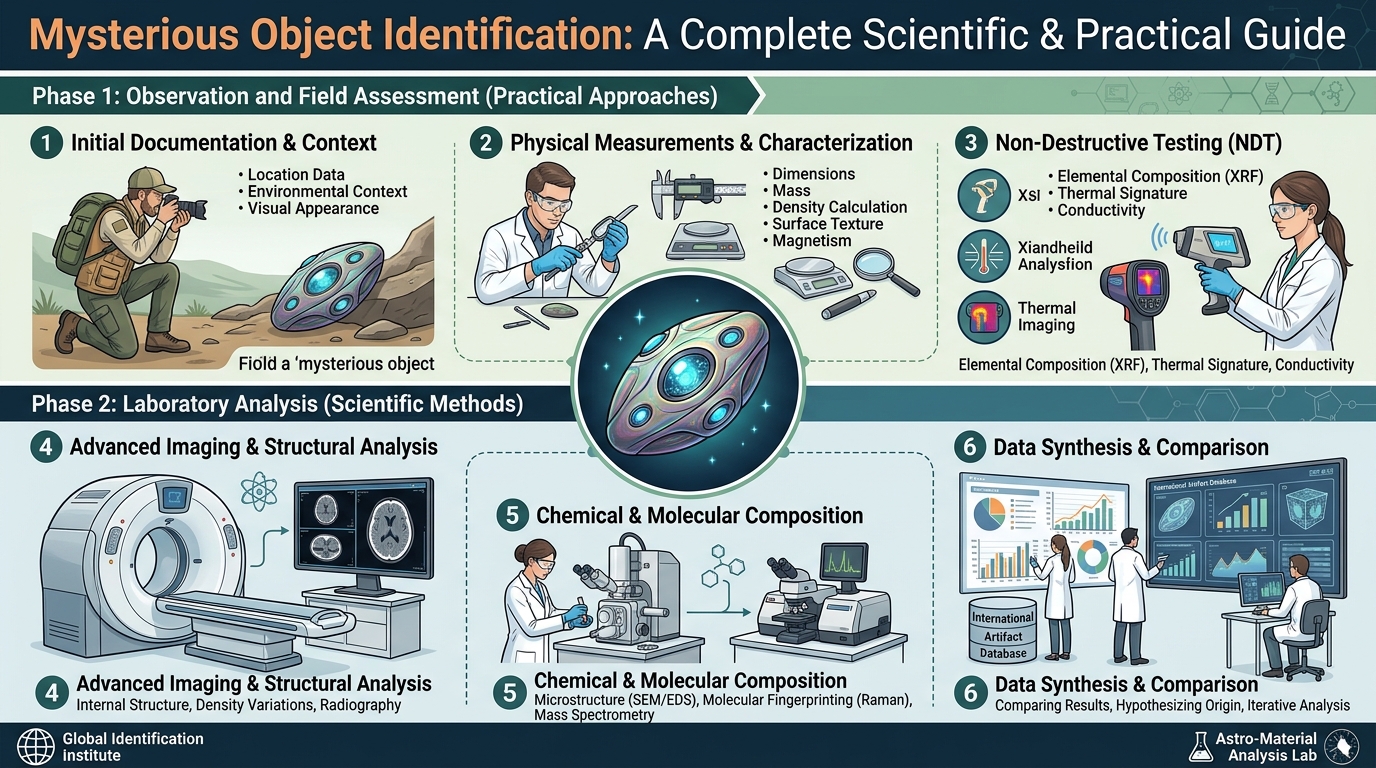
Finding an unfamiliar object in an attic, field, or antique shop can be both exciting and frustrating. Mysterious object identification requires a systematic approach combining observation, research, scientific analysis, and expert consultation. Whether you have discovered an unmarked tool, an unknown archaeological find, or a puzzling family heirloom, this guide provides professional methodologies to determine what your object is, when it was made, what it was used for, and whether it holds value. From visual inspection techniques to advanced laboratory methods, you will learn how to unlock the secrets of any unidentified artifact.
Table of Contents
| Section | Topic |
|---|---|
| 1 | The Five-Step Identification Framework |
| 2 | Visual and Tactile Observation Techniques |
| 3 | Material Analysis Without Damaging the Object |
| 4 | Markings, Signatures, and Hallmarks Decoded |
| 5 | Research Resources and Reference Databases |
| 6 | Scientific Testing Methods Explained |
| 7 | When and How to Consult Experts |
| 8 | Frequently Asked Questions |
1. The Five-Step Identification Framework
Professional object identification follows a structured sequence. Skipping steps leads to incorrect conclusions. The framework below applies to any mysterious object regardless of category.
| Step | Action | Purpose |
|---|---|---|
| One | Safe handling and initial documentation | Preserve evidence and prevent damage |
| Two | Systematic visual and tactile observation | Gather all visible data without assumptions |
| Three | Material identification | Determine what the object is made of |
| Four | Comparative research | Match features against known examples |
| Five | Expert consultation or scientific testing | Confirm or refine identification |
Do not clean, repair, or attempt to operate a mysterious object before completing Step Two. Cleaning can remove critical evidence including residues, patina, and microscopic markings.
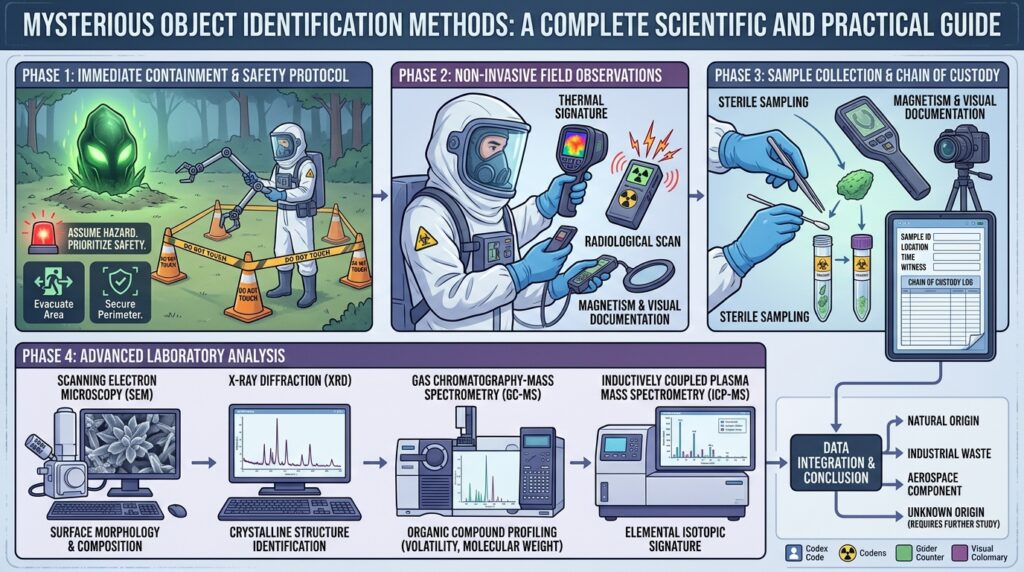
2. Visual and Tactile Observation Techniques
Before any research or testing, document and examine the object thoroughly. Most identification clues are visible to the naked eye or low magnification.
Initial Documentation
Photograph the object from multiple angles using natural daylight. Include a scale reference such as a ruler or common coin. Photograph any markings, damage, or unusual features separately. Record the following information in a written log:
Discovery location including specific coordinates if available
Context of discovery such as soil type, depth, associated objects
Dimensions measured with calipers or ruler
Weight measured with accurate scale
Color description under natural light
Odor noting any metallic, chemical, or organic smells
Systematic Visual Examination
Examine the object under good lighting with magnification of 5x to 10x. A jeweler‘s loupe or handheld digital microscope works well. Document these characteristics:
Surface texture including smooth, rough, cast, hammered, machined, or polished
Manufacturing traces such as tool marks, mold seams, grind marks, or file marks
Wear patterns showing how the object was used or handled
Corrosion or patina type and distribution
Joint construction methods if the object has multiple parts
Fastener types including screws, rivets, nails, or adhesives
Tactile Examination
With clean, dry hands or nitrile gloves, feel the object carefully. Weight distribution indicates hollow versus solid construction. Temperature conductivity helps identify metal types. Metal feels cold initially and warms quickly in the hand. Stone and ceramic feel cold and warm slowly. Wood and organic materials feel warmer initially. Surface texture differences between areas suggest repairs or replacements.
What to Look For by Category
| Object Category | Key Identification Features |
|---|---|
| Tools | Wear patterns on working surfaces, handle shape, material quality |
| Containers | Closure type, interior residues, rim construction, base markings |
| Decorative objects | Style elements, motif types, finishing technique, mounting method |
| Scientific instruments | Scale markings, adjustment mechanisms, lens or mirror condition |
| Weaponry | Balance point, edge geometry, proof marks, serial numbers |
| Textiles | Weave pattern, thread count, selvage type, dye analysis |
| Ceramics | Glaze type, clay body color, firing method, foot ring style |
3. Material Analysis Without Damaging the Object
Identifying the material composition narrows possible age and origin significantly. Non-destructive methods provide answers without risking damage.
Visual Material Identification
Metal identification begins with color and patina. Iron and steel rust reddish-brown. Copper and its alloys develop green or brown patina. Brass is yellow, bronze is more brown, and both resist rust. Silver tarnishes black. Gold does not tarnish. Aluminum is lightweight and silvery with white oxidation. Lead is heavy, soft, and develops white-grey corrosion.
Wood identification requires examining end grain, color, weight, and grain pattern. Hardwoods like oak, mahogany, and walnut indicate furniture or tool handles. Softwoods like pine and cedar indicate construction or storage items.
Stone identification considers hardness, crystal structure, and surface feel. Marble is soft and can be scratched with a knife. Granite is hard and resists scratching. Flint and chert have conchoidal fracture patterns indicating knapping.
Ceramic identification examines the exposed clay body at unglazed areas. Porcelain is white, translucent when thin, and rings like a bell when tapped. Stoneware is grey or brown, opaque, and dense. Earthenware is porous, soft, and easily scratched.
Glass identification considers color, bubbles, and surface wear. Older glass often contains bubbles and uneven thickness. Pressed glass has sharp mold lines. Blown glass shows pontil marks on the base.
Magnetic and Density Testing
A simple magnet identifies ferrous metals. Iron and steel are magnetic. Most non-ferrous metals including copper, brass, bronze, aluminum, lead, tin, and precious metals are non-magnetic. Stainless steel varies.
Specific gravity testing measures density. Weigh the object in grams. Suspend it from a fine thread and weigh it submerged in distilled water. Divide the dry weight by the weight loss in water. Compare results against known material densities:
| Material | Specific Gravity Range |
|---|---|
| Gold | 15.0 to 19.3 |
| Lead | 11.3 |
| Silver | 10.5 |
| Copper | 8.9 |
| Brass | 8.4 to 8.7 |
| Iron | 7.9 |
| Tin | 7.3 |
| Aluminum | 2.7 |
UV Light Examination
Long-wave ultraviolet light causes different materials to fluoresce in characteristic colors. Modern adhesives and restorations often fluoresce brightly. Ivory and bone fluoresce white or blue-white. Some minerals have diagnostic fluorescence. UV examination requires a dark room and proper eye protection.
4. Markings, Signatures, and Hallmarks Decoded
Markings are the most direct path to identification. Learn to read them systematically.
Maker‘s Marks and Signatures
Photograph the marking at highest possible magnification. Trace the marking onto paper using soft pencil and thin paper placed over the mark. Compare against reference databases for the object category.
For silver and precious metals, hallmarks indicate purity, assay office, date, and maker. British hallmarks follow a standard system with anchor for Birmingham, castle for Edinburgh, crown for Sheffield, and leopard for London. Date letters cycle every 20 to 25 years.
For ceramics, marks on the base include manufacturer, pattern name, and country of origin. After 1891, the McKinley Tariff Act required country of origin marks on imports to the United States. Items marked “England” date after 1891. Items marked “Made in England” date after 1921.
For furniture, marks may be stamped, branded, or written. Drawer interiors, backs of case pieces, and bottoms of tables hide maker marks. Pencil inscriptions often indicate assembly numbers, not maker names.
For tools, markings include maker names, patent dates, and model numbers. Patent dates help narrow manufacturing period. A tool marked “Pat. Oct 12 1875” was made after October 1875.
Decoding Numbers and Letters
Serial numbers suggest factory production. Research the brand and model to locate serial number decoding charts. Patent numbers can be searched through the United States Patent and Trademark Office database. Registration numbers on British silver and ceramics indicate design registration dates.
Handwritten inscriptions require careful reading. Ink type suggests age. Iron gall ink fades to brown. Modern synthetic inks remain black or blue. Pencil inscriptions may be erasable; do not touch them directly.
5. Research Resources and Reference Databases
Once you have documented the object‘s physical characteristics, compare against published references.
Online Databases for Mysterious Object Identification
The following resources are freely accessible:
Google Lens and similar visual search tools upload your photograph and find visually similar images. This method works best for distinctive shapes and decorative styles.
The Metropolitan Museum of Art Open Access provides millions of high-resolution images of verified artifacts searchable by category, material, culture, and date.
The British Museum Online Collection offers searchable access to their entire collection with detailed object descriptions.
The Internet Archive contains digitized historical catalogs, trade publications, and patent records from the 18th through early 20th centuries.
The US Patent and Trademark Office database searches all patents issued since 1790.
The Portable Antiquities Scheme database records archaeological finds from the United Kingdom with identification help.
Print and Academic Resources
University libraries provide access to auction records, collectors‘ guides, and academic journals. Specific journals for mysterious object identification include Studies in Conservation, Journal of the American Institute for Conservation, and Historical Archaeology.
Trade catalogs reprinted from original manufacturers are invaluable for tool and household object identification. Sears Roebuck catalogs from 1890 to 1940 illustrate thousands of common objects with descriptions and prices.
Comparative Collection Visits
Local historical societies, museums, and university archaeology departments often allow researcher access to comparative collections. Bring photographs and measurements rather than the actual object for initial consultations.
6. Scientific Testing Methods Explained
When visual and research methods cannot identify an object, scientific testing provides definitive answers.
X-Ray Fluorescence Spectrometry
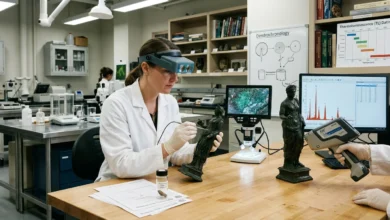
XRF identifies elemental composition without sampling or damaging the object. A handheld instrument directs X-rays at the surface and measures the fluorescent energy emitted by different elements. The test takes seconds and works on metals, ceramics, glass, and some stones.
XRF cannot detect elements lighter than sodium, including carbon, oxygen, and hydrogen. It analyzes only the surface layer, so coatings or corrosion may affect readings. Despite these limitations, XRF is the most useful single test for mysterious metal objects.
Fourier-Transform Infrared Spectroscopy
FTIR identifies organic materials including adhesives, coatings, textiles, and residues. The test requires a microscopic sample in most cases, though some instruments can analyze surfaces directly. FTIR reveals whether a residue is wax, oil, protein, or synthetic polymer.
Radiocarbon Dating
Carbon-14 dating determines the age of organic materials including wood, bone, textile, paper, and leather. The test requires a sample of approximately 10 to 100 milligrams. Results have a margin of error of 30 to 50 years for recent objects and larger margins for older objects.
Carbon-14 dating is useless for metal, stone, ceramic, or glass objects except where organic residues are present. The test is expensive and should be reserved for objects where age is genuinely unknown and significant.
X-Ray Radiography
X-ray imaging reveals internal structures, hidden modifications, and manufacturing methods. The test works on any object that X-rays can penetrate. Radiography can reveal cores inside cast metal objects, hidden nails in furniture, and overwritten text in documents.
7. When and How to Consult Experts
Knowing when to seek expert help prevents wasted time and incorrect identifications.
Types of Experts for Different Objects
| Object Type | Expert Type | Where to Find |
|---|---|---|
| Archaeological finds | Museum curator or academic archaeologist | Local university, state archaeologist office |
| Antique furniture | Certified appraiser specializing in furniture | International Society of Appraisers directory |
| Metal tools and hardware | Antique tool collector association | Early American Industries Association |
| Ceramics and glass | Decorative arts curator | Major museum decorative arts department |
| Military objects | Militaria collector or historian | Military history forums, local reenactment groups |
| Scientific instruments | Scientific instrument collector | Scientific Instrument Commission |
| Textiles and clothing | Costume and textile curator | Costume Society of America |
| Unidentified organic material | Conservation scientist | American Institute for Conservation directory |
Preparing for Expert Consultation
Do not email an expert with only a vague description. Provide the following:
High-resolution photographs from multiple angles with scale
Measurements and weight
Material identification from your testing
Any markings transcribed exactly
Discovery context and location
Previous research you have conducted
Experts receive hundreds of identification requests. Clear, organized inquiries receive responses. Vague requests are ignored.
Authentication Services
Professional authentication services provide written opinions for a fee. Costs range from 100 to 500 dollars depending on category and complexity. Authenticated objects receive documentation that supports insurance and resale value.
8. Frequently Asked Questions
Q1: I found a metal object in my backyard. What should I do first?
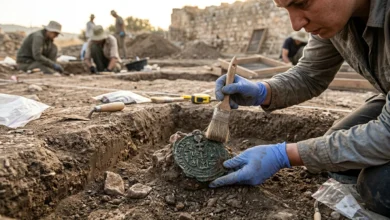
Photograph it in place before moving. Note the depth and surrounding soil. Handle minimally. Do not clean or attempt to remove corrosion. Research local laws regarding artifact discovery. Report significant finds to your state archaeologist or local historical society.
Q2: How can I tell if my mysterious object is valuable without paying for an appraisal?
Compare against completed auction listings on eBay and LiveAuctioneers. Search using descriptive terms. If similar objects sell for under 50 dollars, professional appraisal is not cost-effective. If similar objects sell for hundreds or thousands, professional appraisal is warranted.
Q3: Is it safe to use Google Lens on my mysterious object?
Yes, for visual search. Google Lens compares your image against indexed web images. It may identify common objects immediately. For rare or unusual objects, it may return no matches. The process does not damage the object.
Q4: Can I use acid testing to identify metal?
Acid testing damages the surface by leaving permanent marks. Only use acid testing on objects you own and accept will be damaged. Professional non-destructive methods including XRF are superior.
Q5: What does a pontil mark on glass indicate?
A pontil mark is a rough or scarred area on the base of glass objects where the pontil rod was attached during hand blowing. Pontil marks indicate handmade glass, generally before the 20th century for most production. Smooth polished bases without pontil marks may be mold-blown or machine-made.
Q6: How do I identify unmarked ceramic?
Examine the clay body at unglazed areas. Porcelain is white and translucent. Ironstone is dense and white. Stoneware is grey or brown. Earthenware is porous and soft. The firing method, glaze chemistry, and foot ring style narrow the period and origin.
Q7: What is the most useful single tool for object identification?
A 10x triplet loupe with built-in scale. This magnifying tool reveals tool marks, wear patterns, and markings invisible to the naked eye. Quality loupes cost 30 to 100 dollars and last decades.
Q8: Can museums help identify my object for free?
Many museums offer free identification services for objects with potential historical significance. Contact the museum‘s curatorial department by email with photographs. Public programs like Antiques Roadshow events provide free verbal appraisals. Be prepared for a response time of weeks or months.
Q9: How do I identify an object that appears homemade?
Look for evidence of hand fabrication including irregular dimensions, asymmetric features, and tool marks inconsistent with factory production. Homemade objects often use repurposed materials. The value of homemade objects is usually sentimental rather than monetary unless the maker is historically significant.
Q10: What should I do if I cannot identify my object after following all these methods?
Accept that some objects remain unidentified. Document everything you have learned. Store the object with your documentation. Future researchers with better resources may succeed where you could not. Unidentified objects are not failures; they are opportunities for future discovery.
mysteriousobjectidentification unknownartifactidentification antiquesidentification objectidentificationmethods identifyoldobjects artifactresearchtips mysteriousfindguide antiquedatabaseidentification noninvasivetesting objectmarkingsdecoded hallmarkidentification