Collectible Item Authenticity Guide: How to Spot Fakes, Verify Provenance, and Protect Your Investment
Introduction
The global collectibles market is worth over $400 billion, but with high value comes high risk. Counterfeiters have become increasingly sophisticated, producing fakes that fool even experienced collectors. A collectible item authenticity guide is your essential defense against fraud. Whether you collect trading cards, vintage handbags, comic books, or antique furniture, knowing how to verify what you buy separates profitable collecting from costly mistakes. This guide provides step-by-step authentication methods, red flags to watch for, and professional resources to confirm legitimacy before you spend your money.
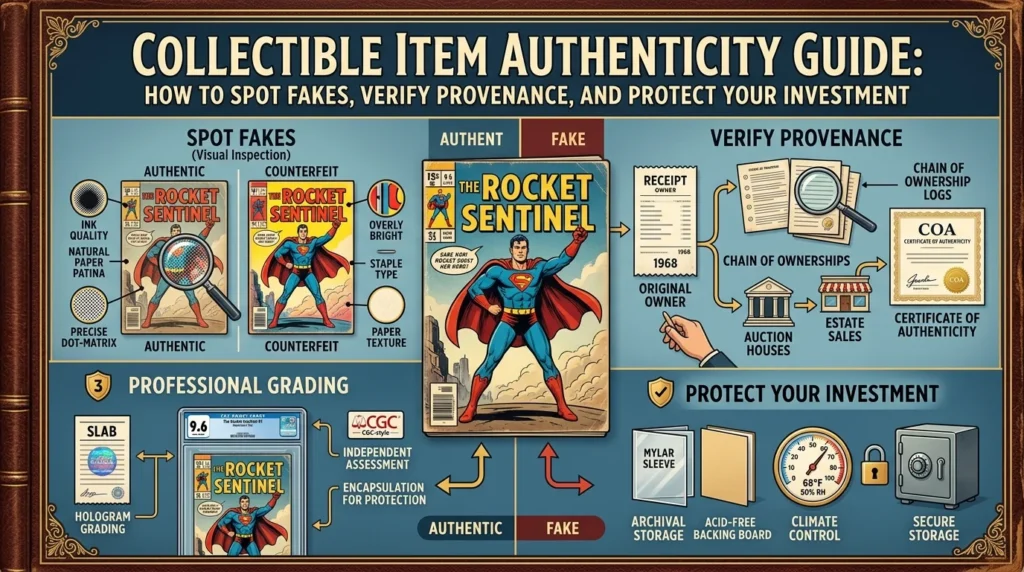
Table: Authentication Methods by Collectible Category
| Collectible Type | Primary Authentication Method | Tools Needed | Common Forgery Signs |
|---|---|---|---|
| Coins & Currency | Weight, magnet test, edge lettering | Digital scale, calipers, magnifying loupe | Wrong weight, magnetic response (for non-ferrous coins) |
| Sports Cards | Stock thickness, color registration, gloss pattern | Jeweler’s loupe, black light, centering tool | Blurry printing, wrong card stock, UV reaction |
| Autographs | Ink flow analysis, stroke pressure, provenance | UV light, magnifying glass, exemplar database | Trembling lines, unnatural pauses, wrong ink era |
| Vintage Watches | Serial number lookup, movement inspection, caseback engravings | Caseback opener, loupe, reference books | Mismatched serials, modern fonts on vintage pieces |
| Comic Books | Page color, staple rust, cover gloss, centerfold integrity | White gloves, light table, CGC reference guide | Bright white pages (for Golden Age), reproduction staples |
| Designer Handbags | Stitch count, hardware weight, date code, lining material | Measuring tape, magnet, authentic reference | Uneven stitching, lightweight hardware, glued linings |
| Vintage Toys | Mold seam, plastic type, paint application, patent numbers | Black light, magnifying glass, price guide | Fresh plastic smell, incorrect screw types, modern paint |
| Antique Furniture | Joinery type, wood aging, tool marks, hardware patina | Endoscope, wood moisture meter, UV light | Machine-cut dovetails, new screws, identical wear patterns |
Why Authenticity Matters More Than Ever
The rise of online marketplaces has made it easier to buy collectibles but also easier to sell fakes. According to the International Anti-Counterfeiting Coalition, online counterfeit goods have increased by 400% since 2020. For collectors, this means three serious risks:
- Financial Loss – A fake Rolex bought for $8,000 is worth nothing. Resale value drops to zero once inauthenticity is proven.
- Legal Liability – Reselling a counterfeit item, even unknowingly, can result in lawsuits or customs seizures.
- Portfolio Damage – Insurance companies may deny claims on mixed authentic and fake collections if proper verification was not performed.
A proper collectible item authenticity guide protects against all three risks through systematic verification.
Step 1: Visual Inspection Under Magnification
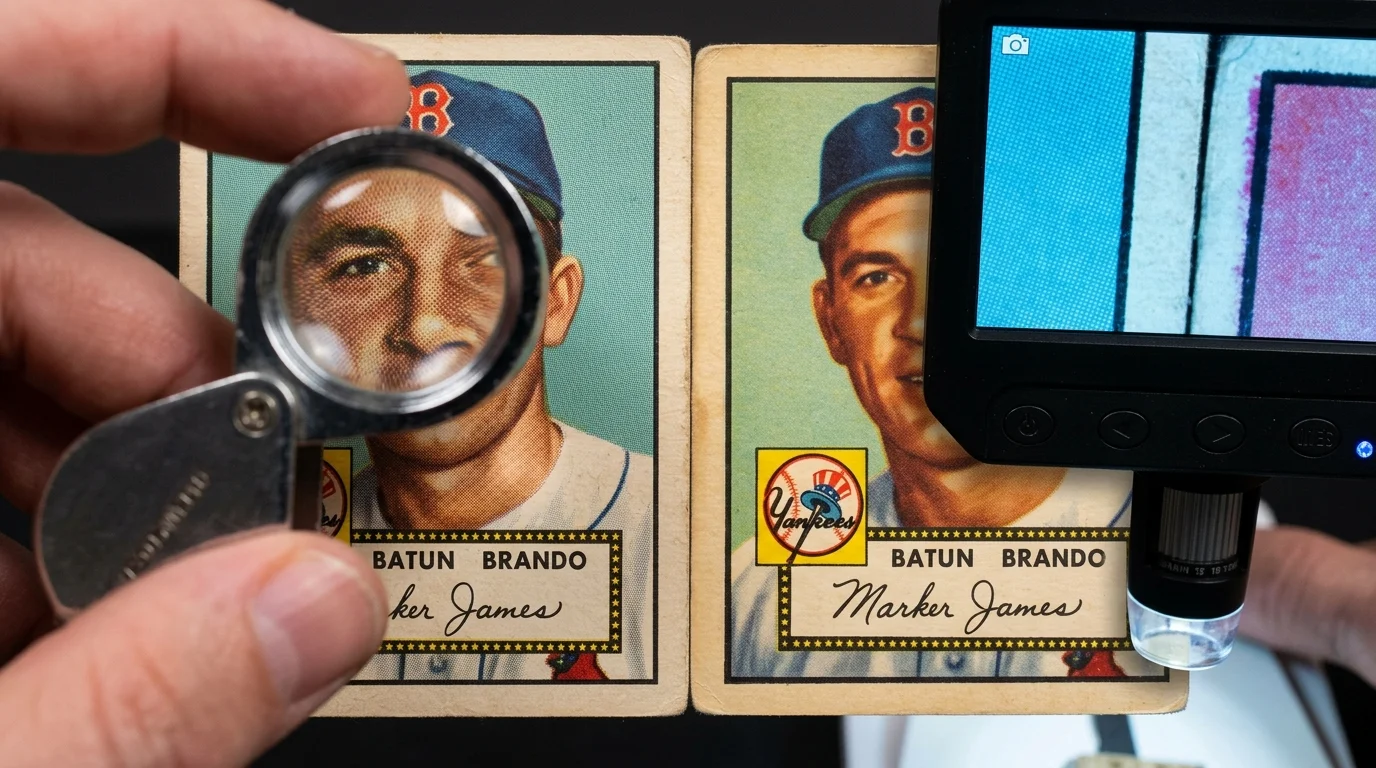
The first line of defense is your own eyes—with proper magnification. A 10x jeweler’s loupe costs under $15 and reveals details invisible to naked vision. Examine these four areas on any collectible:
Surface Consistency – Authentic items show age-appropriate wear. A 1950s baseball card should have slightly yellowed edges, not pure white. A Victorian brooch should have micro-scratches, not perfect polish. Counterfeits often have uniform wear patterns applied artificially using sandpaper or tumblers.
Print Quality – For paper items (cards, comics, posters), look for dot patterns. Authentic offset printing uses rosette patterns visible under magnification. Counterfeit inkjet prints show perfect dots in grid formation. Use a black light—genuine older paper often fluoresces dull brown, while modern bright white paper glows blue-white.
Mold Lines – Vintage plastic toys and model kits have visible mold seam lines. Fakes often have blurred or missing seams because recasting softens details. Also check for air bubbles—genuine vintage resin casting may have tiny bubbles, while modern polyurethane fakes often have none or too many.
Patina and Oxidation – Metal items develop natural patina over decades. Silver tarnishes unevenly. Bronze develops green verdigris only in recessed areas. Counterfeiters use chemical baths that create uniform coloration. A simple test: rub a white cotton cloth on the item. Authentic antique patina does not transfer easily. Fake patina often leaves colored residue.
Step 2: Weight and Measurement Verification
Dimensions and weight are quantifiable authenticity markers that counterfeiters frequently get wrong. Use a digital caliper (accuracy 0.01mm) and a gram scale (accuracy 0.1g) to compare your item against known authentic examples.
Example tolerances for authentic items:
- Morgan silver dollar (1878-1921): 38.1mm diameter, 2.4mm thickness, 26.73 grams. Any variation beyond 0.2mm or 0.5 grams is suspicious.
- 1952 Topps Mickey Mantle card: 2.5 x 3.5 inches exactly. Modern reprints often measure 2.48 x 3.48 inches due to scanning shrinkage.
- Rolex Submariner 16610: 40mm case width excluding crown, 12.5mm thickness. Fakes often measure 40.5mm or 13mm.
Create a reference spreadsheet with dimensions and weights for every item type you collect. Compare new acquisitions against these baselines before completing any purchase.
Step 3: Provenance Verification
Provenance—the documented history of ownership—is the most powerful authenticity tool available. A collectible item authenticity guide must emphasize that provenance beats even expert opinion. Follow this checklist:
- Chain of custody – Every transfer of ownership should be documented. Missing decades are red flags.
- Original receipts – Store names, prices, and dates should match the era. An 1890s receipt using modern fonts is impossible.
- Photographic evidence – Old photos showing the item in period settings add credibility.
- Exhibition history – Museum or gallery records provide third-party verification.
- Auction records – Past sales at major houses (Sotheby’s, Christie’s, Heritage) create traceable paths.
Request provenance documents before paying for high-value items. Sellers who refuse or provide vague stories (“from an old estate”) should be treated with extreme caution.
Step 4: Professional Authentication Services
For collectibles worth over $500, third-party authentication is strongly recommended. These services provide tamper-evident holders and certification numbers that can be verified online. Major services include:
For Trading Cards & Comics: PSA (Professional Sports Authenticator), CGC (Certified Guaranty Company), Beckett (BGS). Cost: $20-200 per item. Turnaround: 30-90 days.
For Coins: PCGS (Professional Coin Grading Service), NGC (Numismatic Guaranty Company). Cost: $30-300. Turnaround: 20-60 days.
For Autographs: JSA (James Spence Authentication), PSA/DNA, Beckett Authentication. Cost: $25-150 per signature. Turnaround: 10-40 days.
For Watches: The Watch Register, Patek Philippe Extract from Archives, Rolex Service Center verification. Cost: $150-500. Turnaround: 4-12 weeks.
For Luxury Handbags: Entrupy (AI-based microscopic verification), Authenticate First, Real Authentication. Cost: $20-100 for digital certificates. Turnaround: 24-48 hours.
Never accept a seller’s own “certificate of authenticity” unless issued by one of these recognized services. Self-made certificates are worthless and commonly used to deceive.
Step 5: Chemical and Physical Testing
For extremely valuable items (over $5,000), non-destructive chemical testing provides scientific proof. Methods include:
X-Ray Fluorescence (XRF) – Determines elemental composition without damaging the item. Verifies that a gold coin is solid gold, not plated lead. Cost: $100-300 per test.
Ultraviolet Fluorescence – Reveals restoration, overpainting, or modern adhesives. Genuine old varnish fluoresces differently than synthetic alternatives.
Microscopic Thread Analysis – For textiles and clothing, authentic vintage threads are irregular under magnification. Modern machine-spun threads are perfectly uniform.
Dendrochronology – For wooden furniture, tree-ring dating can pinpoint the harvest year of the wood to within a decade. Cost: $500-1,500 but definitive for pre-1800 pieces.
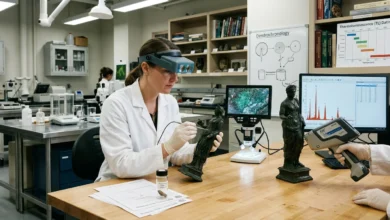
These tests are generally performed by university labs or specialized conservation studios. Contact your nearest major museum’s conservation department for referrals.
Red Flags That Indicate Forgery
Regardless of item type, these warning signs should stop any purchase immediately:
- Too-perfect condition – A 100-year-old item with no wear, no patina, and no flaws is statistically unlikely. Most genuine antiques show honest age.
- Missing serial numbers – Many collectibles have hidden serial numbers or date codes. Their absence is deliberate.
- Fresh smell – New plastic, fresh ink, or recent glue odors indicate recent manufacture despite claimed age.
- Identical wear patterns – Fakes often have wear sanded onto the same spots (corners, edges) in unnatural uniformity.
- Seller refuses returns – Legitimate dealers stand behind authenticity. “As-is, no returns” on valuable items is a major red flag.
- Price significantly below market – A 10,000itemofferedfor2,000 is not a bargain; it is a fake or stolen.
Table: Authentication Cost-Benefit Analysis by Item Value
| Item Value | Recommended Authentication | Maximum Acceptable Cost | Risk of Skipping |
|---|---|---|---|
| Under $100 | Self-verification using this guide | $0 | Low (acceptable loss) |
| 100−500 | Basic third-party service (PSA, JSA quick opinion) | $25 | Medium |
| 500−2,000 | Full third-party grading with holder | $50-100 | High |
| 2,000−10,000 | Two independent services | $150-300 | Very High |
| Over $10,000 | Full service plus XRF or scientific test | $500-1,000 | Extreme (potential lawsuit) |
Real-World Case Study: The Fake Baseball Card That Fooled Experts
In 2021, a 1909-11 T206 Honus Wagner baseball card—one of the rarest in existence—sold for $725,000 at a private auction. The buyer submitted it to PSA for encapsulation. PSA’s authentication team noticed that the card’s edge wear was perfectly uniform on all four sides, which never occurs on authentic tobacco cards (they were cut from sheets with three rough edges and one smooth edge). Microscopic examination revealed that a genuine common player’s card had been chemically stripped of its original image and re-printed with the Wagner image. The buyer recovered his money only after a lengthy lawsuit. This case proves that even high-value sales can involve sophisticated forgery, and professional authentication is non-negotiable.
Frequently Asked Questions (FAQs)
Q1: Can I authenticate a collectible item using only smartphone photos?
A: No. Smartphone photos lack the resolution and color accuracy needed for serious authentication. However, you can request magnified photos (using a clip-on macro lens) of specific areas: signatures, mold seams, serial numbers, and edge wear.
Q2: How do I verify a collectible’s authenticity without damaging it?
A: Use non-destructive methods from this guide: weight and measurement, UV light inspection, magnification, and provenance verification. For expensive items, hire a professional who uses XRF or other non-invasive technologies.
Q3: Are online authentication apps reliable?
A: Mixed results. Entrupy (for handbags) claims 99.1% accuracy using microscopic imaging. Coin authentication apps are unreliable due to lighting variations. Never rely solely on an app—use it as a preliminary screening tool only.
Q4: What is the most counterfeited collectible category?
A: Luxury watches, specifically Rolex and Patek Philippe. Over 95% of “vintage Rolex” listings on some online marketplaces are estimated to be fake or Franken-watches (assembled from genuine and fake parts).
Q5: How can I tell if a vintage autograph is real or stamped?
A: Use a 10x loupe. Genuine ink shows uneven pressure, tiny pooling at stroke ends, and occasional skips. Stamped autographs have perfectly uniform ink density, sharp edges, and no natural variation. Also check for indentation—real signatures depress paper fibers slightly.
Q6: Is a certificate of authenticity (COA) from the seller enough?
A: No. Seller-issued COAs have no independent value. Only COAs from recognized third-party services (PSA, JSA, PCGS, etc.) provide real protection. Many counterfeit items come with fake COAs printed on professional-looking letterhead.
Q7: How do I authenticate vintage jewelry hallmarks?
A: Use a jeweler’s loupe to photograph the hallmark. Compare against reference databases like 925-1000.com or the Online Encyclopedia of Silver Marks. Hallmark placement, font style, and surrounding cartouche shape must match known authentic examples from that era and country.
Q8: What should I do if I discover I bought a counterfeit collectible?
A: Immediately stop all communication with the seller (do not accuse them yet). Gather all documentation: receipts, messages, photos, payment records. File a claim with the platform (eBay, PayPal, credit card). Most offer 180-day buyer protection. For items over $5,000, consult an attorney who specializes in art and collectibles fraud.
Conclusion
A reliable collectible item authenticity guide is your most valuable collecting tool. No matter your niche—coins, comics, watches, toys, or furniture—systematic verification protects your investment and your reputation. Start with visual inspection under magnification, verify dimensions and weight, demand provenance documentation, and use professional authentication services for any item over $500. The cost of authentication is always less than the cost of a fake. Remember: if a deal seems too good to be true, it almost always is. Collect with your eyes open, your tools ready, and your standards high. Your future self—and your portfolio—will thank you.