Vintage Artifact Showcase Ideas: Curating Museum-Quality Displays for Private Collectors
Introduction
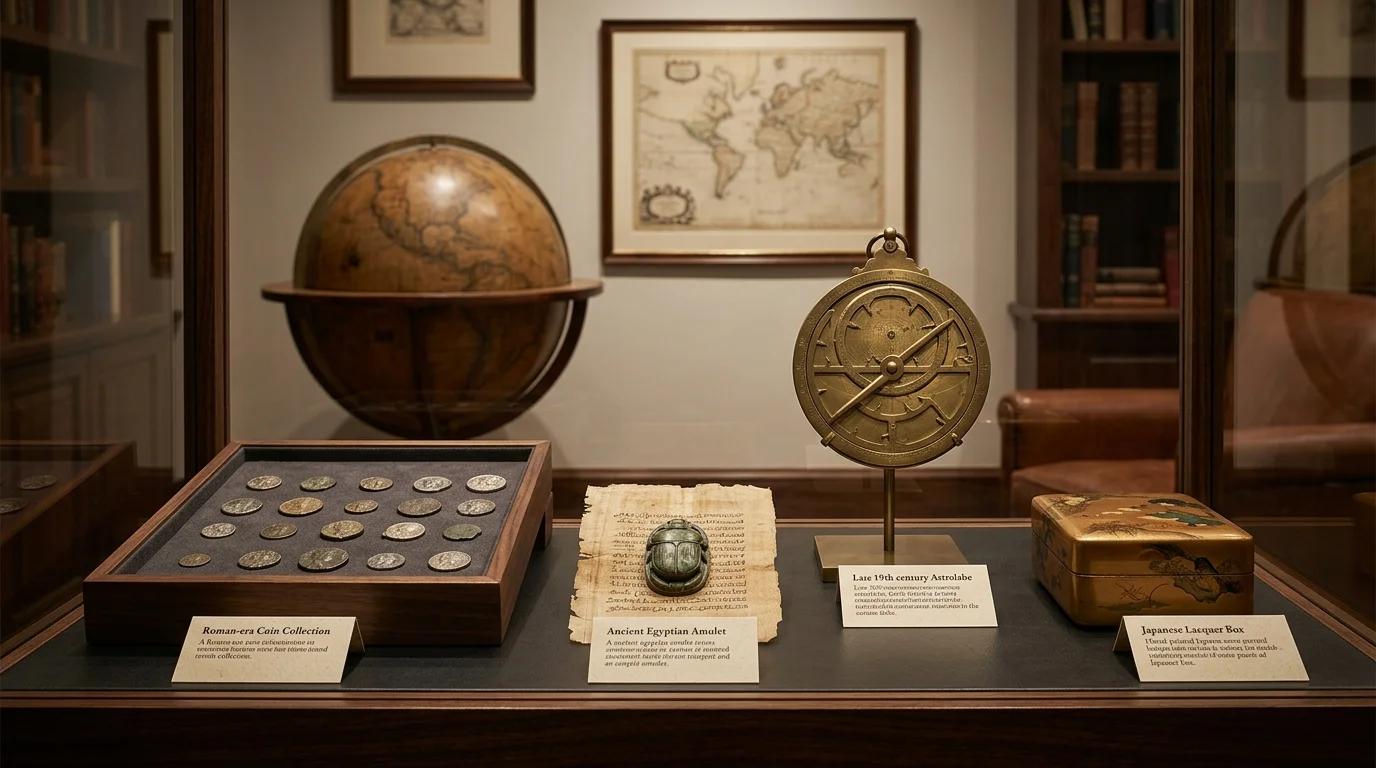
A vintage artifact loses half its magic when poorly displayed. Whether you collect ancient Roman coins, World War II memorabilia, Victorian medical instruments, or mid-century advertising signs, how you present each piece determines its perceived value and emotional impact. Vintage artifact showcase ideas have evolved from simple glass cases into immersive, narrative-driven environments that protect artifacts while telling compelling stories. This article delivers 12 professional-grade showcase strategies used by top antique dealers, museum curators, and high-end private collectors.
Why Showcase Design Matters for Vintage Artifacts
Proper showcasing accomplishes three critical goals: preservation (UV filtering, humidity control, dust prevention), engagement (visual hierarchy, lighting focus, texturing), and security (tamper-proof mounts, alarm integration). Poor displays cause fading, corrosion, accidental damage, and buyer disinterest. Advanced collectors recognize that the showcase itself becomes part of the artifact’s narrative.
Core Principles of Effective Vintage Artifact Displays
| Principle | Application | Benefit |
|---|---|---|
| Zoning by Era | Group artifacts within 50-year production windows | Contextual coherence |
| Lighting Ratio | 3:1 spotlight-to-ambient lighting ratio | Depth and drama |
| Elevated Horizon | Center artifact at 58 inches eye level | Ergonomic viewing |
| Negative Space | 40% artifact, 60% empty or filler space | Reduced visual clutter |
| Material Sympathy | Wood with wood, metal with metal | Texture harmony |
| Label Positioning | Bottom-right corner, 12-point sans-serif font | Readability without distraction |
12 Advanced Vintage Artifact Showcase Ideas
1. The Chronological Wall Timeline
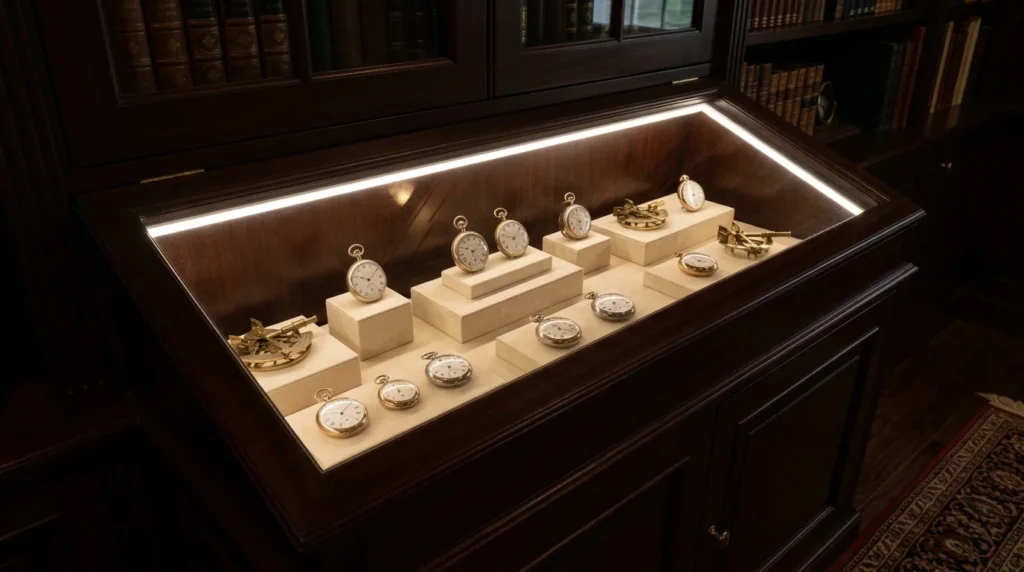
Mount artifacts on floating shelves with laser-etched acrylic dates below each piece. Use hidden LED strips (3000K color temperature) to cast soft shadows. Ideal for typewriter collections, telephones, or cameras. Space items 8–12 inches apart to allow side viewing.
2. The Cabinet of Curiosities
Repurpose an antique apothecary chest or printer’s tray. Fill each compartment with a different small artifact: coins, thimbles, buttons, fossils, or watch gears. Back each compartment with black velour to create depth. Label compartments using brass pin tags.
3. The Shadow Box Theatre
Deep-set (4–6 inch) shadow boxes with hinged glass fronts work perfectly for flat artifacts: vintage postcards, medals, daguerreotypes, or lace. Install micro-gimbaled LED spots (adjustable beam angle 15–60 degrees) to highlight textures. Add a 45-degree mirrored back corner to reflect unseen details.
4. The Industrial Glass and Steel Case
For heavy artifacts (typewriters, phonographs, cast iron toys), use powder-coated steel frames with tempered glass panels. Incorporate sliding magnetic locks. Raise the case on 6-inch casters for mobility. This industrial aesthetic complements 1920s–1960s artifacts.
5. The Thematic Vignette
Create a period-authentic room corner: a 1950s diner table with a jukebox, menu, and soda fountain glass. Or a Civil War desk with inkwell, letter, and field glasses. Vignettes increase emotional connection and are especially effective for retail antique shops.
6. The Floating Plexiglass Illusion
Suspend small, lightweight artifacts (feathers, arrowheads, brooches, keys) between two sheets of optical-grade acrylic using nylon fishing line (2lb test). The artifact appears to float in mid-air. Requires dust-free assembly and anti-static acrylic treatment.
7. The Rotating Carousel Tower
Motorized turntables inside glass cylinders allow 360-degree viewing of three-dimensional artifacts: vases, decanters, skulls, or sculptures. Set rotation speed to 1–2 RPM. Ideal for museum installations where floor space is limited.
8. The Repurposed Vintage Furniture Display
Convert an old radio cabinet into a coin or watch display. Replace the speaker grille with a hinged glass panel. Install velvet-lined drawers where records once sat. This method preserves antique furniture while creating hidden storage.
9. The Humidity-Controlled Sealed Showcase
For organic artifacts (leather-bound books, wool uniforms, taxidermy, birch bark canoes), use acrylic cases with silica gel canisters and mini hygrometers. Maintain 45–50% relative humidity. Add a rubber gasket seal to prevent external air exchange.
10. The Multi-Level Step Display
Acrylic stair-step risers (2-inch, 4-inch, 6-inch heights) arranged in a zigzag pattern allow viewing of 30+ small artifacts in a 24-inch-wide case. Perfect for thimbles, spoons, pins, or medallions. Label each step with laser-engraved acrylic strips.
11. The Backlit Silhouette Panel
For translucent artifacts (stained glass fragments, tintypes, milk glass, celluloid jewelry), install a 5000K LED light panel behind a frosted acrylic diffuser. The artifact becomes a glowing silhouette. Use black museum board as the front matte.
12. The Interactive Touchless Display
For high-value artifacts (original letters, signed photographs, fragile textiles), install motion-sensor spotlights that illuminate only when a visitor stands within 18 inches. Pair with QR code labels that link to audio descriptions or high-resolution zoomable images.
Lighting Specifications for Vintage Artifact Showcases
| Artifact Type | Maximum Lux | Color Temperature | UV Filter Required |
|---|---|---|---|
| Textiles & Paper | 50 lux | 2700K | Yes (99% UV block) |
| Painted Surfaces | 150 lux | 3000K | Yes |
| Metal & Ceramics | 300 lux | 3500K | Optional |
| Glass & Crystal | 500 lux | 4000K | No |
| Fossil & Stone | 200 lux | 3500K | No |
Pro tip: Use fiber optic lighting (cold light) for heat-sensitive artifacts. Never use halogen or incandescent bulbs inside sealed cases.
Conservation Considerations Before Showcasing
Every artifact must be stabilized before display. For paper: deacidification spray and encapsulation in Mylar. For metals: microcrystalline wax coating (Renaissance Wax) to prevent oxidation. For wood: reversible adhesive consolidation of cracks. For textiles: vacuuming with a HEPA filter and tulle backing to distribute weight. Document all treatments with time-stamped photographs.
Security Measures for High-Value Vintage Artifact Displays
- Adhesive security mounts: Museum putty for small items (Quakehold!)
- Tensile wire: Stainless steel 0.5mm wire through coin or medallion holes
- Magnetic clamps: For books held open to a specific page
- Alarm systems: Glass break sensors and micro-switches on case doors
- Camera placement: Overhead 4K with motion tracking for cases valued above $10,000
Labeling and Storytelling Techniques
A label should contain: object name, date, region, material, dimension, and a one-sentence story hook. Example: “Civil War Canteen – 1863 – Pennsylvania – Tin and Wool – ‘Carried through the Battle of Gettysburg by Private James Reed, 24th Michigan.’” Use acid-free paper labels laminated with matte UV film. Place labels at a consistent 10-degree tilt for easy reading.
Showcase Maintenance Schedule
| Frequency | Action |
|---|---|
| Daily | Dust glass exterior with microfiber cloth |
| Weekly | Check hygrometers and silica gel color |
| Monthly | Clean interior with canned air (no vacuums) |
| Quarterly | Inspect mounts for loosening |
| Annually | Replace UV-filtering films and LED drivers |
| Biennially | Remove artifacts, deep clean case, reapply conservation coatings |
DIY vs. Professional Showcase Fabrication
Custom museum showcases from suppliers (Small Corp., Gaylord, Display Design) cost 500–5,000 per linear foot but include UV-rated glass, archival adhesives, and climate seals. DIY showcases using IKEA Detolf cabinets (80)withaddedweatherstripping,UVfilm,andLEDstripscostunder150 but lack security and precision humidity control. For artifacts valued above $2,000 total, invest in professional fabrication.
Examples of Thematic Showcase Layouts
- Maritime Collection: Rope-framed shadow boxes, navy blue felt, brass labels, wave-pattern risers
- Veteran Military Display: Uniform on mannequin with dog tags on the exterior, medals in a recessed velvet tray, letters in a side pocket
- Vintage Pharmacy: Apothecary jars on stepped shelves, mortar and pestle as centerpiece, prescription ledger open to a notable page
- Early Computing: Transparent acrylic towers showing circuit boards, timeline of processors underneath, interactive power button that lights an LED
Budget-Friendly Vintage Artifact Showcase Ideas
For collectors starting with under 500:usefloatingpictureledgeshelves(15 each) with museum wax. Repurpose fishing tackle boxes for coin display. Convert an old briefcase into a portable shadow box. Use plate stands (metal easels) from dollar stores for ceramic artifacts. The key is not cost but consistency: all displays in one room should share material and color language.
Common Showcase Mistakes to Avoid
- Overcrowding: More than 12 items in a 36-inch case creates confusion
- Direct sunlight: Even 15 minutes can fade a 19th-century photograph
- Touching artifacts to glass: Condensation forms between surfaces
- Missing labels: 70% of viewers will not ask what an artifact is
- Inconsistent heights: All artifacts should have their key detail at roughly the same eye level
Future Trends in Vintage Artifact Showcasing
- Augmented reality labels: Point phone at artifact to see animated usage
- Biometric cases: Fingerprint unlocking for private collections
- Phase-change materials: Passive thermal regulation inside sealed cases
- Recycled acrylic: Eco-friendly alternatives to virgin materials
Conclusion
Mastering vintage artifact showcase ideas separates a cluttered storage shelf from a curated collection worthy of admiration. Implement zoning by era, maintain strict lighting ratios, always prioritize conservation over aesthetics, and never skip proper labeling. Whether you build a floating Plexiglass illusion or a repurposed radio cabinet, consistency in materials and storytelling will elevate every artifact you own.
Frequently Asked Questions (FAQs)
Q1: What is the best lighting for showcasing vintage paper artifacts?
A: Fiber optic or LED lighting at 50 lux maximum, 2700K color temperature, with 99% UV filtering. Never use halogen or fluorescent bulbs.
Q2: How do I prevent dust from entering my vintage artifact showcase?
A: Use weather stripping (closed-cell foam) around all glass-to-frame junctions. Install a positive pressure HEPA filter fan if the case has active cooling. For static cases, accept dust and clean quarterly with canned air.
Q3: Can I mix different types of artifacts in one showcase?
A: Yes, but only if they share the same environmental requirements. Never mix paper (needs low light, 40-50% RH) with metal (higher light, 35-40% RH) in a sealed case.
Q4: What is the ideal height for a wall-mounted vintage artifact display?
A: Center of the display at 58 inches from floor (average adult eye level). For children’s museums or lower viewers, 48 inches. For seated viewing (wheelchair), 42 inches.
Q5: How do I securely mount a heavy vintage artifact (10+ pounds) without damaging it?
A: Use a custom cradle made of Ethafom or Volara foam carved to the artifact’s exact shape. Do not use adhesives or straps that touch the artifact. The cradle then sits on a reinforced acrylic shelf.
Q6: What is the cheapest way to showcase vintage coins or small artifacts?
A: A desktop coin display case with a black velvet liner and hinged acrylic lid (costs 25–40 on Amazon). Label each compartment with a white gel pen directly on the acrylic.
Q7: How often should I replace UV-filtering acrylic or glass?
A: UV-filtering layers degrade after 5-7 years of constant exposure to ambient UV (even from fluorescent lights). Replace when the material begins to yellow or show micro-crazing.
Q8: Can vintage artifacts be showcased outdoors or in covered patios?
A: No. Temperature swings, humidity spikes, and airborne pollutants will accelerate decay. For outdoor historical markers, use sealed bronzes or stone replicas only.