Rare Artifact Showcase Guide: Professional Display Strategies for Museums, Collectors, and Curators
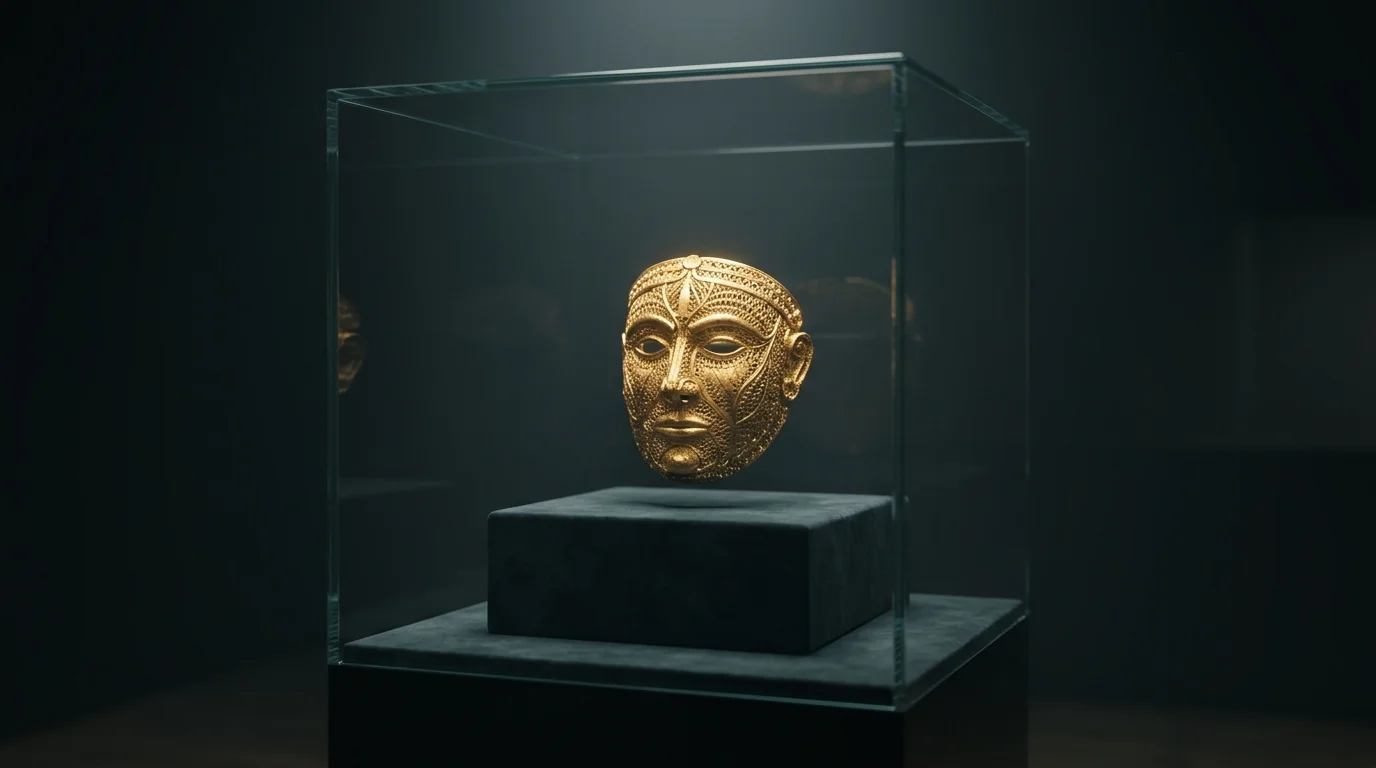
Displaying a rare artifact is a profound responsibility. Whether you are a museum curator preparing a major exhibition, a private collector showcasing a prized acquisition, or a gallery owner presenting historical treasures, the way you present an artifact directly impacts its preservation, its perceived value, and the story it tells to viewers. A poorly displayed artifact risks damage, misinterpretation, or being overlooked entirely. A thoughtfully designed showcase, however, transforms an object into an experience—one that educates, inspires, and preserves history for future generations.
This comprehensive guide explores the essential principles, techniques, and technologies behind professional artifact showcasing, drawing on museum best practices, conservation science, and innovative digital approaches.
The Four Pillars of Artifact Display
Professional artifact display rests on four fundamental pillars that must be balanced in every exhibition decision. These principles apply whether you are working with a multimillion-dollar museum collection or a single cherished family heirloom .
Preservation ensures the artifact remains undamaged during display through environmental control, secure mounting, and material compatibility. Aesthetics presents the artifact in a visually compelling manner that highlights its beauty, craftsmanship, and unique features. Context helps viewers understand the artifact’s historical, cultural, or functional significance through accompanying information and spatial arrangement. Accessibility makes the artifact visible and comprehensible to diverse audiences, including those with physical limitations or different language backgrounds.
Every design choice—from lighting intensity to label placement—should serve these four pillars simultaneously.
Understanding Artifact Conservation Requirements Before Display
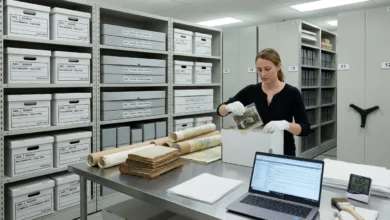
Long before an artifact enters a display case, conservation work begins. Professional museums follow rigorous protocols to ensure that display conditions will not harm the objects they present .
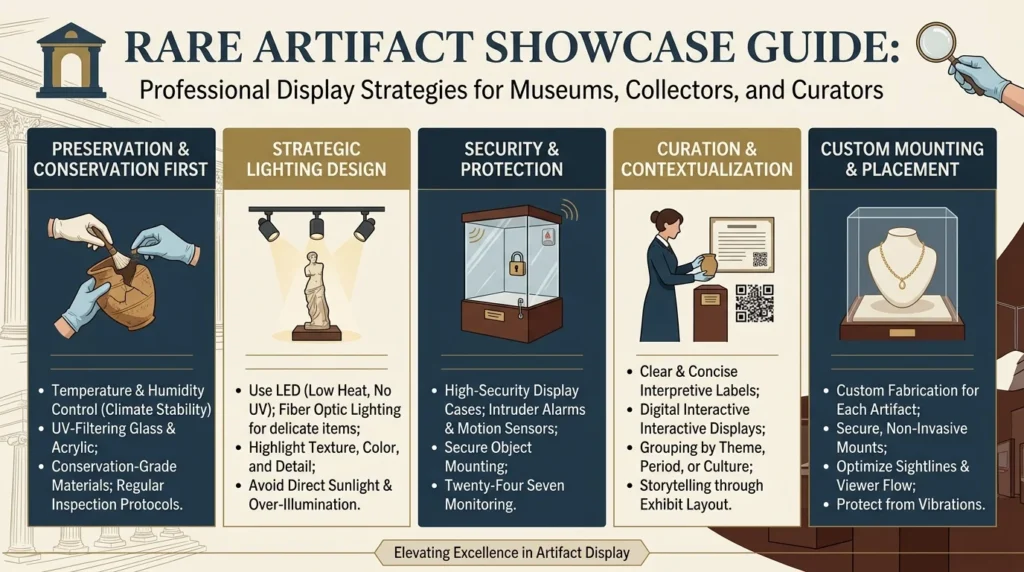
The process starts with material testing. Every material used in a display case—from the wood framing to the paint on the walls to the fabric cushioning an artifact—must be tested for safety. Conservators place these materials in sealed glass jars along with metal coupons made of copper, silver, and lead. The jars are heated in laboratory ovens to accelerate the release of gases. Any material that causes corrosion on the metal coupons is rejected for use in exhibit construction .
Condition reporting is equally critical. When artifacts arrive at a museum, conservators perform thorough visual inspections, comparing each object against high-quality photographs taken previously. Any signs of damage—corrosion, chipping, cracking, or other changes—are meticulously documented. In some cases, emergency treatments are performed to stabilize an object before it can be safely displayed .
Environmental requirements vary dramatically by material type. The table below summarizes key considerations for common artifact categories .
| Artifact Type | Primary Risks | Environmental Requirements | Display Considerations |
|---|---|---|---|
| Iron Objects | Rust and corrosion | Very low humidity (under 25% RH) | Low light levels; often requires microclimate generators |
| Textiles and Costumes | Light damage, fiber degradation | Low light, UV filters, stable humidity | Mannequins or flat mounting with acid-free materials |
| Manuscripts and Paper | Ink fading, paper deterioration | Climate-controlled cases, UV-protective glass | Low light levels; inert construction materials |
| Ceramics and Pottery | Physical breakage, structural instability | Moderate humidity; stable temperature | Custom mounts for unbalanced vessels; 3D-printed supports |
| Jewelry and Metals | Tarnishing, corrosion | Low pollutants; controlled humidity | Secure cases with tamper-proof locks; mirrored backgrounds |
| Wooden Artifacts | Warping, pest infestation | Stable humidity; pest-free environment | Elevated mounts to prevent moisture contact |
Environmental Control Technologies for Display Cases
Modern display cases are far more than glass boxes. They incorporate sophisticated technologies to maintain stable conditions for sensitive artifacts .
Sealed Microclimates
Display cases are designed to be sealed against external air exchange. This prevents humidity fluctuations, dust infiltration, and pollutant exposure. However, even sealed cases gradually equilibrate with outside conditions. To address this, conservators add several layers of protection.
Silica gel is placed inside cases to passively regulate humidity levels. This material absorbs moisture when humidity rises and releases it when conditions become too dry. For extremely sensitive artifacts, activated charcoal or specialized products like Purafil absorb airborne pollutants. Purafil changes color as it becomes saturated with contaminants, providing a visual indicator of when replacement is needed .
Active Environmental Systems
For the most sensitive artifacts, active environmental control becomes necessary. Microclimate generators maintain precise conditions within individual display cases. These devices continuously monitor temperature and humidity, adjusting as needed to keep conditions within specified ranges.
The Canadian Museum of History uses microclimate generators to maintain relative humidity below 25% for rare iron artifacts. Even though display cases are sealed, the air inside constantly tries to reach equilibrium with outside conditions. These active devices counteract that tendency, ensuring iron objects remain stable throughout multi-month exhibitions .
Monitoring and Data Logging
Behind many professional displays, small data loggers are tucked into corners of display cases. These devices continuously record temperature, humidity, and sometimes light exposure. Some provide visual readings for staff checks, while others use Bluetooth technology to transmit data wirelessly for remote monitoring. This constant surveillance allows conservators to intervene before conditions drift into dangerous territory .
Custom Mount Design for Unstable Artifacts
Many artifacts lack the physical stability to stand safely on their own. Ceramic vessels with small bases, oddly shaped objects, and items with existing damage require custom support mounts that secure them without causing harm .
Principles of Safe Mount Design
Professional mount design follows several crucial guidelines. Low-risk materials must be used for constructing mounts, ensuring no chemical interaction with the artifact. Mounts should avoid direct contact with the artifact wherever possible, or use cushioned interfaces when contact is unavoidable. Aesthetic values must be preserved through color harmony and shapes that complement rather than distract from the artifact. Finally, mounts must provide sufficient strength to support the artifact’s full weight and maintain balance .
3D Printing and Digital Mount Fabrication
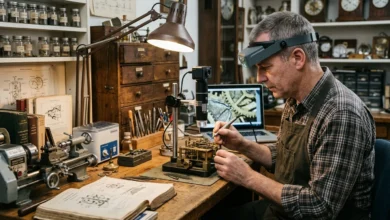
Modern technology has revolutionized mount design. Conservators now use 3D scanning to create precise digital models of artifacts. These models allow them to design custom supports that fit perfectly against an artifact’s unique contours. The supports are then fabricated using 3D printers, ensuring accuracy down to fractions of a millimeter .
A compelling case study involves an Iron Age ceramic drinking cup excavated in Iran. The vessel dated to approximately 1200-800 BCE and had minimal base contact, making it extremely unstable. Researchers used calipers and micrometers to take precise measurements, then created a 3D model using Rhino 7 software. A custom hand-shaped support base was designed with fingers shaped to securely hold the vessel based on its exact dimensions. The support was 3D-printed and then coated with 1mm of dark red polyester velvet fibers for aesthetic harmony. Stability tests confirmed the mount provided excellent balance while remaining virtually invisible to viewers .
Lighting Strategies That Protect and Reveal
Lighting is perhaps the most powerful tool in the exhibitor’s arsenal—and one of the most dangerous to artifacts. Different materials have dramatically different sensitivities to light exposure .
Light Sensitivity Levels
Textiles, watercolors, manuscripts, and photographs are extremely light-sensitive. Even moderate light exposure causes fading and material degradation over time. These artifacts require the lowest light levels, typically 50 lux or less, and benefit from motion-activated lighting that illuminates only when visitors are present.
Oil paintings, wood, leather, and most archaeological materials have moderate sensitivity. They can tolerate slightly higher light levels but still require UV filtration and exposure limits.
Stone, ceramic, and metal artifacts are generally light-stable. While they face minimal risk from illumination, proper lighting still enhances their visual impact without causing harm.
Best Practices for Artifact Lighting
LED lighting has become the standard for museum displays. LEDs emit minimal heat compared to traditional bulbs, reducing thermal stress on artifacts. They also consume less energy and offer precise color rendering. UV filters should be applied to all light sources and display glass, as ultraviolet radiation accelerates fading and material breakdown .
Spotlighting techniques draw attention to key features, while diffuse ambient lighting provides overall illumination without harsh shadows. For three-dimensional artifacts, multiple light sources from different angles eliminate shadows and reveal contours. Some installations use fiber optic lighting to direct pinpoint beams onto specific details, such as gemstone facets or intricate carvings .
Digital Technologies Transforming Artifact Display
The integration of digital technology into physical exhibitions has opened new possibilities for engaging audiences while protecting original objects .
Augmented Reality for Contextual Storytelling
Augmented reality (AR) allows museums to layer digital information directly onto physical artifacts. Visitors using smartphones or tablets can point their devices at an object and see animated reconstructions, historical scenes, or detailed annotations that would be impossible to include on traditional labels .
The Echoes of Bronze project at New York University demonstrates this potential. Visitors to a gallery of ancient Chinese bronze vessels can scan an object to reveal animated scenes showing how the vessel was used in rituals. Motifs like dragons, phoenixes, and taotie masks appear to unfold from the bronze surface, telling stories of power, spirituality, and ceremony. The experience transforms passive observation into active discovery .
Photogrammetry and 3D Models
Photogrammetry combines multiple overlapping photographs to create detailed three-dimensional digital models of artifacts. The Cleveland Museum of Art has used this technique to allow visitors to examine miniature artworks at magnifications impossible with physical viewing .
In their exhibition China through the Magnifying Glass, the museum selected ten miniatures for photogrammetry modeling. The resulting 3D models are animated with captions that point out unique vantage points—markings on the base of a vase, a creature visible only on the back of an object, minuscule inscriptions that would otherwise be invisible in a display case. Visitors can rotate, enlarge, and examine these models from any angle .
The museum has digitized 98% of its collection and maintains more than 1,000 3D assets available for public exploration online. This digital accessibility expands the museum’s reach far beyond its physical walls .
Interactive Touchless Displays
Sensor technology enables touchless interactive displays that enhance accessibility while minimizing physical contact with artifacts. Motion sensors detect visitor presence and trigger audiovisual content, creating engaging experiences without requiring any physical interaction with display surfaces. This approach is particularly valuable during health concerns and for artifacts that cannot tolerate frequent handling .
Contextual Display and Narrative Design
Technical considerations of preservation mean nothing if visitors walk away without understanding why an artifact matters. Contextual display bridges this gap .
Creating Narrative Flow
Large artifacts should not be isolated. Instead, they should become part of a narrative flow that guides visitors from one object to the next, revealing connections and relationships. Effective exhibitions consider not just an artifact’s origin but its intended use, the environment it came from, and its journey to the museum .
Supporting materials such as text panels, photographs, videos, and interactive elements provide explanatory narratives. A display of an ancient Roman chariot might be enhanced by background information about its role in society, 3D reconstructions of its use in racing arenas, or detailed accounts of the craftspeople who built it .
Label Design Principles
Labels should be legible, placed at appropriate heights for diverse audiences, and written in clear language. Multilingual labels accommodate international visitors. Digital screens can offer language selection and adjustable text sizes for accessibility .
Showcase Customization by Artifact Type
Different artifact categories require fundamentally different display approaches. The following section outlines specialized considerations for major artifact types .
Historical Artifacts
Historical artifacts require climate-controlled cases with UV-protective glass and inert construction materials. The showcase design should align with the artifact’s era to further immerse viewers. An ancient Egyptian artifact might benefit from subtle gold accents or hieroglyph-inspired designs that echo the time period. Display height should place artifacts at eye level to prevent viewer strain .
Fine Jewelry
Security is paramount for jewelry displays. Cases require tamper-proof locks, shatter-resistant glass, and often alarm systems. Climate control features protect humidity-sensitive materials like opals and pearls. Mirrors placed strategically make items appear larger and more dazzling. Soft neutral backgrounds—black or white velvet—make jewelry stand out. Fiber optic lighting can direct pinpoint beams onto specific gem facets .
Textiles and Costumes
Textiles require support that prevents sagging, creasing, and degradation. Custom mannequins must be made to fit specific garments, using inert materials that will not react chemically. For flat mounting, acid-free materials and UV-protective glass are essential. Specialized pins and threads minimize stress on fabrics. Low light levels with UV filters protect against fading, while stable humidity and temperature prevent fiber weakening and mold growth .
Sculptures and Three-Dimensional Art
Large sculptures require sturdy pedestals made from materials matching the sculpture’s style—wood, stainless steel, or acrylic. Pedestal height should present the sculpture at an optimal viewing angle. Lighting must highlight textures, contours, and dimensions; multiple light sources from different angles eliminate harsh shadows. Smaller sculptures benefit from vitrines or glass cases with rotating bases that allow 360-degree viewing without visitor movement .
Case Study: The First Royals of Europe Exhibition
The Canadian Museum of History’s First Royals of Europe exhibition provides an excellent example of professional artifact display in practice. The exhibition featured objects spanning 6,500 years of history, organized by material culture periods—Copper Age, Bronze Age, and Iron Age .
Conservators faced particular challenges with iron objects from the Iron Age. Despite iron’s historical importance, the metal does not survive the test of time well. To protect these rare artifacts, they were displayed under low light and in very low humidity conditions maintained by microclimate generators .
For less sensitive copper and bronze objects, standard sealed cases with silica gel and pollutant absorbers provided sufficient protection. Every material used in case construction was pre-tested using the accelerated aging method with metal coupons. Data loggers placed throughout the exhibition continuously monitored conditions, allowing staff to respond to any fluctuations .
Accessibility and Inclusive Design
Modern exhibition design prioritizes accessibility for all visitors, regardless of physical ability or background .
Physical accessibility includes proper case heights for wheelchair users, adequate space for maneuverability, and clear sightlines to artifacts. Touchless interactive displays accommodate visitors who cannot use traditional touchscreens. Audio guides and descriptive labels serve visitors with visual impairments.
Multilingual presentation through digital screens accommodates international audiences. Some museums provide text in multiple languages or offer translation devices. Visual storytelling through images, diagrams, and videos helps visitors who struggle with text-heavy interpretations.
Maintenance and Ongoing Care
Displaying an artifact is not a one-time event. Ongoing maintenance ensures continued preservation .
Regular cleaning schedules must account for artifact sensitivity. Cases should be designed with access points that allow conservators to perform routine checks without disrupting the display or risking artifact damage. Environmental data should be reviewed regularly to identify concerning trends before they cause harm.
For long-term exhibitions, periodic condition reassessments are essential. Artifacts may change over time even in optimal conditions. Catching these changes early allows for intervention before irreversible damage occurs.
Frequently Asked Questions (FAQs)
Q1: What is the first step in displaying a rare artifact?
The first step is always conservation assessment. Before any display design begins, have the artifact examined by a qualified conservator who can identify material composition, existing damage, environmental requirements, and handling protocols. Displaying an artifact without understanding its preservation needs risks irreversible damage.
Q2: How do I choose the right display case for my artifact?
Selection depends on artifact size, material sensitivity, security requirements, and display duration. For sensitive items like textiles or paper, choose sealed cases with UV-protective glass and climate control capabilities. For valuable items like jewelry, prioritize security features. Always select inert construction materials that have passed accelerated aging tests.
Q3: Can I display fragile artifacts without professional conservation training?
For valuable or historically significant artifacts, professional conservation guidance is strongly recommended. However, for personal collections of lower-stakes items, you can follow basic principles: avoid direct sunlight, maintain stable humidity and temperature, use archival-quality mounting materials, and never use adhesives or paints directly on artifacts.
Q4: How important is lighting for artifact display?
Lighting is critically important both for preservation and visual impact. The wrong lighting can cause fading, heating damage, and poor visibility. Use LED sources with UV filters, keep light levels appropriate for material sensitivity, and consider motion-activated lighting to reduce total exposure time for sensitive objects.
Q5: What are the signs that my displayed artifact is deteriorating?
Watch for color changes or fading, surface cracking or flaking, corrosion or tarnishing on metals, mold growth or musty odors, and warping or dimensional changes. If you observe any of these signs, remove the artifact from display immediately and consult a conservator.
Q6: How often should display cases be monitored?
Temperature and humidity should be checked daily for sensitive artifacts or weekly for stable collections. Data loggers provide continuous monitoring between manual checks. Visual inspections of artifacts should occur monthly, with detailed condition assessments annually or before and after loan periods.
Q7: Is it safe to use digital technology like AR near original artifacts?
Yes, when properly implemented. Augmented reality uses cameras and screens that pose no direct risk to artifacts. However, physical installation of any technology near artifacts must be carefully managed to prevent accidental contact, and lighting for digital capture must meet conservation standards.
Q8: What is the biggest mistake people make when displaying artifacts?
The most common and damaging mistake is using inappropriate materials in direct contact with artifacts. Regular wood, standard adhesives, rubber padding, and many fabrics off-gas chemicals that cause corrosion, staining, and material degradation. Always use archival-quality, tested materials for any surface or mount touching an artifact.
Conclusion
Displaying rare artifacts is both a science and an art. The science demands rigorous attention to environmental control, material compatibility, and structural support. The art requires thoughtful design that reveals beauty, tells stories, and creates meaningful connections between viewers and the past.
Whether you are curating a major museum exhibition or displaying a single cherished object in your home, the same principles apply. Prioritize preservation above all else. Choose materials and methods that will not harm the artifact. Use lighting to reveal rather than damage. Provide context that transforms viewing into understanding. And remember that you are a temporary steward—your choices today determine whether this artifact will survive for future generations to appreciate.
The technologies available to exhibitors have never been more sophisticated, from 3D-printed custom mounts to augmented reality storytelling. But the fundamental goal remains unchanged: to honor the artifact’s journey through time and share its significance with those who encounter it today.