Hidden Collectible Market Insights: Uncovering Undervalued Treasures Before the Next Boom
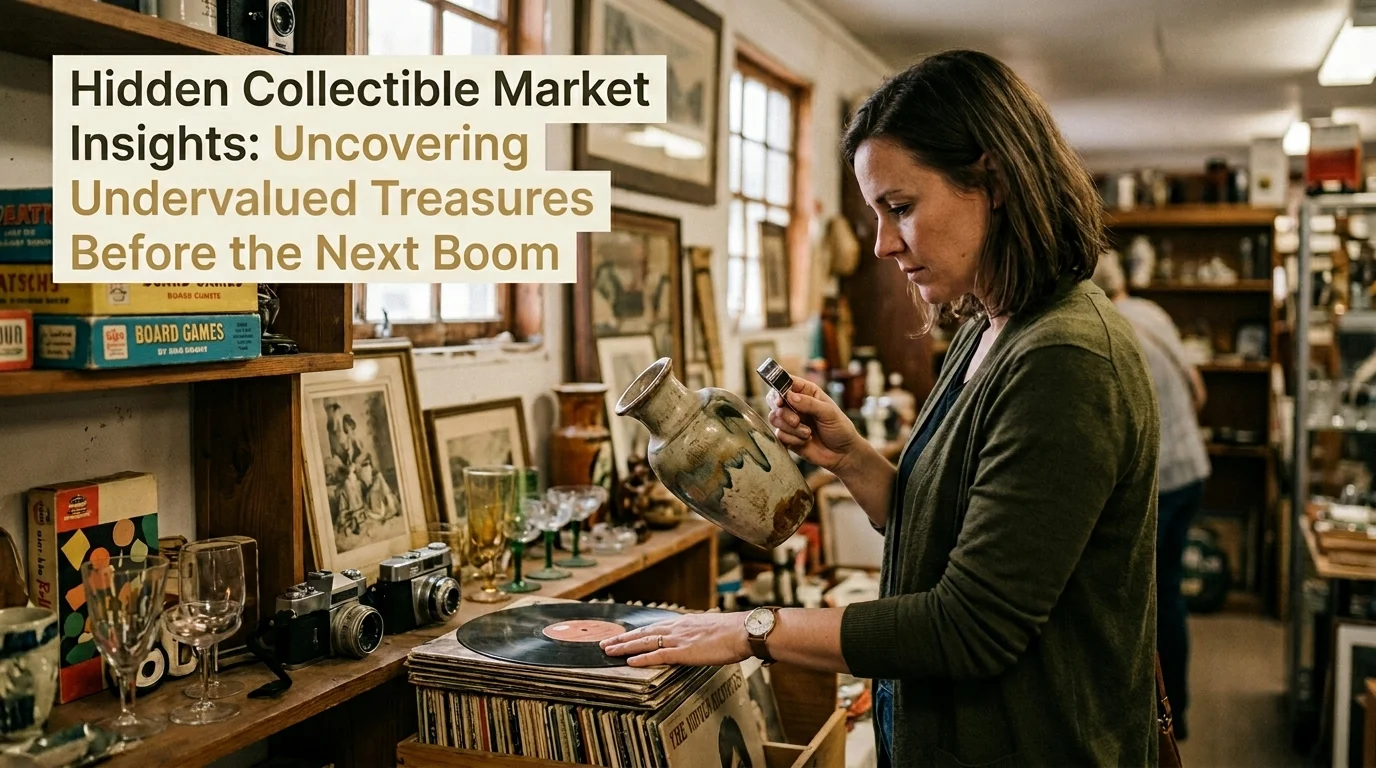
The collectibles market operates on a simple yet powerful principle: today’s overlooked niche becomes tomorrow’s gold rush. From sneakers and sealed video games to vintage toys and VHS tapes, history has repeatedly shown that the most significant returns go to those who recognize emerging markets before the mainstream catches on . In 2026, the landscape of hidden collectible opportunities is shifting rapidly, driven by changing consumer psychology, technological innovation, and a growing appetite for authenticity.
This guide reveals the underground markets quietly gaining momentum, the psychological forces driving collector behavior, and actionable strategies for identifying undervalued assets before prices skyrocket.
The Life Cycle of Collectible Booms: Understanding the Pattern
Every major collectible boom follows a predictable sequence. Understanding this cycle is essential for anyone looking to profit from hidden markets .
Phase One: The Discovery Stage
A small group of collectors discovers a niche that most people ignore. They are drawn not by profit potential but by rarity, cultural connection, or personal meaning. This authenticity provides the initial spark .
Phase Two: The Awareness Stage
Word spreads through online forums, social media communities, and specialized blogs. Demand begins to rise, but supply remains finite. Early adopters who bought in during Phase One start seeing value appreciation.
Phase Three: The Mainstream Shift
Outsiders notice the buzz and rising prices. Speculators enter the market. Demand accelerates rapidly, supply dries up, and prices skyrocket. This is when hidden markets become visible to the general public .
Phase Four: The Peak and Correction
Markets eventually cool. Prices stabilize or decline as novelty fades and counterfeit concerns emerge. Attention shifts to the next overlooked category .
The biggest returns consistently go to those who recognize these markets before Phase Three begins .
Foreign Collectibles: The Most Overlooked Opportunity in 2026
Foreign editions of collectibles represent perhaps the most undervalued segment of the entire market today. For decades, collectors have focused exclusively on domestic releases, operating under the mistaken belief that local versions hold the highest value .
Why Foreign Collectibles Remain Hidden
Several factors have kept these markets under the radar:
Outdated Bias – Many collectors dismiss foreign editions as “reprints” or “novelties” without understanding their true scarcity and cultural significance .
Limited Awareness – Most collectors simply do not know these markets exist. Information has historically been difficult to access across language barriers and geographic distances .
Neglected Supply – Collections of foreign collectibles were often ignored, disregarded, or even thrown away due to the mistaken belief they had no value. This neglect has further increased scarcity in markets already defined by finite supply .
Categories with Hidden Potential
Foreign collectibles span multiple categories, each offering unique opportunities:
| Category | Hidden Opportunity | Why It Matters |
|---|---|---|
| Foreign Comic Books | International editions with exclusive cover art | Often rarer than US versions; different printing standards create unique variants |
| Pokémon Card Variants | Japanese and other language editions | Different artwork, holofoil patterns, and release schedules |
| Region-Exclusive Games | Titles that never crossed local borders | Extremely limited print runs; cultural artifacts of gaming history |
| International Action Figures | Variants sold only in specific countries | Different paint applications, accessories, and packaging |
These pieces are now being recognized as potentially the rarest and most significant versions of items collectors already love .
Signs of Growing Momentum
The signs of a coming shift are already visible. Sales data shows increasing buying activity from overseas sources. Communities focused on international collectibles are growing. Markets abroad are drying up as awareness spreads .
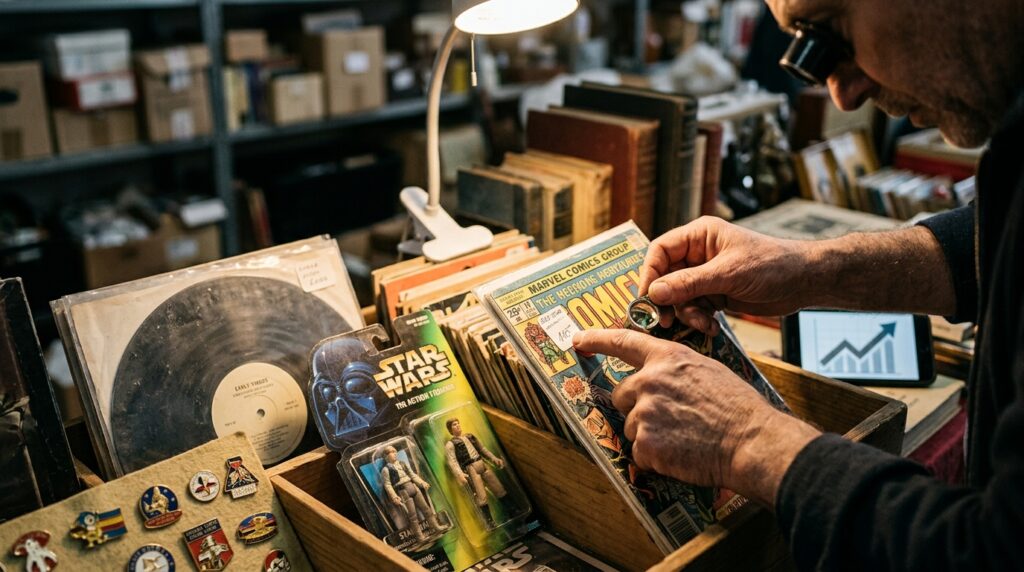
The Psychology Driving Hidden Collectible Markets
Understanding why people collect is as important as knowing what to collect. The emotional drivers behind modern collecting reveal where hidden value may emerge next.
The Thrill of Controlled Surprise
Blind boxes and mystery packs have exploded into a multi-billion dollar market because they offer something predictable retail cannot: genuine surprise. The global blind-box market, valued at 11.38billionin2021,isprojectedtoreach24.2 billion by 2033 .
The psychology is rooted in variable-ratio reinforcement. Rewards appear after a random number of attempts, keeping buyers engaged through the anticipation of a potential rare find. This same mechanism drives slot machine engagement and explains why collectors chase rare items even when odds are slim .
Nostalgia as Currency
Adult collectors—dubbed “kidults”—are driving a premium layer of the toy market where figures and mystery drops function as lifestyle objects rather than children’s playthings .
Nostalgia explains why plush toys from the 1990s are experiencing dramatic resale values. Original Beanie Babies with tags can fetch hundreds or thousands of pounds. Retired Jellycat originals regularly sell for several thousand pounds. Original Care Bears with original packaging hit the several hundred mark .
Identity and Social Signaling
Modern collecting has evolved beyond simple accumulation. Collectors today ask not only what is rare but what fits their personal style, what travels well on social media, what looks good on display, and what still feels fun after the algorithm has moved on .
The object itself may be small, but the emotional job it performs is significant. Collectibles offer controlled surprise in a period when many purchases feel joyless and overly rational. They create tiny ceremonies—opening the box, guessing the item, trading with friends, posting the reveal, deciding where it belongs .
Technology Is Creating New Hidden Markets
Technological innovation is reshaping how collectibles are bought, sold, and authenticated, creating entirely new categories of hidden opportunity.
The Digital Vending Machine Model
Startups like Courtyard have revolutionized trading card collecting by introducing mystery pack mechanics to digital platforms. Customers pay a fixed amount for an unknown card from a massive inventory stored in secure vaults. If disappointed, they can sell back immediately for 90% of market value, creating unprecedented liquidity in a category historically difficult to navigate .
The growth has been staggering. Courtyard grew from 50,000inmonthlymerchandisesalesinJanuary2024to50 million per month just eighteen months later . The same card is sold an average of eight times per month on the platform.
Blockchain Authentication
Technology is solving the authenticity problem that has long plagued collectibles. Items with blockchain-based authentication and AI verification can command starting bids 30% higher than comparable unverified pieces .
For newcomers to collecting, technical verification lowers the barrier to entry. The technology handles the expertise gap, transforming collecting from an expert’s game into accessible participation .
Traditional Antiques: Unexpected Resurgence Categories
While digital collectibles grab headlines, traditional antiques are experiencing unexpected demand shifts. Several categories are gaining momentum in 2026.
Surrealist-Inspired Furniture
After periods of design restraint and neutral palettes, collectors are seeking pieces with off-beat personality. Vintage objects with unconventional forms that hint at faces, figures, animals, or optical tricks represent the current sweet spot .
Original Surrealist pieces from the 1920s and 1930s are extremely rare, making vintage pieces in this style highly desirable as substitutes .
Murano Glass
Renewed enthusiasm for Venetian glassware has made Murano pieces highly sought after. Chandeliers rank among the most purchased vintage lighting items on major marketplaces. Table lamps, vases, and bowls are also popular, with signed examples and clear color palettes proving easiest to resell .
Scandinavian Pine from the 1970s
A specific niche within Scandinavian design is gaining attention: the chunky, visibly grained pine furniture from 1970s Scandinavia. This style moved away from refined blonde wood toward solid pine left untreated or lightly oiled, featuring scalloped edges and pierced details drawing on folk craft traditions .
Demand is focusing on lighting and dining chairs, which are increasingly available through online marketplaces .
Vintage Textiles
As homes move toward spaces defined by history and character rather than uniformity, vintage quilts, wall hangings, and tapestries have become clear expressions of this shift. These pieces work across rooms and functions—folded at the end of a bed, draped over a sofa, or hung as artwork .
Categories to Watch in 2026 and Beyond
Based on market data and expert analysis, several specific categories show strong potential for growth.
Emerging High-Potential Categories
Categories Facing Cooling Demand
Not every collectible retains its heat. Data suggests the following categories may be past their peak:
- Labubu figures (only 2% of surveyed buyers planning future purchases)
- Stanley cups (waning hype)
- Funko Pops (oversaturated market)
- Traditional luxury watches (post-pandemic correction)
How to Identify Hidden Collectible Opportunities
Successful collectors develop a systematic approach to spotting emerging trends before they explode.
Track Social Signals
Social media communities and online forums provide early warning of growing demand. Look for discussions about long waiting lists, early sell-outs, aftermarket price spikes, and passionate community engagement. These are strong indicators to buy in before the boom .
The goal is to be a trendsetter, not a trend follower .
Understand Scarcity Drivers
Finite supply that cannot be replicated is the foundation of collectible value. Look for:
- Limited production runs
- Discontinued product lines
- Manufacturing errors or variations
- Regional exclusives
- Time-limited releases tied to cultural events
Monitor Market Liquidity
The ability to buy and sell easily is increasingly important to collectors. Marketplaces that offer instant buyback options or fee-free trading lower the barrier to entry and attract more participants, driving further price appreciation .
Consider Authentication Technology
Items with verifiable provenance through blockchain or AI certification are commanding premiums. As this technology becomes more widespread, authenticated items will likely outperform unverified equivalents .
Practical Strategies for Entering Hidden Markets
Start Small
Do not invest heavily in any niche until you understand it. Purchase one or two items first. Experience the buying process. Join community discussions. Learn the nuances of condition grading, rarity assessment, and pricing.
Focus on What You Genuinely Enjoy
The most successful collectors focus on categories they personally appreciate. If you dislike an item, you will not enjoy researching it, storing it, or waiting for appreciation. Treat collecting as style, not a stock market .
Preserve Condition and Provenance
Original packaging, tags, and documentation dramatically impact value. A toy with original tags can easily double in value compared to the same item without tags . Store collectibles properly. Document their history. Keep receipts and authentication certificates.
Build Networks Before You Need Them
Establish relationships with dealers, auction houses, and other collectors before you are ready to sell. These connections provide market intelligence, sourcing opportunities, and exit options when the time comes.
Risks and Considerations
Counterfeit Concerns
As markets heat up, counterfeiters follow. Learn authentication basics for your chosen category. Buy from reputable sources. Verify serial numbers, holograms, and other security features when available.
Market Timing Challenges
Predicting the exact peak of any collectible boom is impossible. The goal is not to time the market perfectly but to recognize value before it becomes obvious to everyone. Profit-taking is rarely wrong.
Storage and Insurance
Physical collectibles require proper storage. Climate control, security, and insurance add costs that impact net returns. Factor these expenses into your purchasing decisions.
Frequently Asked Questions (FAQs)
Q1: What is the single most overlooked collectible category right now?
Foreign editions of popular collectibles—comics, trading cards, games, and toys from international markets—represent the most undervalued segment. For decades, collectors have ignored these due to bias toward domestic releases, creating scarcity and low prices that will likely correct as global awareness grows .
Q2: How can I tell if a niche market is about to explode?
Look for three signals: low awareness among mainstream collectors, finite supply that cannot be replicated, and growing community engagement on social media and forums. When you see passionate discussions, waiting lists, and aftermarket price spikes for items still available at retail, the shift has begun .
Q3: Are blind boxes a good investment or just gambling?
Blind boxes combine elements of both. The expected value of most blind box purchases is negative—most pulls are worth less than the purchase price. However, limited editions and rare variants can appreciate significantly. Treat blind boxes as entertainment with occasional upside, not a primary investment strategy .
Q4: What role does technology play in modern collectibles?
Technology is transforming the market through digital authentication, blockchain provenance, and gamified buying experiences. Items with verified digital certification can command 30% premiums over unverified pieces. Digital mystery pack platforms have grown from 50,000to50 million in monthly sales within eighteen months .
Q5: How do I start collecting with a limited budget?
Focus on one narrow niche rather than spreading across categories. Learn everything about that niche—rarity factors, condition grading, pricing trends. Buy the best quality you can afford within that niche. Join community forums. Build relationships with dealers. Patience and specialization outperform scattered buying every time.
Q6: Are traditional antiques still worth collecting alongside modern collectibles?
Yes, but the categories are shifting. Heavy, formal antiques are cooling while pieces with off-beat personality, Surrealist influences, and vintage textiles are gaining momentum. Murano glass, 1970s Scandinavian pine, and wall-mounted devotional objects are particularly strong in 2026 .
Q7: How important is original packaging for value retention?
Extremely important. Original tags can double a toy’s value. Original boxes, certificates of authenticity, and documentation significantly impact resale prices. Store packaging carefully. Never discard original materials .
Q8: What is the biggest mistake new collectors make?
Chasing already-hot trends rather than identifying emerging ones. By the time a category is making headlines, the best entry prices are gone. The biggest returns go to those who recognize potential before mainstream awareness, not after .
Conclusion
The hidden collectible markets of 2026 offer opportunities for those willing to look beyond the obvious. Foreign editions, niche plush toys, authenticated trading cards, and off-beat antiques are quietly gaining momentum while most collectors focus elsewhere.
The pattern never changes: collectors first, investors second, speculators last . Those who enter markets driven by genuine passion and curiosity—rather than FOMO and get-rich-quick hopes—consistently outperform. They build positions before the rush, hold through volatility, and exit when the market has recognized what they saw all along.
The next gold rush in collectibles will not be driven by what is new. It will be sparked by what has been overlooked . The question is not whether these hidden markets will have their moment. The question is who will be holding them when that moment arrives.