The Mysterious Old Technology Guide: Uncovering, Identifying, and Understanding Forgotten Innovations
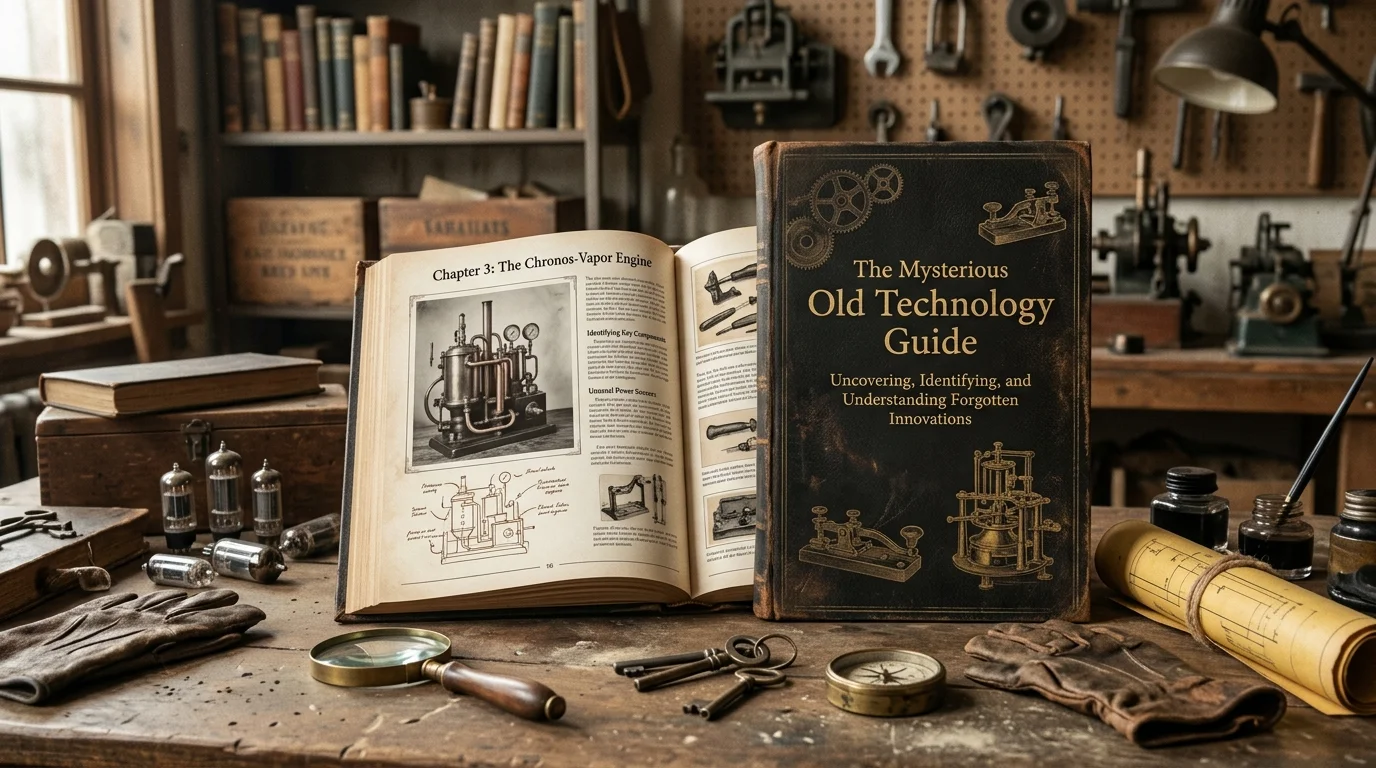
The world of old technology is filled with devices, instruments, and mechanical wonders that baffle modern observers. From cryptic Victorian medical apparatuses to pre-digital communication devices and obsolete computing hardware, these mysterious objects represent a fascinating intersection of ingenuity, limitation, and historical context that has since been lost to mainstream knowledge. This comprehensive guide provides collectors, historians, and curious enthusiasts with systematic strategies for identifying, evaluating, and preserving the most enigmatic technologies of the past.
Understanding What Makes Old Technology Mysterious
Technology becomes mysterious when its purpose, operation, or significance is not immediately apparent to contemporary observers. This opacity arises from several factors. The device may rely on principles that have been superseded or abandoned, such as mechanical computing or pneumatic control systems. The object might be incomplete, missing critical components that would reveal its function. Alternatively, the technology may have served a specialized purpose in a trade or profession that no longer exists in the same form.
The most mysterious old technologies often share common characteristics. They feature unfamiliar interfaces without obvious input or output mechanisms. They incorporate materials or manufacturing techniques that are no longer common. They bear cryptic markings, serial numbers, or patent references that require specialized knowledge to interpret. They may show evidence of modification or adaptation for purposes different from their original design. Understanding these characteristics helps collectors recognize potentially significant items that others might overlook.
Major Categories of Mysterious Old Technology
Pre-Electric Communication Devices
Before ubiquitous electricity enabled instant global communication, inventors developed remarkable mechanical and acoustic devices that now perplex modern observers. The mechanical telegraph, including optical telegraph systems using semaphore arms on towers, created networks that spanned countries but left behind few recognizable remnants. What appears to be a simple brass cylinder with lenses may actually be a heliograph for mirror-based Morse code communication over long distances using sunlight.
Acoustic devices including speaking tubes, mechanical amplifiers, and early dictation machines often appear as oddly shaped horns, pipes, or cylinders with no obvious power source. The mechanical dictation machine, using wax cylinders and spring-wound motors, resembles nothing in contemporary offices. The lover’s telegraph, a Victorian device allowing whispered communication between rooms using taut string and membrane receivers, appears as a pair of decorative tin cans connected by cord.
Medical and Therapeutic Instruments
Perhaps no category produces more mysterious objects than historical medicine. Electrical therapy devices from the late 19th and early 20th centuries, including violet ray machines and static electricity generators, feature intimidating arrays of glass vacuum tubes, brass electrodes, and mahogany cabinets with complex switching systems. These devices, used for treating everything from arthritis to hair loss through mild electrical stimulation, are frequently mistaken for torture instruments or pseudo-scientific quackery.
Patent medicine devices represent another rich category. The Perfection Developer for lung and throat diseases, patented in 1903 and produced by the Chicago Health Food Company, appears as a metal box with rubber tubes and glass bulbs. Without its original instructions, its function as an inhaler for medicated vapors is not obvious. Vibratory therapeutic chairs, belt-driven massagers, and magnetic field generators appear as furniture or industrial equipment rather than medical devices.
Calculating and Computing Devices
The history of calculation before electronic computers produced extraordinary mechanical devices that now seem almost magical. The arithmometer, patented in 1820 as the first commercially successful mechanical calculator, uses a complex system of stepped drums and gears visible through glass panels. Later mechanical calculators including Curta calculators, Friden machines, and Marchant calculators feature dense arrays of keys, levers, and numeric displays that operate through sophisticated carry mechanisms requiring no electricity.
Slide rules, once essential tools for engineers, appear as simple wooden or plastic rulers with cryptic logarithmic scales and sliding central sections. The variety of scales including CI, DI, K, Ln, and L becomes meaningful only when one understands logarithmic mathematics. Circular slide rules, cylindrical calculators like the Otis King, and specialized rules for specific professions appear even more mysterious to the uninitiated.
Audio Recording and Playback Devices
Before standardized digital and analog formats, audio technology varied enormously. Wire recorders, which captured sound on thin stainless steel wire, feature spools and magnetic heads but no recognizable tape path. The wire itself, finer than human hair, is nearly invisible and easily mistaken for thread. Disc recorders that cut grooves into blank discs in real time appear as hybrid turntable-drill press devices. Cylinder dictation machines from Dictaphone and Ediphone use mandrels and floating cutting heads in configurations nothing like later phonographs.
Auxetophones and other acoustic amplification devices used horns and diaphragms to amplify sound without electricity. These devices often incorporate exotic materials like mica, aluminum, and specially treated paper in ways that are not obviously functional. Dictaphone dictation belts, introduced in 1947 and used into the 1960s, appear as opaque plastic belts with fine groove patterns that are meaningless without knowledge of the system’s operation.
Industrial and Scientific Instruments
The specialized tools of obsolete trades constitute a vast category of mysterious technology. Transit theodolites with complex telescopic sights, bubble levels, and graduated circles served surveyors for centuries but now appear as oddly configured brass microscopes. Steam engine indicators, which recorded cylinder pressure on paper cards to generate indicator diagrams, feature nested springs, pistons, and rotating drums that have no obvious modern equivalent.
Pneumatic tube system components, including carriers, dispatch stations, and switching mechanisms, appear as brass cylinders, cast iron door mechanisms, and compressed air valves whose purpose is not apparent when removed from the larger system. Chemical analysis apparatus including polarimeters, refractometers, and colorimeters often appear as brass tubes with prisms, glass sample chambers, and eyepieces that could be mistaken for military or astronomical instruments.
Identification Strategies and Resources
Decoding Markings and Patent Numbers
The most direct route to identifying a mysterious old technology is deciphering its markings. Patent numbers are particularly valuable, as they provide dates and often include the inventor’s name and claimed function. The United States Patent and Trademark Office maintains searchable databases of all patents issued since 1790. Numbers preceded by “PAT” or “Patented” followed by a date rather than a number indicate the actual patent date, which can be searched manually or through online patent collections.
Serial numbers, model numbers, and manufacturer names should be recorded exactly as they appear. Case sensitivity matters less than character-by-character accuracy, as optical character recognition errors in digital archives can make precise matches elusive. The Vintage Technology Association maintains databases of manufacturer marks and serial number ranges for many categories of obsolete equipment.
Physical Examination for Functional Clues
When markings provide limited information, physical examination reveals functional clues. Identify any input mechanisms including cranks, levers, buttons, or electrical connections. Determine what moves when mechanisms are operated manually. Look for wear patterns that indicate repeated use in specific areas. Examine the interior for residue of materials processed by the device—ink, wax, chemical residues, or paper dust often reveal the device’s purpose.
The presence of standardized interfaces provides important clues. Screw threads follow identifiable standards including Whitworth, metric, and various unified thread standards. Electrical connectors changed dramatically over time, with distinctive two-prong non-polarized plugs indicating pre-1960s manufacture. Audio connectors including tip-ring-sleeve (TRS) phone connectors in 1/4 inch and smaller sizes suggest audio equipment, while bayonet-style connectors suggest scientific or military applications.
Online Resources and Community Expertise
Specialized online communities provide the best resource for identifying obscure technology. The Vintage Computer Federation (VCF) forums host experts in computing, calculating, and office equipment. The Antique Radio Forums cover consumer electronics back to the spark gap era. The Smithsonian Institution’s Lemelson Center for the Study of Invention and Innovation maintains research guides for historical technology categories.
The Internet Archive’s collection of trade catalogs, instruction manuals, and technical publications provides searchable access to documentation for thousands of obsolete devices. The HathiTrust Digital Library includes engineering handbooks, chemical apparatus catalogs, and medical instrument compendiums from the 19th and early 20th centuries. These resources often contain the original documentation that makes mysterious devices comprehensible.
Professional Appraisal and Authentication
For potentially valuable mysterious technologies, professional appraisal provides definitive identification. The International Society of Appraisers and the American Society of Appraisers maintain directories of certified appraisers with expertise in scientific instruments, medical antiques, and early technology. Museum curators in relevant departments may provide identification assistance for items with potential research significance, though institutional policies on public inquiries vary.
When seeking professional assistance, document the item thoroughly beforehand. Photograph all sides, interior views, and any markings using good lighting and a neutral background. Record all measurements and note any materials that can be identified. Document any provenance or ownership history, as this information significantly aids identification and affects value.
Value Determinants for Mysterious Old Technology
The market value of mysterious old technology depends on several factors that differ from conventional antiques. Completeness is paramount—a device missing critical components may have minimal value even if the remaining parts are rare. Original documentation including manuals, schematics, and patent copies can multiply value several times over. Working condition commands premium prices for functional categories where operation can be demonstrated.
Rarity functions differently for technology than for decorative arts. Extremely rare items with very low survival rates may have limited value if no collector community actively seeks them. The existence of an “active but obscure” collector base is essential for value realization. Research the frequency of similar items at auction and note whether specific categories command consistent prices or sporadic results.
Provenance from notable owners, institutions, or historical events dramatically increases value. A standard telegraph sounder becomes extraordinary when documented as the unit used at a particular railroad depot during a significant event. University and corporate surplus sales sometimes yield items with institutional provenance that retains value despite the unremarkable appearance of the objects themselves.
Preservation and Restoration Guidelines
Conservation Over Restoration
For most mysterious old technology, professional conservators recommend conservation over restoration. Conservation preserves the existing materials and information content of the object. Restoration attempts to return the object to a previous state, often destroying original finishes, patina, and historical evidence in the process. The collector community generally values original condition, even with wear and non-function, above restored condition.
The primary exception involves mechanical devices where function is essential to the object’s significance. For these items, restoration should be limited to reversible repairs that do not alter original components. Replacement parts should be clearly documented as such, and original parts should be preserved even if non-functional. This approach maintains the object’s historical integrity while allowing demonstration of its original purpose.
Cleaning and Handling Protocols
Before any cleaning, document the device thoroughly through photographs. Remove only loose dirt using soft brushes, compressed air at safe distances, or appropriate vacuum attachments with screens to capture loose parts. Never use water, cleaning solvents, or abrasives without specific knowledge that the materials will tolerate them. Many mysterious devices incorporate unusual materials including early plastics like Bakelite, Catalin, and celluloid that are damaged by common cleaning products.
For electrical and electronic devices, never apply power without professional inspection. Capacitors can hold lethal charges for decades and may fail catastrophically when energized. Deteriorated insulation creates fire and shock hazards. Vacuum tubes may be irreplaceable if damaged. The safe approach is to assume any electrical device is hazardous until proven otherwise by qualified examination.
Storage Environment Requirements
Mysterious old technology requires stable environmental conditions for preservation. Maintain temperatures between 60-70 degrees Fahrenheit and relative humidity between 40-50 percent. Avoid basements subject to dampness and attics subject to temperature extremes. Direct sunlight causes fading, embrittlement, and degradation of many materials including wood, rubber, plastics, and textiles.
Individual storage for each device prevents damage from adjacent items moving or settling. Support all weight-bearing surfaces rather than resting objects on projecting components that may be fragile. Remove batteries from any device containing them, as battery leakage destroys contacts and surrounding materials. For devices with fabric insulation, leather components, or rubber parts, monitor for active deterioration and consult conservators when degradation accelerates.
Frequently Asked Questions
Q: How can I identify an old technology device with no visible markings?
A: Focus on physical examination for functional clues. Identify input mechanisms, output indicators, and any moving parts. Note the material types and manufacturing methods. Compare the device to images in trade catalogs available through the Internet Archive. Post clear photographs to specialized forums like the Vintage Computer Federation or Antique Radios communities.
Q: Are mysterious old technologies generally valuable?
A: Value varies enormously based on completeness, condition, rarity, and the existence of active collector interest. Some categories including early mechanical calculators, pre-1930 audio equipment, and patent medicine devices have strong markets. Others including many industrial instruments and laboratory devices have limited collector bases. Research completed auction sales for comparable items.
Q: Should I attempt to make a mysterious old device work?
A: Generally no. Applying power or force to unknown devices risks damage to irreplaceable components and personal injury. For potential demonstration purposes, consult with specialists in the specific technology category. Many museum professionals recommend preserving devices in non-working original condition rather than attempting functional restoration.
Q: What is the most mysterious category of old technology?
A: Medical and therapeutic devices from the 1880-1930 period produce the most frequent identification requests. Electrical therapy machines, patent medicine vaporizers, and diagnostic instruments often incorporate unfamiliar components and lack obvious operational logic from modern perspectives.
Q: How can I find documentation for an identified device?
A: Search the Internet Archive for trade catalogs and instruction manuals. Search the HathiTrust Digital Library for technical publications. Check the Smithsonian Institution’s library catalog for holdings. Contact specialized museums including the Museum of Communication in Seattle, the Vintage Radio and Communications Museum, and the Computer History Museum in Mountain View.
Q: What tools should I use to clean a mysterious old device?
A: Soft natural-bristle brushes, compressed air at safe distances, and vacuum attachments with screen covers. Never use water, solvents, abrasives, or household cleaners. For metal parts, dry cleaning methods only unless you have specific conservation training. For electronic devices, never allow moisture near internal components.
Q: How can I find a buyer for a mysterious old technology device?
A: Specialized auction houses including RRAuction, Bonhams, and Skinner handle scientific instruments and early technology. Online marketplaces including eBay reach broad audiences but require accurate identification for proper pricing. Specialist dealers in antique scientific instruments, medical antiques, and vintage computing may make direct purchase offers.