Mysterious Collectible Discoveries: Unearthing Hidden Treasures That Rewrite History

Collecting has always been a pursuit of passion, patience, and luck. But every so often, an ordinary person stumbles upon something extraordinary—an object buried in dust, hidden in an attic, or forgotten in a thrift store that turns out to be a lost masterpiece, a relic of immense historical value, or a treasure worth millions. These mysterious collectible discoveries captivate the world, not just for their monetary worth, but for the stories they tell about forgotten eras, secret lives, and unexpected fortunes. This article dives deep into the most fascinating cases of mysterious collectibles found in the most unlikely places, revealing how these discoveries reshaped history, art, and the very concept of value.
What Defines a Mysterious Collectible Discovery?
A mysterious collectible discovery is not merely an old item. It is an object whose origin, ownership, or significance was unknown, hidden, or misinterpreted for years, decades, or even centuries. These items often surface during estate sales, garage sales, renovations, or archaeological digs. What makes them mysterious is the gap between their humble discovery setting and their true historical or artistic importance. From ancient coins found in couch cushions to Renaissance paintings pulled from farmhouse kitchens, these discoveries challenge our understanding of rarity, provenance, and luck.
Top 10 Most Mysterious Collectible Discoveries of All Time
1. The Fabergé Egg Found at a Flea Market
In 2014, a scrap metal dealer in the American Midwest bought a small golden egg at a flea market for 14,000,hopingtomeltitdownforprofit.Hecouldn′tbringhimselftodestroyit.Later,researchrevealeditwasoneofthelostImperialFabergeˊEggs,createdforTsarAlexanderIII.Itsvalue?Over33 million. The mystery remains: how did a Russian imperial treasure end up in a U.S. flea market?
2. The Roman Dodecahedron – Purpose Unknown
Over 100 small, hollow bronze objects with twelve pentagonal faces have been found across Europe, mostly by amateur metal detectorists. Dated to the 2nd or 3rd century AD, no Roman text mentions them. Theories range from surveying instruments to knitting tools to religious relics. Their mysterious collectible status comes not from value, but from the enigma of their purpose.
3. The Original Declaration of Independence Found in a Frame Shop
In 1991, a man brought a rolled, faded document to a Philadelphia auction house. He had bought it at a flea market for 4,believingitwasareproduction.Itturnedouttobeanoriginal1820printingoftheDeclarationofIndependence.Onlyfourcopiesexist.Itsoldforover450,000.
4. The Bass Pro Shops Meteorite
A 22-pound rock used as a doorstop in a Michigan barn for 30 years was actually the sixth largest meteorite ever found in Michigan. The owner had no idea. It was authenticated in 2018 and now sits in a Bass Pro Shops display.
5. Nazi War Art Hidden in Dutch Attics
After World War II, hundreds of paintings looted by Nazis were thought lost forever. Yet decades later, homeowners renovating attics in Amsterdam and Brussels have found original works by masters like Van Gogh and Monet, hidden behind false walls, often with swastikas stamped on the back of frames.
6. The Antikythera Mechanism – World’s First Computer
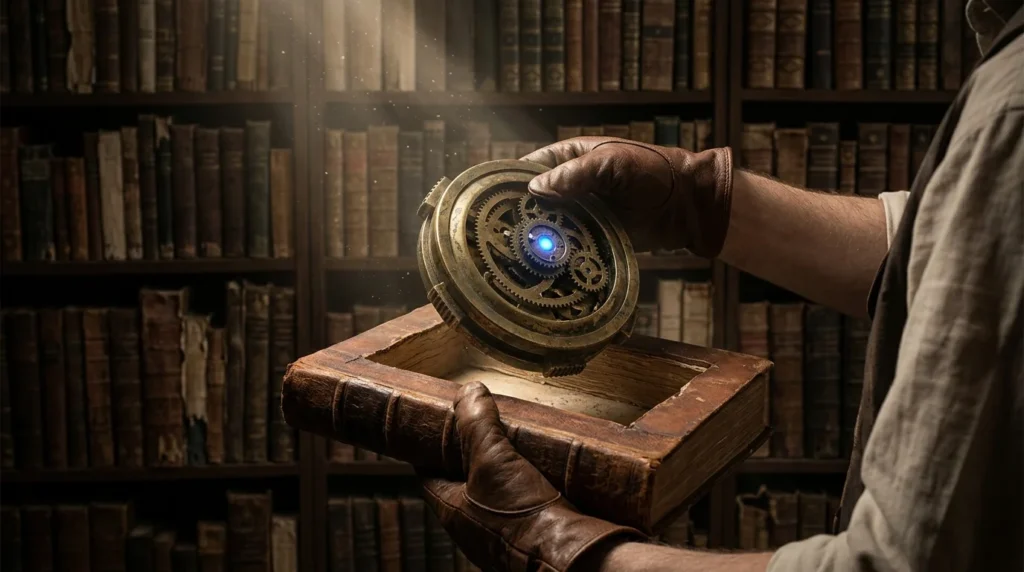
Discovered in a Greek shipwreck in 1901, this corroded bronze lump was ignored for decades. In the 1950s, scientists realized it was a complex mechanical computer from 100 BC, used to predict astronomical positions. No other artifact like it exists from that era, making it the ultimate mysterious collectible.
7. The $10,000 Thrift Store Vase
In 2020, a Virginia woman bought a small blue-and-white vase for 3.99ataGoodwill.Shekeptitonhermantelforyears.Anantiquesappraiseridentifieditasarare18th−centuryChineseQianlongvase,oneofonlyafewknown.ItsoldatSotheby’sforover1.2 million.
8. The Lost Dali Painting Discovered Under a Bed
A painting found leaning against a wall in a Spanish family home was dismissed as a tourist copy. After the owner died, relatives had it authenticated. It was an original Salvador Dali from 1931, valued at over $1 million. The family had used the back to hold a cork bulletin board for decades.
9. The Civil War Submarine H.L. Hunley’s Silver Dollar
In 2000, when the Confederate submarine H.L. Hunley was raised off the coast of South Carolina, conservators found a single 1860 silver dollar lying next to the skeleton of the captain. It was a lucky charm. No explanation exists for why the rest of the crew had no coins.
10. The Cardiff Giant Forgery Hoard
Though a famous hoax itself, the 1869 Cardiff Giant spawned a hidden collection of miniature “giant” carvings found in an upstate New York barn in 2015. The carvings, made by the same forger, had been considered a myth until a farmer discovered them in a locked trunk.
How to Recognize a Mysterious Collectible in Your Own Home
You do not need to be an expert to spot potential treasures. Look for these signs:
- Unusual weight (solid metal or stone objects)
- Hand-carved details inconsistent with mass production
- Hallmarks, stamps, or inscriptions you cannot identify
- Asymmetry or irregularities in ceramics or glass
- Old handwritten labels or inventory numbers
- Materials like ivory, tortoiseshell, or rosewood (now restricted)
- Foreign newspaper or textile wrapping
Always research before selling, cleaning, or altering an item. Many mysterious collectible discoveries lost value because owners cleaned off patina or repainted surfaces.
The Psychology Behind Mysterious Collectible Discoveries
Why do these stories fascinate us so deeply? Partly because they democratize wealth and history. Anyone could be holding a forgotten masterpiece. Partly because they validate the hunter-gatherer instinct still wired into human brains. And partly because each discovery forces us to question what else we overlook in daily life—the dusty box in the garage, the odd rock in the garden, the heavy painting at the estate sale.
Legal and Ethical Considerations
Not all mysterious collectible discoveries can be kept or sold. Laws vary by country:
- In the UK, the Treasure Act 1996 requires finders of gold, silver, or hoards over 300 years old to report them to a coroner.
- In the US, archaeological artifacts on federal land belong to the government.
- Nazi-looted art may be subject to restitution claims by heirs of original owners.
- Meteorites on private property belong to the landowner, but on public land, rules differ.
Before selling or even announcing a discovery, consult a legal expert in cultural property law.
Where Mysterious Collectible Discoveries Most Often Happen
| Location Type | Probability of Discovery | Notable Example |
|---|---|---|
| Estate sales | Very High | Fabergé Egg |
| Thrift stores | High | Qianlong vase |
| Barns and outbuildings | Medium | Cardiff Giant carvings |
| Attics | High | Hidden Dali painting |
| Flea markets | Very High | Declaration of Independence |
| Beach metal detecting | Low | Roman coins |
| Renovation sites | Medium | Wall-hidden art |
How to Authenticate a Mysterious Find
Authentication is a multi-step process that should never be rushed.
- Do not clean the object. Patina, dirt, and oxidation are evidence of age.
- Take high-resolution photographs from all angles.
- Use online databases (e.g., worthpoint, invaluable) for initial comparisons.
- Contact a university art history or archaeology department.
- Hire a certified appraiser from a professional organization like the ASA or ISA.
- For high-value items, use scientific dating methods (thermoluminescence for ceramics, XRF for metal composition).
The Future of Mysterious Collectible Discoveries
As technology improves, more discoveries will happen underground and underwater. Ground-penetrating radar already helps locate buried hoards. AI-driven image recognition can scan auction photos to flag undervalued masterpieces. Blockchain provenance tracking may someday reduce the number of truly “mysterious” finds, but human oversight and chance will always create gaps.
Frequently Asked Questions
Q1: What is the most valuable mysterious collectible ever discovered?
A: The most valuable is arguably the Fabergé Third Imperial Egg, found at a flea market and valued at over $33 million. Other contenders include the Antikythera Mechanism, which is priceless due to its unique historical significance.
Q2: Can I legally keep something I find at a garage sale or thrift store?
A: Yes, in most jurisdictions, once you purchase an item in good faith, it becomes your property. However, if the item was stolen and later sold, the original owner may reclaim it. Always keep receipts.
Q3: How do I know if my old coin or stamp is valuable?
A: Do not clean it. Use online price guides but be cautious. Submit high-quality images to forums like r/coins or professional grading services like PCGS (coins) or PSE (stamps). Value depends on rarity, condition, and demand.
Q4: Are mysterious collectible discoveries only valuable if they are old?
A: No. Some modern collectibles—prototype video games, first-edition comic books, error banknotes—have sold for hundreds of thousands. Age alone does not determine value. Rarity and cultural importance matter more.
Q5: What should I do if I think I found a historically significant artifact?
A: Stop handling it. Contact your local museum, historical society, or university archaeology department. Do not attempt to sell it online first. Proper documentation increases both historical value and eventual sale price.
Q6: How common are these discoveries?
A: Truly major discoveries happen dozens of times per year worldwide, but most are modest—a 5,000vaseora10,000 coin. The million-dollar finds occur once every few years. However, thousands of minor mysterious collectible discoveries go unreported.
Q7: Can I insure a mysterious collectible before authentication?
A: Most insurers will not cover an item without a formal appraisal. However, you can add scheduled personal property coverage once an appraiser provides a written estimate. For transport to an authenticator, use shipping insurance with declared value.
Q8: Do metal detectors really lead to mysterious collectibles?
A: Yes, especially in Europe. Metal detectorists have discovered Roman hoards, Viking silver, and medieval jewelry. Always check local laws. Many countries require permits and mandate reporting of finds.
Q9: What is the strangest mysterious collectible ever found?
A: The “Salt Man” mummies of Iran, discovered by miners, are arguably the strangest—naturally preserved bodies from 400 AD with personal belongings still intact, including a single leather earring and wool trousers.
Q10: Are there any mysterious collectibles still missing?
A: Yes. The Amber Room of Tsarskoye Selo, worth an estimated $500 million, was looted by Nazis and never recovered. Also missing: the original copy of the Magna Carta sent to Canterbury Cathedral, and over 500 paintings from the Isabella Stewart Gardner Museum heist.
Conclusion
Mysterious collectible discoveries remind us that history is not confined to museums. It lives in basements, barns, and bargain bins. Every object has a journey, and sometimes that journey ends in a garage sale, only to begin again in a Sotheby’s auction house. Whether you are a seasoned collector or a curious homeowner, keep your eyes open. The next mysterious collectible might be hiding in plain sight—waiting for someone to recognize its secret.