Hidden Stories of Relics: Uncovering the Secret Narratives Within Ancient Artifacts
Introduction
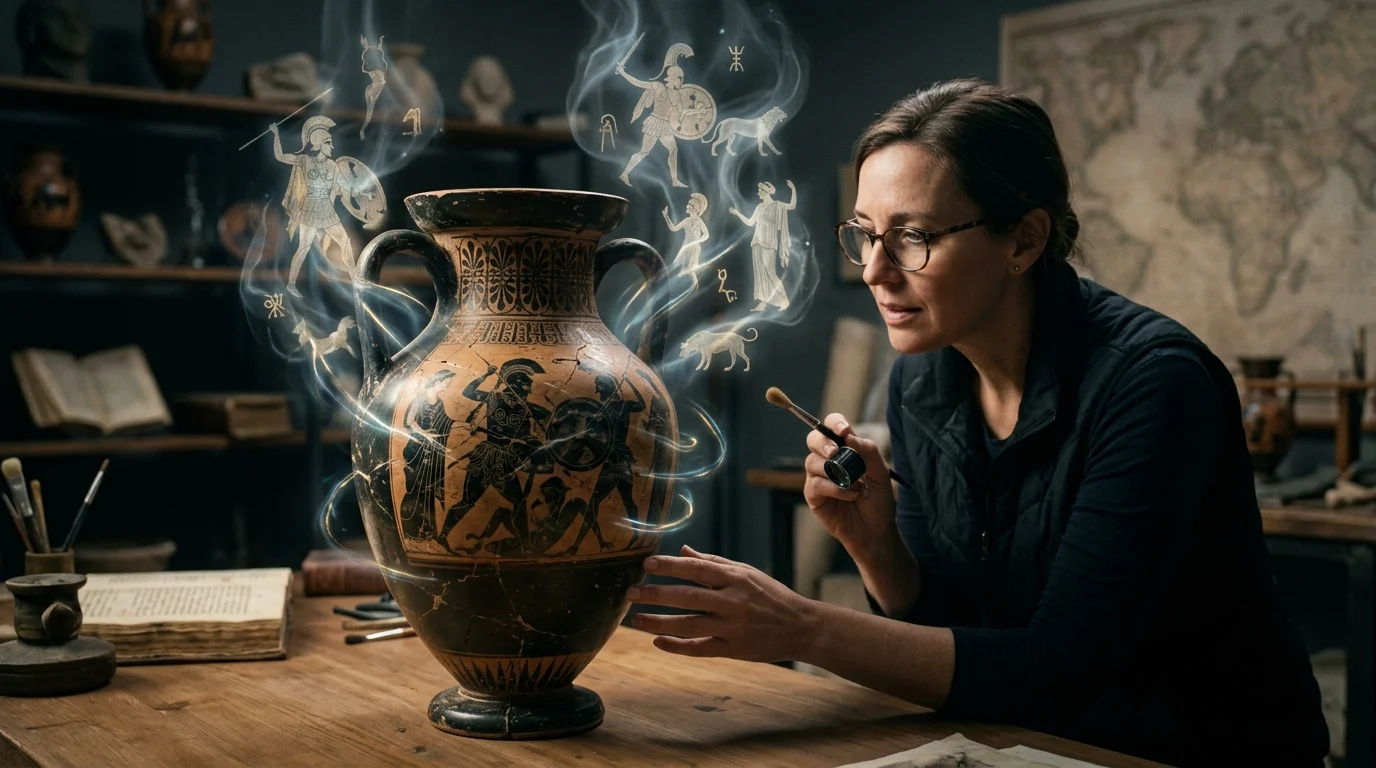
Every relic carries secrets beneath its weathered surface. From a chipped pottery shard in a museum drawer to a rusted coin found in a farmer’s field, these objects hold narratives that transcend their physical form. The hidden stories of relics encompass the lives of their creators, users, and the circumstances that led to their burial, loss, or preservation. This article explores how historians, archaeologists, and conservators decode the silent testimonies embedded in ancient artifacts, revealing truths about trade routes, religious practices, social hierarchies, and personal tragedies that written history often overlooks.
What Are Relics and Why Their Stories Remain Hidden
Relics are physical objects from the past that have survived into the present. They range from sacred religious artifacts like saintly bones to mundane items like a Roman soldier’s boot nail. Their stories remain hidden because time erodes context. A sword found in a river may represent a warrior’s heroic death, a ritual offering, or simply an accidental drop during a ferry crossing. Without excavation records, laboratory analysis, and comparative study, relics remain mute. The discipline of relic analysis transforms silence into testimony.
Types of Hidden Narratives in Relics
| Type of Hidden Story | Description | Example |
|---|---|---|
| Biographical Story | Personal history of owner or maker | A thimble worn thin on one side reveals a seamstress who worked for decades |
| Functional Story | How the object was actually used versus intended use | A ceremonial dagger with resharpened edge used in daily cutting tasks |
| Journey Story | Movement across geographical and cultural boundaries | African ivory carved with European Christian motifs found in a Mughal court |
| Trauma Story | Evidence of violence, accident, or sudden abandonment | Arrowhead embedded in a soldier’s pelvic bone |
| Restoration Story | Previous repair attempts showing value and care | A pottery bowl with drilled holes for ancient lacing repairs |
| Ritual Story | Ceremonial use or deliberate deposition | Swords bent before being placed in Viking graves to prevent grave robbing |
Scientific Methods for Uncovering Hidden Relic Stories
Microscopic Analysis
Surface examination under magnification reveals tool marks, wear patterns, and residues invisible to the naked eye. A Viking comb shows not just decoration but the direction of each carving stroke, possibly identifying left-handed versus right-handed craftsmen. Use-wear analysis on stone tools identifies whether an arrowhead was used for hunting, butchering, or as a drill based on microscopic polish patterns on specific edges.
Residue Analysis
Chemical testing extracts traces of original contents from porous surfaces. Pottery vessels absorb lipids, proteins, and DNA from cooked foods. Gas chromatography-mass spectrometry (GC-MS) can identify olive oil, wine, honey, or even specific spices like cinnamon or black pepper, revealing ancient trade connections and culinary preferences. A single jar from a shipwreck might contain traces of resin from a specific tree species only growing in one valley of Cyprus.
X-Ray and Radiography
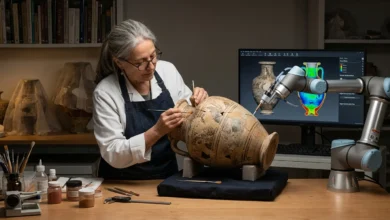
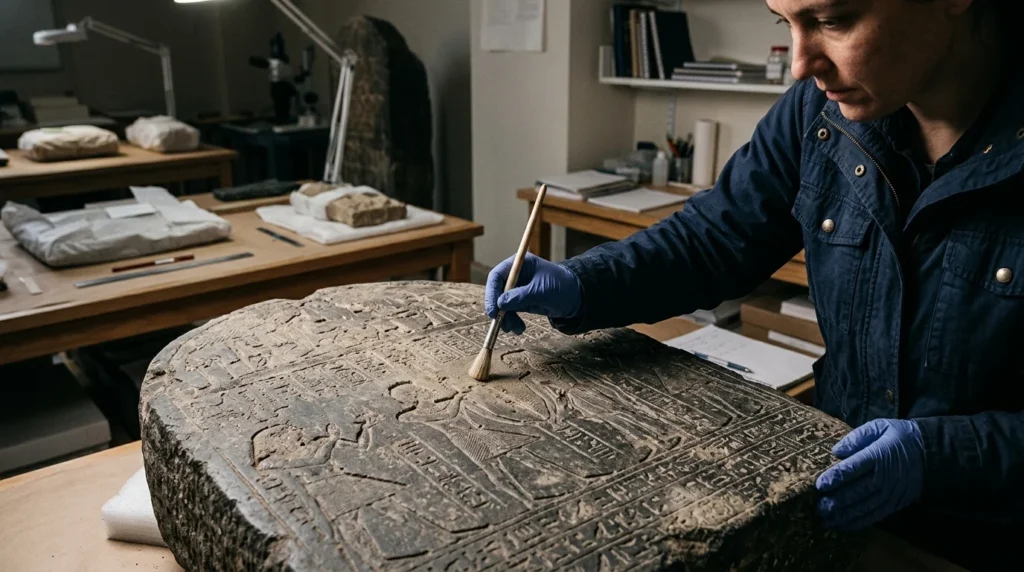
Non-invasive imaging sees through corrosion and dirt to reveal hidden features. X-ray fluorescence (XRF) maps elemental composition, identifying metal alloys, pigment sources, or hidden inscriptions beneath later paint layers. A medieval reliquary that appears gold on the surface may reveal an iron core with thin gold foil, exposing the economic constraints of its donors. CT scanning of Egyptian animal mummies occasionally shows that the linen wrappings contain no animal at all, only mud and reeds—a hidden story of ancient fraud.
Isotopic Analysis
Stable isotope ratios in organic materials like bone, teeth, or wood record geographical origins and diet. Strontium isotopes in tooth enamel match specific bedrock geology, revealing where a person or animal grew up. Oxygen isotopes indicate climate and water sources. When applied to relic materials like ivory, leather, or wooden statue fragments, isotopic analysis traces ancient supply chains. An ivory crucifix in a Norwegian church might contain elephant ivory from Savanna elephants of West Africa, telling a hidden story of medieval trans-Saharan trade routes.
Case Studies: Famous Relics with Revealed Hidden Stories
The Staffordshire Hoard
Discovered in 2009 in an English farmer’s field, this collection of over 4,000 Anglo-Saxon gold and silver objects was initially interpreted as a warrior’s loot. Microscopic analysis revealed that many sword fittings were intentionally torn from weapons before burial, and almost no items were complete. The hidden story emerged: this was not loot but a ritual dismantling and deposition of elite military equipment, possibly as a pagan offering to gods during the Christian conversion of Mercia around 650 CE.
The Dead Sea Scrolls
For decades after their 1947 discovery, the scrolls were studied primarily for textual content. However, analysis of the animal skins used for writing revealed hidden stories of diversity. Some scrolls were written on gazelle hide, others on sheep or goat. The collagen breakdown patterns and manufacturing techniques differed between scrolls once grouped together. This suggests that the Qumran community did not produce all scrolls locally but collected texts from across Judea, each with its own scribal tradition and physical history.
The Shroud of Turin
Regardless of one’s beliefs about its nature, the shroud contains hidden stories beyond its controversial image. Pollen grains embedded in the linen fibers were analyzed by botanists who identified species specific to the Jerusalem area and Anatolia. The weaving pattern (herringbone twill) is exceptionally rare for first-century Judea but matches fourteenth-century European textiles. Thread analysis shows consistent cotton contamination, suggesting the cloth was stored near cotton fabrics at some point in its history. Each of these hidden stories contributes to the ongoing debate without settling it definitively.
Hidden Stories of Everyday Relics
Museum collections prioritize spectacular objects, but mundane relics often carry the most poignant hidden stories. A child’s leather shoe found in a chimney contained a hidden compartment with a folded love letter dated 1842, sealed with a wax button. A clay marble with iron filings embedded was discovered in a nineteenth-century prison cell, showing how inmates made magnetic toys from broken handcuff fragments. A wooden bowl with carved ownership marks passed through seven different households over two centuries, each new owner adding their initials before the bowl was finally thrown into a latrine pit where anaerobic conditions preserved it.
The Relics of Conflict
War relics hide stories of both combatants and civilians. A bullet-pierced canteen from the American Civil War still contains dried residue of water mixed with whiskey, suggesting a soldier who supplemented limited rations. A concentration camp spoon bent into a ring shape tells of a prisoner who transformed oppression into a love token. A fragment of a bomber aircraft fuselage with child’s chalk drawings on the interior reveals that ground crews brought their children to remote airbases, creating makeshift playgrounds beside runways.
Ethical Challenges in Interpreting Hidden Relic Stories
Interpretation bias threatens to overwrite authentic hidden stories with preferred narratives. A seventeenth-century court gown may be described as representing aristocratic elegance, but fiber analysis might reveal that it was remade three times, each alteration using cheaper materials, telling a hidden story of declining family fortune rather than static wealth.
Provenance gaps create opportunities for fabrication. Objects without documented excavation contexts lose most of their hidden stories. A Greek vase on the antiquities market may be authentic, but without knowledge of whether it came from a sanctuary, a grave, or a trash pit, its story is irrecoverably partial. This is why ethical collectors and museums refuse undocumented artifacts.
How to Discover Hidden Stories in Relics You Own
For personal relic collections or family heirlooms, systematic investigation can reveal hidden narratives without professional equipment. Start by examining the object under strong light and magnification for tool marks, wear patterns, and repairs. Research comparable objects through museum databases or reference books. Interview older family members about their memories of the object’s use and previous ownership. Test non-destructively: use a blacklight to detect later overpainting, a magnet to find ferrous metal inclusions, or a cotton swab with distilled water on a hidden spot to test for soluble salts indicating archaeological origin.
Document everything in writing with photographs. Even if you never identify the full hidden story, your documentation becomes part of the object’s ongoing narrative for future investigators.
The Future of Relic Storytelling
Emerging technologies promise to reveal ever deeper hidden stories. Reflectance transformation imaging (RTI) allows viewers to change lighting angles digitally, revealing incised inscriptions too faint for normal vision. Ancient DNA sequencing from relic surfaces is now possible without visible sampling, extracting degraded genetic material from sweat, blood, or food residues. Machine learning algorithms trained on thousands of known artifacts can now predict function, origin, and date for unidentified relics based on morphological features.
However, these advances raise questions about when a hidden story should remain hidden. Some indigenous communities object to destructive or even non-invasive analysis of ancestral relics, arguing that the stories they choose to share orally are sufficient. The future of relic studies will require negotiated protocols between scientific curiosity and cultural sovereignty.
FAQs About Hidden Stories of Relics
Q1: Can any relic have a hidden story, or only rare museum objects?
A: Every relic has a hidden story, including mass-produced items. A common 1950s ceramic mug may contain fingerprint ridges from the factory worker who glazed it, microscopic tea stains from decades of daily use, and a hairline crack from the day it was knocked off a table. Common objects tell common lives, which are historically important.
Q2: How do archaeologists decide which relics to analyze for hidden stories?
A: Priority is given to relics with good provenience (documented excavation context), those from under-represented groups (women, children, enslaved people, laborers), and those showing unusual features during excavation. Random sampling of all relics from a single site often reveals patterns that targeted selection misses.
Q3: Do hidden stories ever contradict written historical records?
A: Frequently. Written records often reflect elite perspectives, legal ideals, or propaganda. Relics provide physical evidence of actual practice. For example, written laws may forbid certain trade goods, but relic analysis reveals their presence, showing smuggling or official corruption. These contradictions are among the most valuable contributions of relic studies.
Q4: How much does professional relic analysis cost?
A: Visual examination and photography by a qualified conservator costs 100−300 per hour. Non-invasive XRF analysis adds 200−500 per object. Destructive analysis like radiocarbon dating costs 500−800 per sample. Comprehensive analysis of a single significant relic may exceed $5,000. Many universities offer reduced-cost analysis for objects with clear research value.
Q5: Can cleaning a relic destroy its hidden stories?
A: Yes. Abrasive cleaning removes surface residues containing DNA, pollen, and use-wear evidence. Chemical cleaning alters isotopic signatures. Never clean a potentially significant relic before having it evaluated by a conservator. Dry brushing with a soft brush is usually safe; water, solvents, or abrasives are not.
Q6: How long does it take to fully analyze a relic’s hidden stories?
A: Preliminary visual analysis takes hours to days. Comprehensive scientific analysis including multiple techniques and comparative research takes months to years. The Dead Sea Scrolls are still yielding new hidden stories after 75 years of study. Some stories remain permanently hidden due to missing context or technological limits.
Q7: What happens to hidden stories when a relic is sold or donated?
A: Documentation should transfer with ownership. Serious collectors and museums require condition reports, provenance documentation, and analysis summaries. When documentation is lost, some hidden stories are permanently erased. Ethical relic owners maintain and share all known information with subsequent custodians.
Conclusion
The hidden stories of relics transform inert objects into witnesses of human experience. From the microscopic pollen grain that reveals an ancient pilgrimage route to the bent spoon that testifies to survival against atrocity, these narratives demand patient investigation and ethical interpretation. Every relic in your possession, whether a grandparent’s pocket watch or a beach-found shard of glass, carries secrets waiting to be read. The tools of modern science expand what can be known, but the fundamental practice remains unchanged: look closely, question thoroughly, and respect the voices of those who can no longer speak for themselves. Their stories survive in the things they touched, held, and left behind.