Old Relic Repair Optimization: Balancing Tradition and Technology for Heritage Conservation
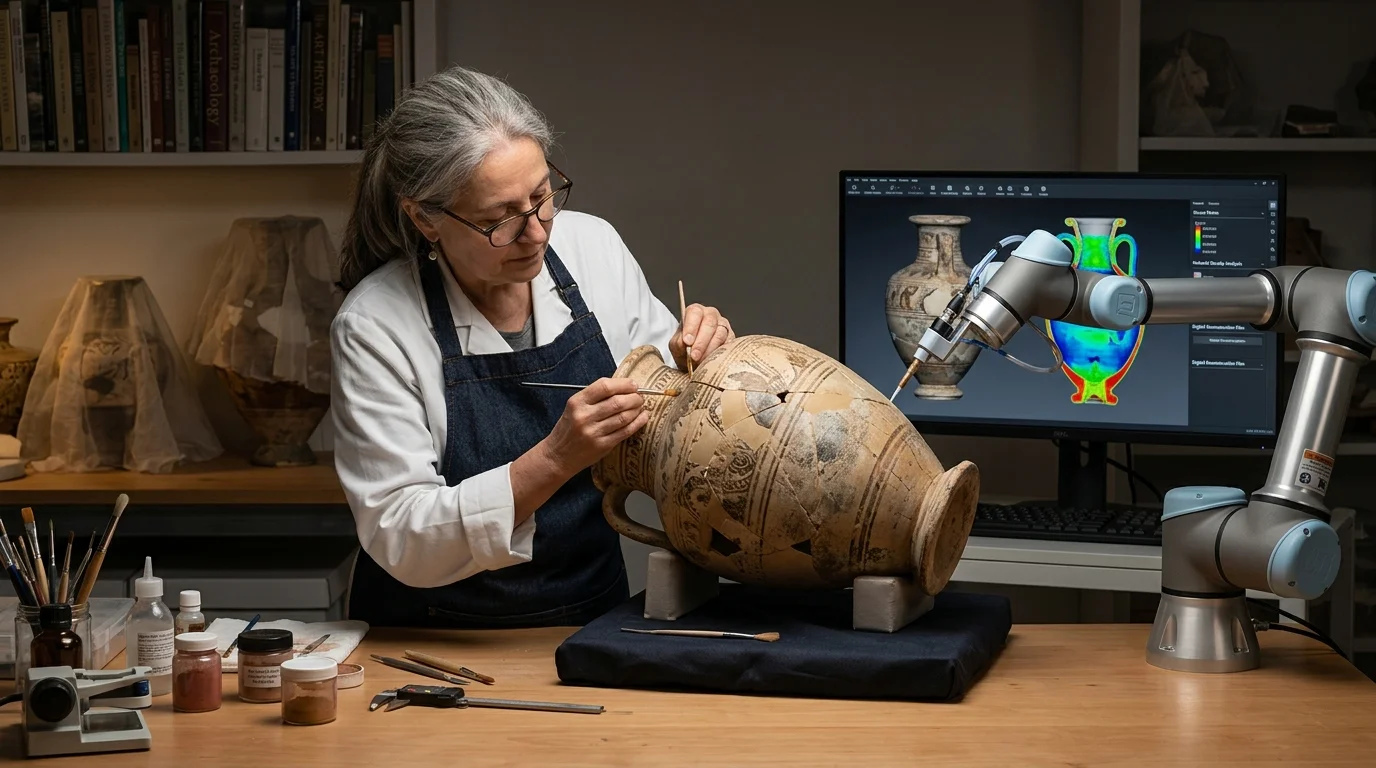
The preservation of historical artifacts represents a critical intersection where cultural heritage meets modern innovation. Old relic repair optimization has evolved significantly from traditional craftsmanship to incorporate cutting-edge technologies, yet the fundamental principles of minimal intervention and authenticity preservation remain paramount. This comprehensive guide explores the methodologies, technologies, and decision-making frameworks that define successful relic restoration in the modern era.
Table of Contents
| Section | Topic |
|---|---|
| 1 | Understanding Relic Repair Optimization |
| 2 | The Three Paths to Restoration |
| 3 | Modern Technologies Reshaping Conservation |
| 4 | The Decision Framework: To Restore or Not |
| 5 | SEO Keywords for Heritage Conservation Businesses |
| 6 | Frequently Asked Questions |
1. Understanding Relic Repair Optimization
Relic repair optimization refers to the strategic process of selecting and implementing the most effective restoration methods while balancing multiple factors including historical authenticity, cost, structural integrity, and long-term preservation. Unlike standard repair work, relic restoration requires a deep understanding of historical materials, original construction techniques, and the philosophical debates surrounding heritage conservation.
The core challenge lies in answering a fundamental question: how much intervention is too much? Every restoration decision carries implications for an artifact’s historical value, monetary worth, and cultural significance. Professional conservators adhere to strict protocols emphasizing three key principles: minimal intervention, discernibility, and reversibility.
2. The Three Paths to Restoration
Understanding the available restoration approaches helps owners and conservators make informed decisions. Based on industry expertise, there are three distinct pathways for old relic repair.
Option One: Museum-Style Conservation
This represents the gold standard of relic preservation. Museum-style conservation treats artifacts as irreplaceable historical documents rather than functional objects. A trained conservator documents every detail, uses only reversible materials, and prioritizes stabilization over aesthetic improvement.
The process involves careful disassembly, individual wrapping and labeling of components, and meticulous documentation at every stage. Old hide glue joints are softened and re-glued rather than replaced, and original materials are preserved wherever possible.
This approach is ideal for items of significant historical or monetary value. However, it comes with substantial costs and risks associated with transportation and handling.
Option Two: Traditional Antique Shop Restoration
Skilled antique restoration shops offer a pragmatic middle ground. These professionals can repair broken moldings, re-glue failed joints, and make artifacts stable and presentable without adhering to strict museum protocols.
This approach is generally more affordable than full conservation because restorers work more efficiently. However, refinishing surfaces—while visually appealing—can reduce historical originality and potentially decrease value for serious collectors.
Option Three: Hybrid On-Site Restoration
The hybrid approach has gained popularity for its practicality and cost-effectiveness. A skilled restorer works strategically, performing on-site structural repairs while taking delicate components to the workshop for careful treatment.
This method eliminates expensive transportation costs and reduces handling risks. The artifact remains in its historical context, and work can be phased over time to manage expenses. For many family heirlooms and moderately valuable antiques, this represents the optimal balance.
3. Modern Technologies Reshaping Conservation
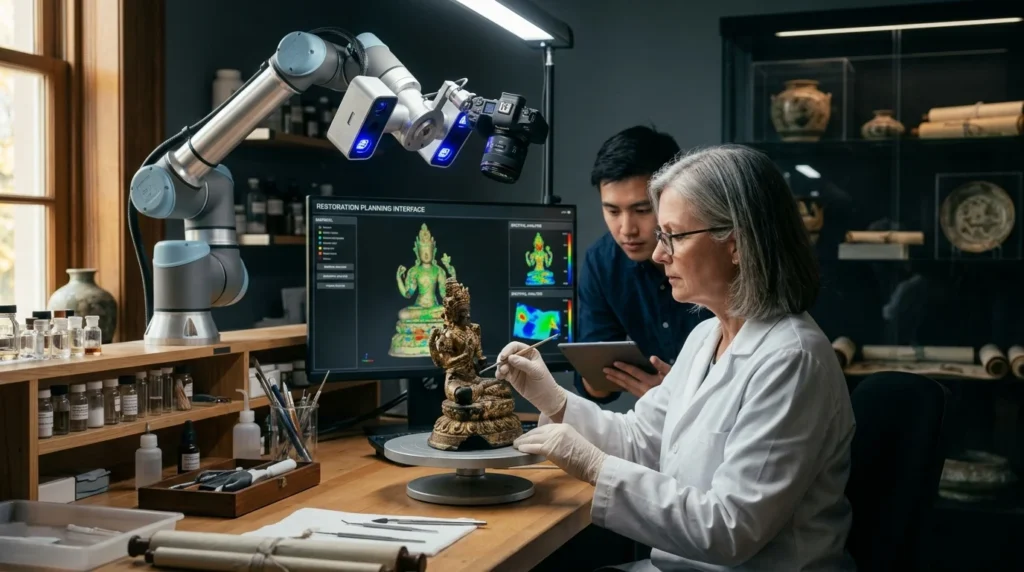
Technology has revolutionized old relic repair optimization, enabling conservators to see beneath surfaces, analyze materials without sampling, and even recover information from seemingly unrecoverable artifacts.
Scientific Diagnostic Tools
Modern relic repair begins with diagnosis, not intervention. Conservators now use sophisticated instruments that would be familiar in any medical setting:
X-Ray Fluorescence Spectrometry allows conservators to identify the elemental composition of metals within seconds. This non-destructive testing method distinguishes harmful corrosion from stable patina, guiding treatment decisions without damaging the artifact.
Fourier-Transform Infrared Spectroscopy analyzes material characteristics by examining infrared absorption and reflection spectra. This technology helps identify fiber types in ancient textiles and binding media in paintings.
Metallographic Microscopes reveal how ancient metal objects were manufactured by examining crystal structures in cross-sections. This information helps conservators understand original production techniques and select appropriate restoration methods.
Digital Imaging and AI
Artificial intelligence is opening new frontiers in relic restoration. The European Research Council‘s UnLost project demonstrates how AI can recover text from carbonized Herculaneum scrolls that remain too brittle to unroll physically.
Digital image inpainting algorithms, such as improved Criminisi algorithms, can reconstruct damaged textile patterns and guide physical restoration work. These digital tools create restoration roadmaps before any physical intervention occurs.
The Cultural Relics Hospital Model
Institutions like the Inner Mongolia Museum have embraced the “cultural relics hospital” concept, where tradition meets technology in specialized laboratories. These facilities restored nearly 300 artifacts in 2025 alone, demonstrating the scalability of modern conservation approaches.
4. The Decision Framework: To Restore or Not
Not every damaged relic requires restoration. Making the right decision requires evaluating multiple factors systematically.
Monetary Value Assessment
The fundamental rule is simple: if restoration costs exceed the restored item’s market value, professional restoration may not make financial sense. A Victorian balloon-back chair worth only $20 does not justify several hundred dollars in restoration expenses.
However, rare items tell a different story. Railroad posters costing 200torestoremightsellfor800-1,000afterward.Firsteditionbooksin“Good”conditionworth300 might reach $1,000 in “Very Good” condition after expert restoration.
Sentimental Value Consideration
Financial calculations cannot capture sentimental worth. A grandfather’s desk or a mother’s favorite armchair may warrant restoration regardless of market value because the personal association is impossible to quantify.
Condition Assessment Guidelines
For collectible books, condition ranks from Fine to Poor determine restoration feasibility. Books in “Fair” or “Poor” condition requiring complete rebinding lose original integrity when end papers or illustrated elements must be replaced.
For furniture, the critical question is whether the patina—the surface aging that proves authenticity—can be preserved. Over-polishing or applying glossy varnish can strip away history and reduce value.
When DIY Makes Sense
Professional restoration is always preferable for high-value items. However, evening courses in antique restoration can be worthwhile investments, provided beginners practice on inexpensive pieces first. A $20 chair is an appropriate test subject; a valuable antique is not.
5. SEO Keywords for Heritage Conservation Businesses
For professionals in relic repair and heritage conservation, search engine optimization requires targeting specific keyword phrases that potential clients actually use.
High-Value Keywords
historic building restoration services near me
heritage conservation companies
antique furniture restoration experts city state
archaeological artifact conservation
museum-quality restoration services
period furniture repair specialists
cultural heritage preservation consultants
Long-Tail Keywords
how much does antique furniture restoration cost
professional relic restoration for museums
certified artifact conservator near location
restore vs preserve antique value comparison
document and paper restoration services
6. Frequently Asked Questions
Q1: Does restoration decrease an antique’s value?
It depends on the restoration quality and the item’s rarity. Sympathetic restoration that preserves original materials typically maintains or increases value. Over-restoration that removes patina or replaces original components can significantly decrease value.
Q2: Can I restore a valuable antique myself?
Professional restoration is strongly recommended for valuable items. A professional antiques restorer brings invaluable expertise. Resist the temptation to repolish valuable tables or repair wobbly legs on important period pieces.
Q3: What are the three principles of professional conservation?
Minimal intervention, discernibility, and reversibility. Conservators intervene as little as possible, ensure their work can be distinguished from original material, and use reversible methods so future conservators can undo current work if better techniques emerge.
Q4: How do conservators analyze artifacts without damaging them?
Non-destructive testing methods including X-ray fluorescence spectrometry, Fourier-transform infrared spectroscopy, and hyperspectral imaging allow thorough analysis without sampling or physical contact.
Q5: Is restoration worth it for sentimental items?
Yes. When sentimental value is involved, financial calculations become irrelevant. Restoring a family heirloom preserves memories and connections across generations.
Q6: What is the “cultural relics hospital” model?
A comprehensive conservation facility equipped with specialized laboratories for different material types, staffed by trained conservators using both traditional skills and advanced technology. These facilities follow complete processes from diagnosis to treatment to environmental monitoring.
Q7: Can AI help restore damaged artifacts?
Yes. AI and machine learning are being used to recover text from damaged scrolls, reconstruct digital images of deteriorated textiles, and guide physical restoration work. The UnLost project exemplifies AI’s potential in heritage conservation.
Q8: What is the hybrid restoration approach?
A practical method combining on-site structural work with off-site shop repairs for delicate components. This reduces transportation costs and risks while ensuring careful treatment of fragile elements.
Q9: How does patina affect antique value?
Patina is part of an item‘s history and value. It should be preserved at all costs. Over-polishing strips away this historical evidence and reduces both charm and monetary worth.
Q10: When should I leave a relic unrestored?
If restoration costs exceed the restored value and no sentimental attachment exists, leaving the item unrestored is wise. Age-appropriate wear is expected and accepted in many antique categories.
oldrelicrepair relicrestoration antiqueconservation heritagerestoration artifactpreservation historicalrestoration relicrepairoptimization museumconservation antiquerestoration culturalheritage preservationtechnology oldartifactrepair restorationtechniques heritageconservation antiquevaluerestoration relicconservation traditionalcraftsmanship moderntechnologyrestoration