Rare Antiques Worth Money: 2026 Market Guide to High-Value Collectibles and Investment Pieces
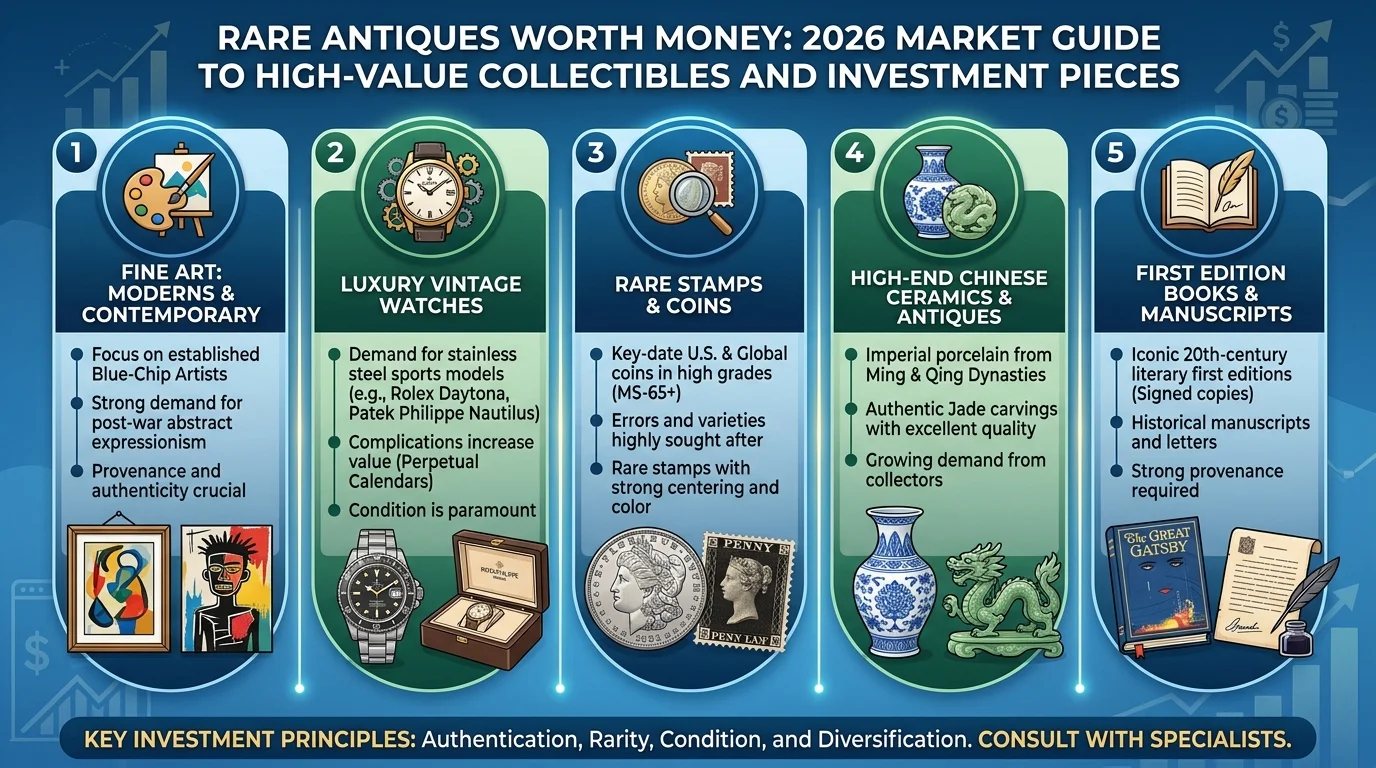
The market for rare antiques is experiencing a remarkable transformation in 2026. After several years of post-pandemic correction, wealthy collectors and savvy investors are returning to tangible assets that offer both cultural significance and financial appreciation. The key drivers of value have shifted decisively toward rarity, provenance, and historical resonance. Whether you are a seasoned collector or someone who has inherited family heirlooms, understanding which antiques command the highest prices today is essential. This comprehensive guide examines the most valuable antique categories, current market trends, and the factors that separate ordinary old objects from extraordinary investments.
Table of Contents
| Category | Key Drivers of Value | 2025-2026 Price Range | Market Trend |
|---|---|---|---|
| Old Master Paintings | Rarity, provenance, historical significance | 10M−236M+ | Strong growth (+13.6% to +28%) |
| Chinese Classical Furniture | Huanghuali wood, craftsmanship, museum provenance | HK1.5M−HK18.8M | Exceptional demand |
| Luxury Watches | Brand (Patek Philippe, Rolex), model, condition | 20,000−250,000+ | Stable growth (+5.1%) |
| Signed Jewelry | Brand (Cartier, VCA), materials, condition | 500−250,000+ | Strong, especially vintage |
| Fine Art & Prints | Artist recognition, provenance, condition | 500−50M+ | Leading recovery category |
| Coins & Currency | Rarity, grade, metal content | 50−50,000+ | Consistent, motivated buyers |
| Classic Cars | Halo models, racing history, provenance | 1M−70M+ | Selective (halo models strong) |
| Provenance-Rich Handbags | Personal history, brand, scarcity | 10,000−10M+ | Flat but narrative-driven |
| Colored Diamonds | Color rarity, carat weight, certification | 50,000−3M+ per carat | Steady, blue diamonds strong |
What Makes an Antique Valuable in 2026?
The antiques market has become more discerning than ever. According to Knight Frank’s Wealth Report 2026, the luxury investment market is entering a “more rational and more discerning phase” after a cycle of extraordinary highs followed by rapid readjustment . Collectors are increasingly prioritizing three factors above all others.
Rarity and Scarcity
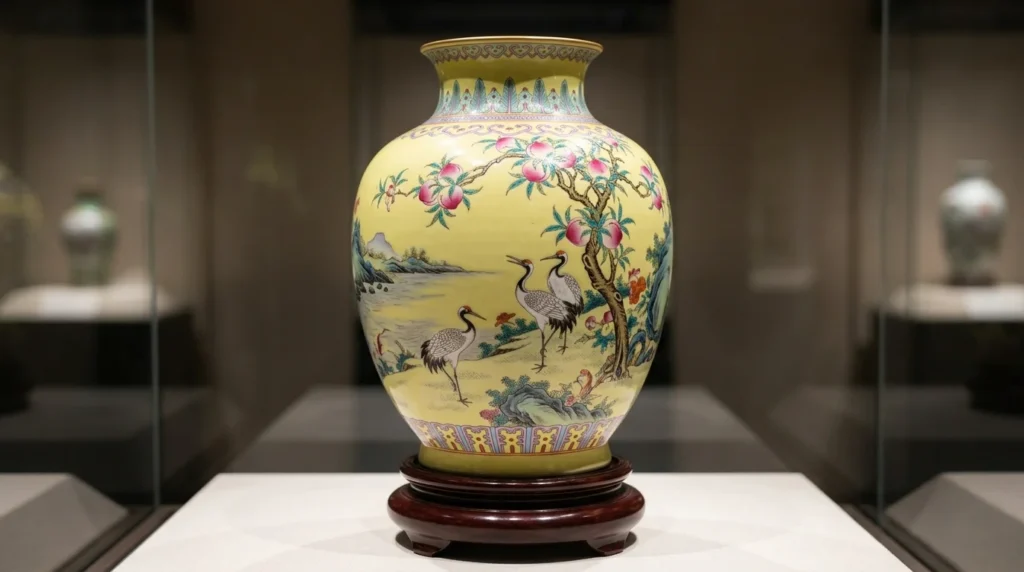
The most valuable antiques are those that few people can own. Limited production runs, unique examples, or pieces from short-lived manufacturing periods command significant premiums. In the Chinese classical furniture market, for instance, huanghuali (黄花梨) pieces from the Ming and Qing dynasties are highly sought because the wood itself is rare and the craftsmanship is irreplaceable .
Provenance and Ownership History
Provenance—the documented history of who owned an object—has become a premium multiplier in 2026. The record-breaking $10.1 million sale of Jane Birkin’s personal Hermès Birkin bag exemplifies how personal history and cultural significance can dramatically enhance value . An identical bag without Birkin’s ownership history would sell for a fraction of that price.
Condition and Authenticity
While signs of wear and patina can confirm authenticity, items should be well-preserved without structural defects. Chips in ceramic items significantly reduce potential selling price, even if the pieces are rare in terms of era or style . For furniture, original finish and minimal restoration are strongly preferred by serious collectors.
Fine Art: The Leading Performer of 2025
Art emerged as the standout category in the luxury investment market, demonstrating that masterpieces transcend economic cycles. The Knight Frank Luxury Investment Index fell only 0.4% in 2025, signaling stabilization after a broad reset across collectible categories .
Old Masters: A Remarkable Resurgence
The Old Master segment has experienced an extraordinary revival. According to Artprice, Old Masters rose in value by 28% in 2025, while the ultra-contemporary segment—which was super hot between 2019 and 2022—dropped by nearly 40% over the same period .
Notable sales include:
- Michelangelo drawing: A sanguine study measuring just a few centimeters, rediscovered in a private Californian collection, sold for $27.2 million—more than ten times its high estimate
- Rembrandt van Rijn: “Young Lion at Rest,” perhaps the last drawing by the artist still in private hands, set the absolute record for a drawing by the master at $17.8 million
- Giovanni Antonio Canal (Canaletto) : “Venice, the Bucintoro at the Molo on Ascension Day” sold for $30.5 million
Christie’s New York Old Masters sale generated 54.1million—thebestsalestotalinthiscategoryinNewYorkforoveradecade.TheshifthasbeensopronouncedthatChristie′sHongKongincludedanOldMasterpaintinginitseveningsaleforthefirsttimeinMarch2026:a17th−centuryDutchstilllifebyJohannesGoedaert,whichbroketheartist′sauctionrecordat1.3 million .
Impressionist and Modern Art
Impressionist art was the strongest-performing category in 2025, rising 13.6% during the year . This gain was driven by major single-owner sales and standout auction results, including:
- Gustav Klimt: “Portrait of Elisabeth Lederer” achieved $236.4 million—the highest-ever price for a modern artwork sold at auction
- Modern art: Rose 7.1% overall
- Postwar art: Gained 5.2%
Chinese Classical Furniture: A Market on Fire
One of the most dramatic stories in the 2026 antiques market is the soaring demand for classical Chinese furniture, particularly pieces made from huanghuali (yellow flowering pear) wood. Two major auction results from spring 2026 illustrate the intensity of this market.
Christie’s Hong Kong “Stone House” Collection
In April 2026, Christie’s Hong Kong held a single-owner sale for a collector known as the “Stone House” (石头书屋). The results were remarkable, with 24 lots achieving HK86.54million(approximately11.1 million USD) and a sell-through rate of 87.5% .
Top lots included:
| Lot Description | Estimate | Final Price (with premium) |
|---|---|---|
| 16th/17th Century Zitan Scroll-form Table | HK$10-15M | HK18.8million(2.4M USD) |
| 17th Century Huanghuali Dragon Throne Chair | HK$6-8M | HK17.58million(2.26M USD) |
| 17th/18th Century Huanghuali Three-tier Shelves | HK$3-5M | HK15.14million(1.95M USD) — 4x estimate |
| 17th/18th Century Huanghuali Display Cabinet (pair) | HK$10-15M | HK15.14million(1.95M USD) |
The huanghuali shelves sold for four times the pre-sale estimate, demonstrating extraordinary demand for rare, well-provenanced pieces .
Christie’s London Flacks Collection
In May 2026, Christie’s London presented “The Flacks Family Collection: Curtain Call,” featuring Chinese classical furniture amassed over thirty years by renowned dealers Marcus and Debbie Flacks. The sale achieved £4.09 million (approximately HK$43.3 million) with a 94% sell-through rate .
Notable results included:
- Late 16th/17th Century Huanghuali Table: Sold for £1.514 million ($1.92 million USD), far exceeding the £700,000-900,000 estimate
- 17th/18th Century Huanghuali Rose Chair: The first piece the Flacks ever collected, sold for £533,400—5.25 times the pre-sale estimate
- Liu Dan Ink Painting “Auspicious Clouds”: Sold for £406,400—four times the estimate
Luxury Watches: Consistent Performance
Watches rose 5.1% in 2025, supported by strong demand for Patek Philippe’s Aquanaut and Nautilus models and continued resilience from Rolex . The category has become one of the most closely watched areas in luxury investing, with buyers focusing on recognizable models, condition, and long-term collectability.
What makes watches valuable:
- Brand recognition: Patek Philippe, Rolex, Audemars Piguet lead the market
- Model rarity: Limited editions, discontinued references, “grail” models
- Condition and completeness: Original box, papers, and service history multiply value
- Provenance: Watches owned by celebrities or historical figures command premiums
Jewelry: Vintage and Signed Pieces
Jewelry is the fastest-moving category at estate sales and auctions . Gold, silver, platinum, and gemstone pieces carry intrinsic metal value that creates a price floor, and collector demand for vintage and designer pieces pushes prices well above melt value.
Price ranges for jewelry at sale:
| Type | Typical Price Range |
|---|---|
| Gold rings and bracelets | 150−5,000+ |
| Sterling silver flatware sets | 300−3,000 |
| Signed vintage costume jewelry (Miriam Haskell, Trifari, Eisenberg) | 50−800 per piece |
| Luxury watches (Rolex, Omega, Patek Philippe) | 1,500−25,000+ |
| Estate diamond rings | 500−15,000+ |
Important note: Never clean antique coins or jewelry before appraisal. Cleaning destroys numismatic value and can reduce a coin’s worth by 50% or more .
How to Determine What Your Antiques Are Worth
If you have inherited antiques or are considering selling, professional appraisers recommend a systematic approach to valuation .
Step 1: Practice “Close Looking”
Examine your item thoroughly. Samantha Robinson, head consignment director of decorative arts and design for Heritage Auctions, advises clients to write down descriptive details: What is it made of? Are there maker’s marks? What are its distinct characteristics? The goal is to form a list of search terms that makes it easier to find comparable items .
Step 2: Check Auction Databases
Once you have identified the piece, look at auction databases to find out what similar items sold for in the past. Useful resources include:
- Christie’s and Sotheby’s auction results
- Heritage Auctions
- Live Auctioneers
- Invaluable
- Artnet
Robinson recommends looking for auction results within the past 2 to 3 years—5 at the most—because the auction market shifts with the overall marketplace .
Step 3: Consult an Expert
For accurate valuation, reach out to a specialist. Vicky Paloympis, head of department for Chinese ceramics and works of art for Christie’s New York, emphasizes: “It is very difficult to identify the age and origin of an antique item without first striving to build connoisseurship.”
Many auction houses offer complimentary auction assessments. The best specialist is someone who deeply understands the material and has personal relationships within the bidding community .
Estate Sale Categories with Strong Demand in 2026
Beyond the high-end auction market, certain categories consistently attract serious buyers at estate sales .
Fine Art and Signed Prints
Original oil paintings by listed artists: 500to50,000+
Signed limited edition prints: 100to5,000
Vintage posters: 75to2,000
Coins, Currency, and Stamps
Pre-1965 U.S. silver coins: Value based on silver content plus numismatic premium
Rare date coins and error coins: 50to50,000+
Stamp collections: 50to10,000+
Mid-Century Modern Furniture
Eames, Knoll, Herman Miller pieces: 300to15,000
Solid wood dining sets: 200to3,000
Art Deco sideboards: 400to5,000
Collectibles and Memorabilia
Sports memorabilia (signed, game-used): 50to25,000+
Vintage toys (Hot Wheels, Star Wars): 20to3,000
Trading cards: 10to50,000+ for rare singles
What Sells Poorly
Mass-produced collectibles (figurines, Beanie Babies)
VHS tapes and CDs
Traditional china and crystal sets
Oversized entertainment centers
The Role of Provenance in Value Enhancement
The single most important trend in the 2026 antiques market is the premium placed on provenance. Liam Bailey, global head of research at Knight Frank, notes: “Collectors are increasingly prioritising rarity, provenance, and cultural resonance.”
The Jane Birkin Hermès bag that sold for $10.1 million exemplifies this trend. The handbag category was broadly flat in 2025—Birkin values slipped only 0.2% overall. But a bag with extraordinary personal history commanded a price that had no relation to standard market valuations .
For sellers, this means documenting ownership history is essential. Keep receipts, letters, photographs, and any other materials that establish an item’s journey through time.
Looking Ahead: Market Outlook Through 2030
The luxury investment market appears poised for steadier, more sustainable growth. The days of rapid, broad-based gains may be over for now, but the renewed emphasis on quality and authenticity could ultimately strengthen the market’s foundations .
Key trends to watch:
- Younger collectors are reshaping ownership models through digital and fractional platforms
- Asian demand for classical furniture, Old Masters, and luxury goods continues to grow
- Provenance-rich items will command increasing premiums
- Condition will become even more critical as collectors become more discerning
FAQ
What is the most valuable type of antique right now?
Old Master paintings and fine art are leading the market, with the Impressionist category rising 13.6% in 2025 and Old Masters gaining 28%. Individual works by masters like Klimt, Michelangelo, and Canaletto have sold for tens of millions to over $236 million .
How can I tell if my antique is worth money?
Examine the piece for maker’s marks, signatures, or labels. Research its characteristics using auction databases. Look for similar items that have sold recently. Condition is crucial—well-preserved pieces without damage are worth significantly more. For accurate valuation, consult a professional appraiser .
What old items are surprisingly valuable?
Vintage toys (especially in original packaging), signed costume jewelry by Miriam Haskell or Trifari, first-edition vinyl records, mid-century modern furniture, and studio pottery with identifiable maker’s marks often sell for hundreds or thousands of dollars .
Does provenance really affect value that much?
Yes. The Jane Birkin Hermès bag sold for $10.1 million—dramatically more than an identical bag without her ownership history. Provenance can multiply an item’s value, sometimes by factors of 10 or more .
Should I clean or restore my antique before selling?
No. Do not clean coins, furniture, or metal items before appraisal. Cleaning can destroy numismatic value and reduce a coin’s worth by 50% or more. For furniture, original finish and patina are preferred. Leave restoration decisions to professional conservators .
Where is the best place to sell valuable antiques?
For high-value items (over $5,000), auction houses like Christie’s, Sotheby’s, or Heritage Auctions are recommended. For mid-range items, specialized online platforms like 1stDibs or Live Auctioneers work well. For more common items, estate sales or local auctions may be appropriate .