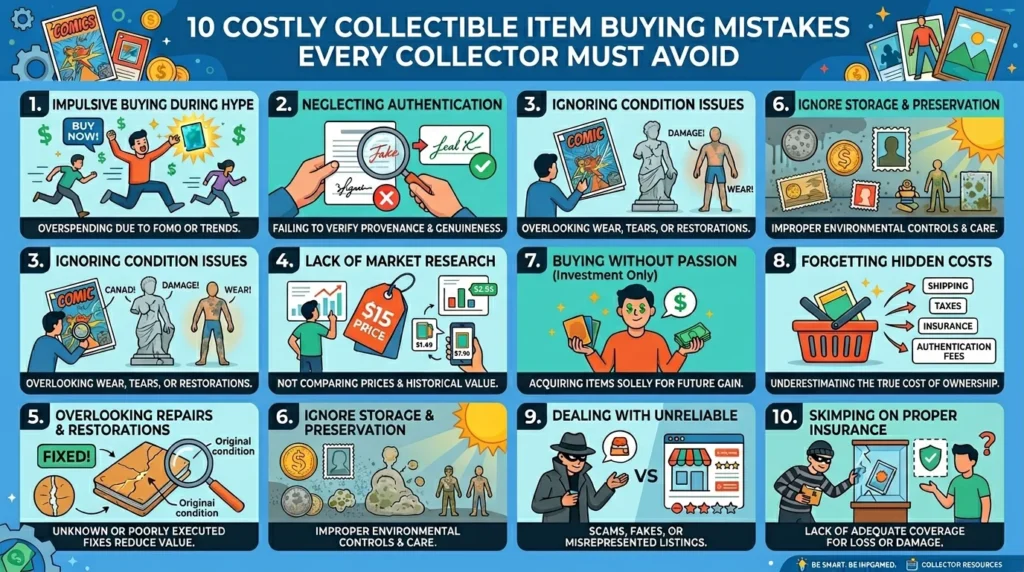
10 Costly Collectible Item Buying Mistakes Every Collector Must Avoid
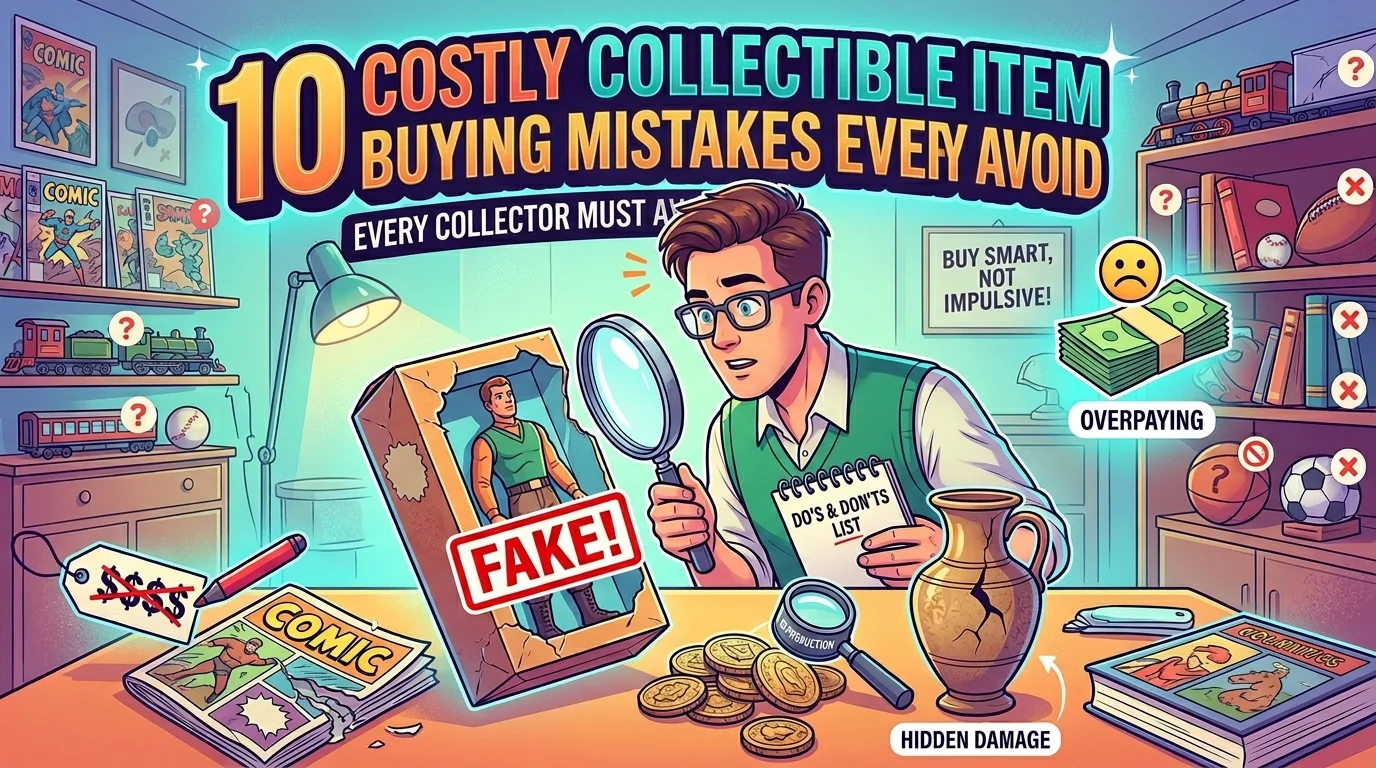
Building a meaningful collection is one of life’s great pleasures. The thrill of the hunt, the joy of discovery, and the satisfaction of owning a piece of history or art are unmatched. However, the path to a valuable and rewarding collection is littered with pitfalls. Even experienced collectors make mistakes, but most errors are preventable with knowledge and discipline. This guide reveals the most common collectible item buying mistakes, from overpaying at auctions to neglecting authentication, so you can protect your investment and build a collection you will cherish for years.
Table of Contents
| Mistake | Risk Level | Impact on Collection | Prevention Difficulty |
|---|---|---|---|
| Not Authenticating | Critical | Complete value loss | Low |
| Overpaying | High | Negative ROI | Medium |
| Buying Without Research | High | Accumulation of worthless items | Low |
| Ignoring Condition | High | Permanent value reduction | Low |
| Falling for Fakes | Critical | Financial ruin | Medium |
| No Investment Strategy | Medium | Disorganized, low-value collection | Medium |
| Neglecting Storage | Medium | Irreversible damage | Low |
| Following Hype | High | Buying at market peaks | High |
| Avoiding Professional Advice | Medium | Missed opportunities | Low |
| Forgetting Insurance | Low | Complete loss potential | Low |
Mistake #1: Failing to Authenticate Before Purchase
The single most dangerous mistake in collectible item buying is skipping authentication. The market is flooded with sophisticated forgeries, restorations, and reproductions that can fool even trained eyes.
Why Authentication Matters
Authentication is the process of verifying that an item is exactly what the seller claims it is. Without proper authentication, you could pay thousands for a fake signed baseball, a reproduction antique vase, or a counterfeit trading card. Once you hand over your money, recourse is often limited.
For high-value items, always request a certificate of authenticity from a recognized third-party grading service. For trading cards, this means PSA, Beckett, or SGC. For autographs, look to JSA or PSA/DNA. For coins, PCGS or NGC are the industry standards. If a seller refuses to provide or allow third-party authentication, walk away immediately.
Red Flags to Watch
Be extremely cautious with items that have no provenance (documented history of ownership). An item that suddenly appears at a flea market or online auction with no paper trail should trigger immediate suspicion. Similarly, prices that seem too good to be true almost always indicate a forgery or stolen item.
Mistake #2: Overpaying Due to Auction Fever
Auctions create psychological pressure that leads rational people to spend irrational amounts. The competitive environment, the ticking clock, and the fear of losing out can cause bidding wars that drive prices far above market value.
Understanding Market Value vs. Auction Price
Every collectible has a fair market value based on recent sales of comparable items. Auction houses add buyer’s premiums (often 15-25% on top of your winning bid), shipping costs, and sometimes taxes. A winning bid of 1,000mightactuallycostyou1,300 or more.
Before any auction, research completed sales on platforms like eBay (filter by “sold items”), Heritage Auctions archives, or price guides. Set a strict maximum bid that includes all fees, and stick to it. When the adrenaline surges, remind yourself that another example will appear eventually.
The Sunk Cost Fallacy
Many collectors fall into the trap of continuing to bid because they have already invested time in tracking the lot or have lost previous auctions for similar items. This is the sunk cost fallacy. The past is irrelevant; only the current price and your budget matter. Learn to walk away. A disciplined collector is a profitable collector.
Mistake #3: Buying Without Specialized Research
Collecting without research is like driving without headlights. You might get lucky, but you are more likely to crash. Each collectible category has its own nuances: variant covers, printing errors, factory seals, edition numbers, and condition grading standards.
The Cost of Ignorance
A common mistake is assuming that all vintage items are valuable. Most are not. Mass-produced items rarely appreciate significantly. Conversely, some seemingly mundane items—like a specific printing of a comic book or a particular year of a coin—can be worth fortunes due to rarity or error.
Take the example of comic books. A first printing of Action Comics #1 sold for over $3 million. A third printing of the same issue? Much less. Without knowing how to identify printings, you could pay a premium for a common version.
How to Research Properly
Start with category-specific price guides. For coins, use the “Red Book” (A Guide Book of United States Coins). For trading cards, check Beckett or Cardboard Connection. Join collector forums on Reddit (r/coins, r/baseballcards), Facebook groups, or dedicated websites like Collectors Universe. Spend hours browsing completed eBay listings to understand price fluctuations. Knowledge is your best defense against overpaying.
Mistake #4: Ignoring Condition and Grading
Condition is arguably the most important factor in collectible value. A rare item in poor condition is often worth less than a common item in mint condition. Yet many beginners buy damaged items thinking they have found a bargain.
The Condition Spectrum
Collectibles are graded on a scale, typically from Poor to Gem Mint. The difference between a grade of 7 (Very Fine) and 9 (Mint) can be 500% or more in value. For coins, a single point on the Sheldon Scale (e.g., MS-64 to MS-65) can mean thousands of dollars.
Common condition issues include:
- Creases, bends, or spine rolls on comics and paper items
- Scratches, dings, or wear on metal items and coins
- Fading, staining, or foxing on photographs and prints
- Rust, corrosion, or pitting on vintage tools or weapons
- Missing parts or non-original replacements
Restoration and Conservation
Restored items present another trap. Professional restoration can make a damaged item look beautiful, but it often destroys collector value. Savvy collectors prefer original, unrestored condition with honest wear over repaired pieces. Always ask if an item has been cleaned, repaired, or altered. If the seller is vague or defensive, assume the worst.
Mistake #5: Falling for Common Fakes and Reproductions
The counterfeit market is enormous and growing. Advances in printing, molding, and aging techniques mean modern fakes can be alarmingly convincing. Some fakes are so good that they have fooled auction houses and experts.
Categories of Fakes
- Reproductions: Legal copies often marked as such, but unscrupulous sellers remove marks.
- Forgeries: Items deliberately made to deceive, including fake signatures and counterfeit coins.
- Restored fakes: Genuine items with forged additions, like a real photograph with a fake signature.
- Altered items: Common items modified to look rare, such as adding a mint mark to a coin.
Authentication Tools
Invest in basic authentication tools: a jeweler’s loupe (10x magnification), a black light (reveals modern paper brighteners), and a digital scale (detects metal composition anomalies). Learn the specific security features of the items you collect, such as microprinting on trading cards or specific mint marks on coins. When in doubt, pay for professional authentication.
Mistake #6: Collecting Without a Strategy or Focus
Many new collectors buy whatever catches their eye, resulting in a random assortment of items with no narrative, theme, or investment potential. A scattered collection is harder to value, harder to sell, and ultimately less satisfying.
The Benefits of Focus
Specialization makes you an expert in a niche. Whether you collect silver age comic books from 1960-1963 or Morgan silver dollars from the Carson City Mint, focus allows you to recognize bargains, avoid fakes, and build a collection that tells a story. Dealers and auction houses take specialized collectors seriously, often offering first access to new finds.
Defining Your Collecting Parameters
Write down your collecting goals. Are you collecting for investment, personal enjoyment, or both? Set parameters for:
- Category (e.g., vintage wristwatches, not all watches)
- Era or date range
- Condition minimum (e.g., only graded VF-20 or better)
- Budget per item and total collection value
- Completion goal (e.g., every issue of a comic series)
Review these parameters annually and adjust as your knowledge and budget grow.
Mistake #7: Neglecting Proper Storage and Display
You found a rare item, paid a fair price, and authenticated it. Then you leave it in a cardboard box in a damp basement. Within months, humidity ruins the paper, rust attacks the metal, and sunlight fades the colors. Value destroyed.
Environmental Threats
- Humidity: Above 60% relative humidity promotes mold, mildew, and corrosion. Below 30% causes brittleness and cracking.
- Temperature: Extreme heat accelerates chemical deterioration. Ideal storage is 65-70°F (18-21°C).
- Light: Ultraviolet radiation from sunlight and fluorescent bulbs fades inks, papers, and fabrics.
- Pollutants: Household dust, smoke, and off-gassing from poor-quality storage materials cause chemical damage.
Proper Storage Solutions
Invest in archival-quality supplies: acid-free boxes, Mylar sleeves, and inert plastic holders. For displayed items, use UV-filtering glass or acrylic. Keep your collection room dark when not in use. Monitor temperature and humidity with a digital hygrometer. For high-value items, consider a safe deposit box or a home safe rated for fire and water damage.
Mistake #8: Chasing Trends and Hype
When a collectible category appears in mainstream news, prices often spike irrationally. Non-collectors pour in, driving prices to unsustainable levels. Then the news cycle moves on, prices crash, and latecomers are left with overpriced items they cannot sell.
The Hype Cycle
Think of Beanie Babies in the 1990s, comic books during the speculator boom of the early 1990s, or more recently, certain NFTs and sports cards. Hype creates a self-reinforcing bubble: prices rise, attracting more buyers, raising prices further. Eventually, supply exceeds demand, and the bubble bursts.
How to Avoid the Trap
Never buy because something is “hot.” Buy because you have researched the category, understand its long-term fundamentals (rarity, demand, historical significance), and would be happy owning the item even if prices dropped 50%. If you cannot explain why an item is valuable without using the word “trending,” you are not ready to buy.
Mistake #9: Avoiding Professional Advice and Appraisals
Pride and frugality often prevent collectors from seeking expert help. You might think you can learn everything online or that appraisals are too expensive. This false economy can cost you dearly.
When to Call a Professional
Seek professional advice before major purchases, when inheriting a collection, or when considering selling. A qualified appraiser can identify hidden value (or worthlessness), authenticate questionable items, and provide documentation for insurance or estate planning.
Finding Reputable Experts
Look for appraisers certified by professional organizations like the International Society of Appraisers (ISA), American Society of Appraisers (ASA), or for specific categories, the Professional Coin Grading Service (PCGS) or the Manuscript Society. Avoid appraisers who offer to buy items they appraise; this is a conflict of interest. Expect to pay an hourly fee or a flat rate for an unbiased opinion.
Mistake #10: Forgetting to Insure Your Collection
Your collection represents years of work and significant financial investment. A house fire, burglary, flood, or even accidental damage can wipe it out overnight. Standard homeowner’s insurance typically has very low limits for collectibles—often 1,000to2,500 total.
Scheduled Personal Property Coverage
You need a separate “scheduled personal property” endorsement or a standalone collectibles insurance policy. This requires a recent professional appraisal for each valuable item. The policy should cover “all risks” including accidental damage, mysterious disappearance, and breakage during shipping.
Documentation
Maintain a detailed inventory with photographs, descriptions, purchase dates and prices, current appraised values, and serial numbers or certification numbers. Store this inventory off-site (cloud storage, safe deposit box). Update it annually or after major acquisitions.
Conclusion
Avoiding common collectible item buying mistakes is not about luck; it is about education, discipline, and patience. Authenticate before you buy. Research before you bid. Store your treasures properly. Insure them adequately. And never let the fear of missing out override your better judgment. The smartest collectors know that the best deals are the ones they walk away from when something feels wrong. Build your knowledge, cultivate a network of trusted dealers and experts, and enjoy the journey. Your collection will thank you.
FAQ
What is the biggest mistake new collectors make?
The most common and costly mistake is buying without authentication. New collectors often trust sellers at face value, only to discover later that signed items are forgeries, graded holders are counterfeit, or rare items are common reproductions. Always verify before you pay.
How can I tell if a collectible is overpriced?
Research completed sales on eBay (filter by “sold items”), check price guides specific to your category, and compare prices across multiple dealers. If every dealer has the same item at similar prices, that is the market. If one item is significantly cheaper, be suspicious. If it is much more expensive, negotiate or walk away.
Is it safe to buy collectibles online?
Yes, but with precautions. Buy from established platforms with buyer protection (eBay, Heritage Auctions). Research seller feedback thoroughly. Request additional photos. Use payment methods that offer dispute resolution (credit card, PayPal Goods and Services). Never pay by wire transfer, cryptocurrency, or cash.
What condition issues destroy value the most?
Restoration and cleaning are value killers in most collectible categories. A coin that has been polished loses 50-90% of its numismatic value. A comic book that has been trimmed or color-touched may be unsellable to serious collectors. Original, honest condition with natural wear is almost always preferable.
Do I really need insurance for a small collection?
Yes. Even a modest collection of a few hundred dollars can represent significant replacement cost. Homeowner’s policies typically cap collectibles coverage at very low amounts. A separate collectibles policy is often surprisingly affordable—often 100−300peryearfor50,000 of coverage. The peace of mind is worth the premium.
How often should I get my collection appraised?
Every 3-5 years, or immediately after major market shifts or significant acquisitions. Markets fluctuate. An appraisal for insurance purposes should reflect current replacement value, not purchase price. For estate or donation purposes, a fresh appraisal is essential.