Hidden Mechanics of Antique Devices: Unlocking Forgotten Engineering Marvels
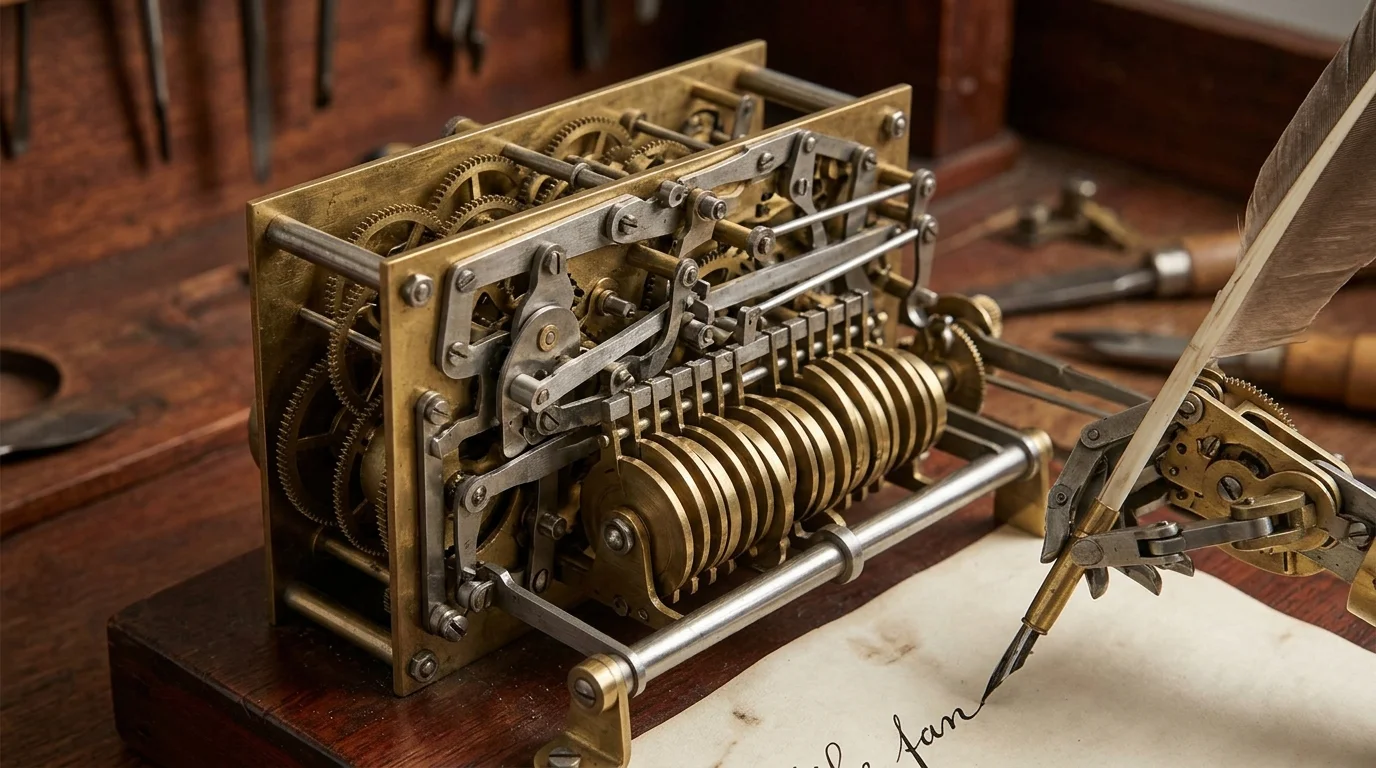
Before digital screens and electric motors, inventors relied on pure mechanical genius to solve complex problems. Antique devices—from 18th-century calculating machines to Victorian-era automata—contain hidden mechanics that modern engineers still struggle to replicate. These intricate systems of gears, springs, escapements, and linkages operate on principles that have been largely forgotten or ignored in the age of microchips. Understanding the hidden mechanics of antique devices not only reveals the brilliance of pre-industrial engineering but also helps collectors, restorers, and historians preserve irreplaceable pieces of human innovation. This article explores the concealed mechanisms inside the world’s most fascinating antique devices, explaining how they work, why they fail, and how to recognize mechanical genius hidden beneath tarnished brass and worn wood.
What Are Hidden Mechanics in Antique Devices?
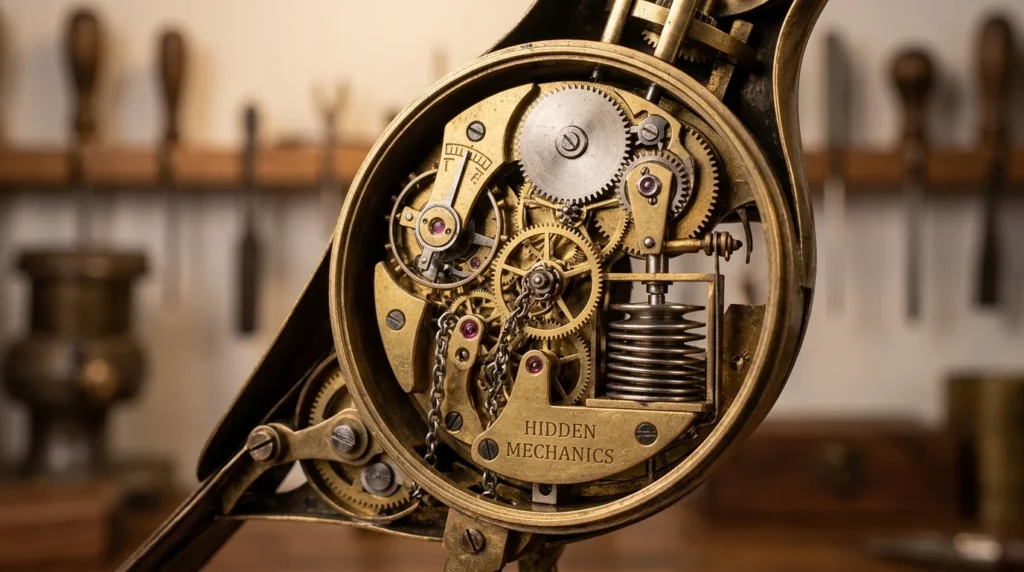
Hidden mechanics refer to the internal components and operational principles that are not visible from the outside. Unlike modern devices that advertise their electronic features, antique devices often conceal their most ingenious engineering inside sealed cases, under floorplates, or behind decorative panels. These mechanisms include differential gears, geneva drives, rack-and-pinion systems, cam timers, gravity escapements, and hydraulic pistons. The “hidden” aspect is both literal—you cannot see them without disassembly—and metaphorical, because the knowledge required to design and repair them has largely disappeared from mainstream education.
The Core Mechanical Families of Antique Devices
| Mechanical Family | Typical Devices | Hidden Component | Function |
|---|---|---|---|
| Gear Trains | Music boxes, clocks, odometers | Compound reduction gearing | Converts high-speed input to slow, powerful output |
| Escapements | Pendulum clocks, pocket watches | Anchor escapement | Regulates energy release for timekeeping |
| Cams and Followers | Automata, player pianos | Barrel cam with lift pins | Produces repetitive motion sequences |
| Ratchet and Pawl | Jacks, winches, early calculators | Silent ratchet mechanism | Allows one-way motion with instant lock |
| Differential Gears | Mechanical computers, vehicle odometers | Planetary gear set | Distributes torque between two output shafts |
| Geneva Drive | Film projectors, vending machines | Intermittent rotary mechanism | Converts continuous rotation into indexed steps |
| Spring Motors | Phonographs, gramophones | Mainspring barrel | Stores and releases rotational energy |
| Linkages | Sewing machines, looms | Four-bar parallel link | Transmits motion with fixed orientation |
1. The Hidden Mechanics of Antique Clocks and Watches
The most sophisticated hidden mechanics before 1900 existed inside timepieces. A typical 18th-century longcase clock contains over 150 individual parts performing six distinct functions: power storage, gear reduction, escapement regulation, motion work (hands), striking train, and calendar complication.
The anchor escapement, invented around 1670, is a masterpiece of hidden design. It consists of a gear with sawtooth teeth (escape wheel) and an anchor-shaped pallet that rocks back and forth. Each swing releases one tooth, allowing the gear train to advance exactly one step. The hidden genius is that the pallet receives impulse from the escape wheel, not from the pendulum, making the mechanism self-sustaining.
Why modern engineers study this: The anchor escapement solves a problem that digital systems cannot—regulating energy without external power. Modern watchmaking still uses variations of this 350-year-old design.
2. Automata: The Hidden Camshafts of the 18th Century
Antique automata—mechanical figures that write, draw, or play music—contain some of the most complex hidden cam systems ever created. The most famous, Jaquet-Droz’s “The Writer” (1774), contains over 6,000 hidden parts packed into a 70cm tall doll. Inside, a series of stacked cam discs contain programmable patterns that determine which letters the figure writes. Each cam has hundreds of tiny pins arranged in a specific order. As the cam rotates, pins push levers that control the figure’s fingers. Changing the cam sequence changes the written text—a mechanical hard drive from 250 years ago.
Hidden mechanics at work: The differential cam system allows the figure to pause between letters, move the pen to a new position, and even dip the pen in ink. No electronics. No motors. Just pure mechanical logic encoded in brass.
3. Antique Music Boxes: The Programmed Comb
A music box’s hidden mechanics appear deceptively simple: a metal comb with tuned teeth and a rotating cylinder with tiny pins. But the engineering hidden beneath the bedplate tells a different story. The governor mechanism, a pair of weighted vanes spinning inside air, regulates speed through aerodynamic drag. Faster rotation creates more drag, which slows the mechanism. This negative feedback loop requires no sensors or circuits—pure physics.
The music box comb is also a hidden mechanical marvel. Each tooth is tuned by carefully filing its base, a process called “tuning while in place.” No two teeth have identical geometry. The comb’s spring constant, tooth length, and overbend angle are mathematically calculated to produce precise frequencies. When you find a music box with broken teeth, you are seeing the limits of pre-industrial metallurgy.
4. Antique Mechanical Calculators: The Hidden Carry Mechanism
Before electronic calculators, devices like the Curta (1948) and the Odhner arithmometer (1890) performed addition, subtraction, multiplication, and division using hidden stepped drums and complementary gears. The most challenging hidden mechanism was the carry mechanism. When a digit wheel turned from 9 to 0, it had to increment the next wheel—automatically, instantly, without stalling.
The solution was the “complementary gear train” or “carry cam.” Inside the Curta calculator, a tiny metal star-wheel sits between digit drums. When the drum passes 9, the star-wheel engages a spring-loaded pawl that flicks the next drum forward by one tooth. This happens in milliseconds. The hidden complexity is that carries can propagate across multiple digits (e.g., 1999 + 1 requires three consecutive carries). The mechanism handles this chain reaction without any electronic logic.
Collector insight: The hardest repairs on antique calculators involve bent carry pawls or worn star-wheels. Most modern repair technicians lack the specialized tools to re-pivot these tiny brass components.
5. Antique Phonographs: The Mechanical Amplifier
Thomas Edison’s phonograph (1877) used hidden mechanics that most people misunderstand. The visible parts are the cylinder, horn, and stylus. The hidden part is the mechanical amplifier—a system of levers that multiplies the tiny vibrations of the stylus into audible sound. The stylus moves less than 0.01mm in response to the grooves. A series of nested levers, machined to precise ratios, amplifies that motion by a factor of 50 before it reaches the diaphragm. The diaphragm then pushes air into the horn.
What makes this hidden mechanism so brilliant is that it works in reverse for recording. A speaking horn compresses air onto a diaphragm, which moves a stylus through a mechanical reduction linkage, cutting grooves into soft wax. The same hidden levers operate bidirectionally without losing calibration.
6. Antique Sewing Machines: The Lockstitch Loop
The hidden mechanics of antique sewing machines solved a problem that baffled inventors for decades: how to create a secure stitch using only one thread from above. The answer was the rotating hook and bobbin mechanism. Beneath the needle plate, a metal hook (rotating at high speed) catches the needle thread, carries it around a bobbin case holding the lower thread, and releases it. The two threads interlock inside the fabric thickness.
The hidden timing mechanism is a set of eccentric cams on the main shaft that coordinate needle height, hook rotation, and feed dog movement. A shift of 0.1mm in cam orientation breaks the stitch. Many antique sewing machines become “unrepairable” because modern technicians do not understand how to phase these eccentric cams.
Why Antique Device Mechanics Remain Hidden Today
| Reason | Explanation |
|---|---|
| Proprietary secrecy | 19th-century manufacturers used sealed cases and special screws to prevent copying |
| Skill obsolescence | Modern repair training focuses on electronics, not mechanical logic |
| Lack of documentation | Many manufacturers deliberately destroyed schematics to protect trade secrets |
| Material degradation | Springs rust, lubricants harden, and movements freeze before owners see the hidden parts |
| Miniaturization | Victorian watchmakers created parts visible only under 20x magnification |
How to Safely Explore Hidden Mechanics Without Damage
If you own an antique device, resist the urge to disassemble it immediately. Follow this protocol:
- Document everything: Photograph the device from all angles before touching any screws.
- Identify fastener type: Many antique devices use left-hand threads, square-head screws, or pins instead of screws.
- Never force movement: If a gear or lever does not move, dried lubricant has frozen it. Forcing breaks teeth.
- Use proper oils: Modern penetrating oils corrode brass and dissolve shellac used to secure knots.
- Learn the order of assembly: Hidden mechanics often require removing outer plates, then spring-loaded parts under tension. Always release springs slowly.
The Resurgence of Interest in Hidden Mechanics
Museums, horology schools, and mechanical engineering programs are now rediscovering antique devices as teaching tools. The reason is simple: digital systems hide their logic behind code. Mechanical devices expose their logic in physical form. Students who study the hidden mechanics of a Curta calculator or a Jaquet-Droz automaton learn about feedback loops, logic gates, and sequencing without writing a single line of code. Some automakers now require mechanical engineering candidates to repair a antique music box as part of the interview process—a test of patience, observation, and manual skill.
Frequently Asked Questions
Q1: What is the most complex hidden mechanism in any antique device?
A: The Charles Babbage Difference Engine No. 2 contains over 8,000 hidden parts, including a carry mechanism that propagates across 31 digits without any electronic assistance. Only two complete examples exist, both built after Babbage’s death.
Q2: How can I tell if an antique device has hidden damage?
A: Listen for irregular sounds. A clock with worn pivot holes ticks unevenly. A music box with broken comb teeth produces buzzing instead of clear notes. A sewing machine with bad timing clicks once per stitch. Also check for metal dust inside the case—that indicates active wear.
Q3: Can modern 3D printing replicate hidden mechanics of antique devices?
A: Partially. 3D printing can recreate gear shapes but cannot duplicate the metallurgical properties of 19th-century brass and steel. Springs, in particular, require specific heat treatments that FDM printing cannot achieve. Metal sintering printers come closer but cost over $100,000.
Q4: Why do antique devices often fail after sitting unused for decades?
A: Lubricants evaporate and harden into varnish. The varnish acts as an adhesive, freezing gears and escapements. When forced, the hardened lubricant acts like grinding paste, wearing down pivot holes. Second, mainsprings take a “set” in a coiled position and lose their stored energy capacity.
Q5: Is it ethical to restore hidden mechanics or should devices remain original?
A: For museum-grade pieces, conservators prefer stabilization over restoration—repairing only what is necessary to prevent further decay. For personal collections, complete restoration is acceptable if you document all changes. Never repaint, re-plate, or replace original parts with modern equivalents without preserving the originals.
Q6: What tools do I need to explore hidden mechanics in antique clocks?
A: Minimum set includes: brass tweezers (non-magnetic), pegwood sticks for cleaning, mainspring winder (required for safety), pivot locator, jeweler’s screwdrivers with hollow-ground tips, and an ultrasonic cleaner for metal parts. Never use standard steel tools on soft brass—they leave permanent marks.
Q7: Are there any antique devices whose hidden mechanics have never been reverse-engineered?
A: Yes. The Antikythera Mechanism’s planetary gear system was only fully understood in 2021 using X-ray tomography. The “Artificial Memory” automaton of 1830 contains a hidden cam stack whose encoding method remains unknown. Some Victorian cipher machines still resist analysis because their cam logic was deliberately scrambled.
Q8: How do antique mechanical calculators perform division without electronic logic?
A: Through repeated subtraction using a “complementary method.” The user sets the dividend. The mechanism subtracts the divisor repeatedly while counting subtractions. The hidden part is the “revolution counter” that tracks how many times subtraction occurs. This is essentially a mechanical algorithm—programming without software.
Q9: What is the most valuable antique device known for its hidden mechanics?
A: The Patek Philippe Henry Graves Supercomplication pocket watch (1933) sold for $24 million. It contains 920 hidden parts, 24 complications, and a celestial chart of Manhattan’s night sky. The hidden mechanics include a minute repeater, a split-second chronograph, and a perpetual calendar that adjusts for leap years until 2100.
Q10: Where can I learn to repair antique device hidden mechanics?
A: The American Watchmakers-Clockmakers Institute (AWCI) offers distance learning. The West Dean College in the UK runs a two-year diploma in mechanical conservation. The BHI (British Horological Institute) provides self-study courses. For automata, the Musée d’art et d’histoire of Neuchâtel, Switzerland, offers rare workshops. Online, watch repair courses from Mark Lovick (Watchfix) provide excellent foundations.
Conclusion
The hidden mechanics of antique devices represent a lost library of mechanical knowledge. Every gear, cam, spring, and escapement embodies a solution to a problem that engineers of that era solved without computers, simulations, or digital measuring tools. For collectors, understanding these hidden mechanics transforms a dusty shelf piece into a living artifact of human ingenuity. For engineers, studying these devices reveals alternative paths to solving modern problems—paths that do not rely on rare earth minerals, cloud computing, or planned obsolescence. The next time you see an antique clock, music box, or sewing machine, remember: its real value is not on the outside. It is hidden inside, waiting for someone patient enough to understand.