The Ultimate Guide to Advanced Collectible Preservation: Protecting Your Investment for Generations
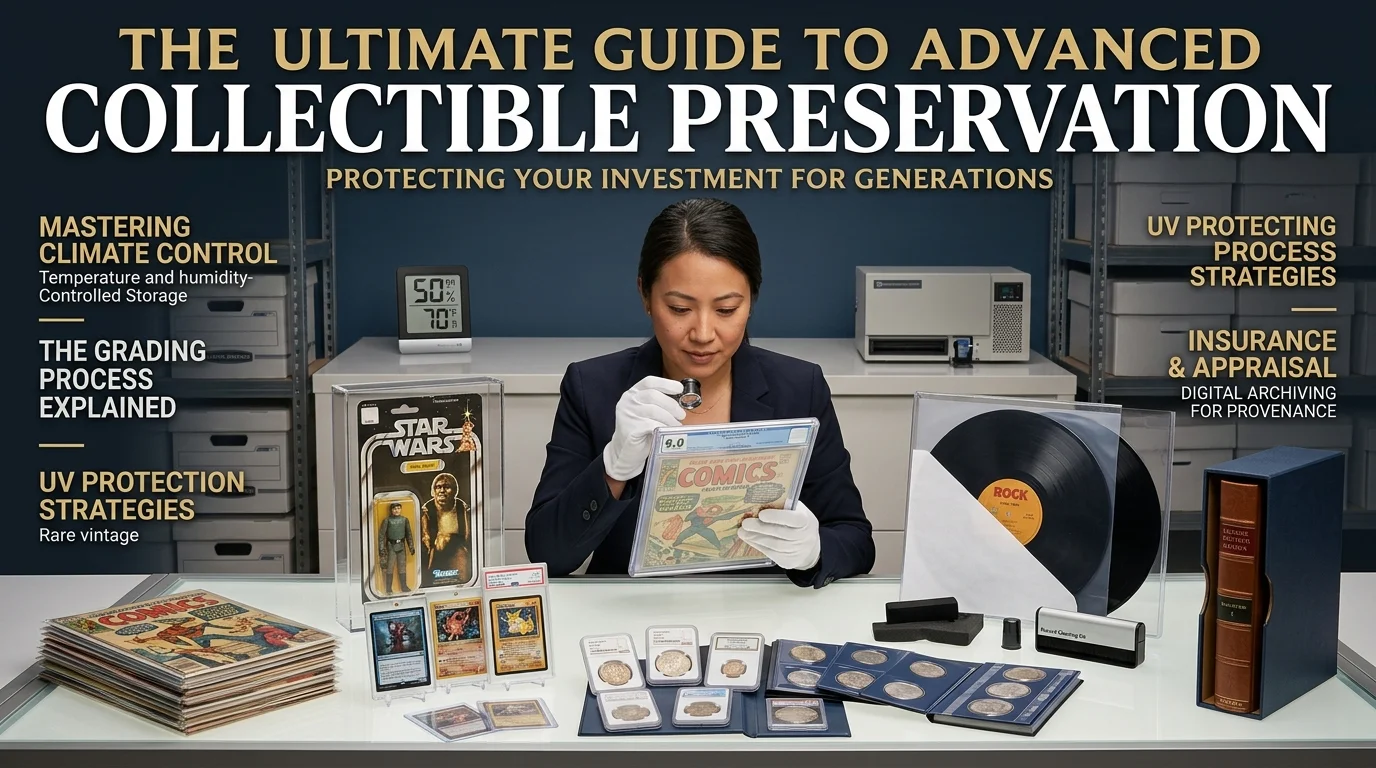
In the world of high-value collecting, the difference between a priceless heirloom and a worthless relic often comes down to one factor: preservation. Whether you are a seasoned numismatist, a trading card investor, or a fine art connoisseur, the physical condition of your asset is the primary driver of its market value . Advanced collectible preservation has evolved far beyond simple shoe boxes. Today, it involves a scientific approach to combating environmental threats, utilizing museum-grade materials, and implementing strategic security protocols. This guide provides a professional framework for safeguarding your tangible assets against the ten agents of deterioration, ensuring they survive in pristine condition for future generations .
Understanding the Ten Agents of Deterioration
Before implementing preservation strategies, one must understand what they are fighting against. The National Park Service and museum conservation experts classify threats into specific categories. Direct physical forces include shock, vibration, and mishandling, which can shatter ceramics or crease trading cards. Thieves and vandals represent a constant security risk, while fire and water—whether from floods or burst pipes—remain catastrophic threats .
Furthermore, pests such as silverfish, carpet beetles, and rodents are biologically programmed to destroy organic materials like paper, textiles, and leather. Perhaps the most insidious threats are pollutants and the inherent instability of materials. Poor quality storage boxes (like standard cardboard) off-gas acids that turn paper yellow, while the very materials some collectibles are made from—such as certain plastics or low-quality paper—can self-destruct over time due to chemical instability . A professional preservation plan addresses every single one of these vectors.
Environmental Controls: Temperature and Humidity
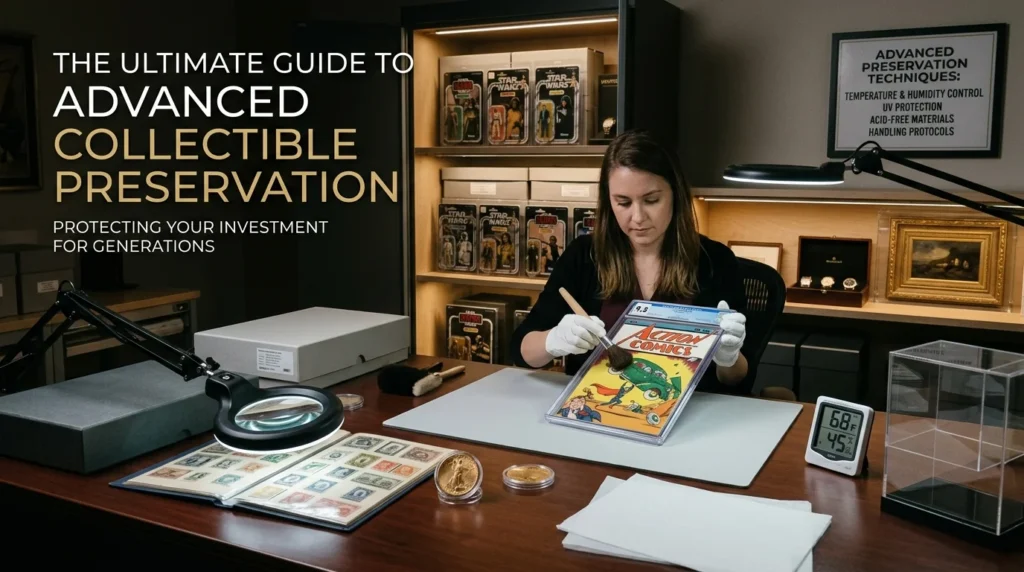
The most critical factor in advanced preservation is creating a stable macroclimate. Fluctuations in temperature and relative humidity are the silent killers of collectibles. Organic materials expand when it is humid and contract when it is dry, leading to microscopic cracking, warping of canvas, and flaking of ink or paint .
For mixed collections, the industry standard recommends maintaining a temperature of approximately 65 to 72 degrees Fahrenheit with a relative humidity of 45 to 55 percent . However, the key word here is stability. Sudden spikes are more damaging than a consistent, slightly higher temperature . For high-value items like rare trading cards or signed memorabilia, collectors are increasingly turning to professional storage vaults—often called “cold storage” for collectibles. Companies like Crown Fine Art, servicing the “Grade10 保管庫” (Grade10 Vault), provide museum-level, climate-controlled environments that monitor conditions 24/7 .
| Preservation Factor | Recommended Standard | Why It Matters |
|---|---|---|
| Temperature | 65–72°F (18–22°C) | Prevents wax melting, ink fading, and material embrittlement. |
| Relative Humidity | 45–55% RH | Stops mold growth, paper warping, and metal corrosion. |
| Light Exposure | Below 50 Lux (for sensitive items) | UV rays cause fading and chemical breakdown of organic fibers. |
| Air Quality | <10 µg/m³ pollutants | Reduces soiling and acidic degradation of surfaces. |
Light Exposure and UV Protection
Light is energy, and energy destroys matter. Ultraviolet (UV) radiation is particularly harmful, breaking down the chemical bonds in paper, textiles, and pigments. This results in fading, yellowing, and embrittlement .
For display cases, advanced collectors should only use UV-filtering acrylic or glass. Additionally, LED lighting is vastly superior to fluorescent bulbs because it emits almost no UV radiation and generates less heat. However, the best preservation strategy is passive. Never hang valuable watercolors or textiles in direct sunlight. Even with UV protection, limit the display time for sensitive items; conservation experts recommend a “rest period” for objects after they have been on exhibit for several months .
The Role of Archival Housing and Storage
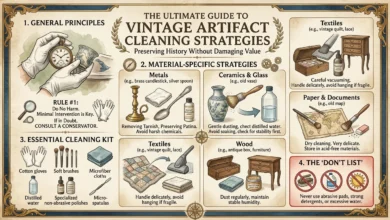
You cannot preserve a valuable collectible using cheap, acidic materials. This is a non-negotiable rule of advanced preservation. Standard cardboard boxes, PVC plastic pages, and wood shelves release volatile organic compounds and acids that migrate onto your collectibles, causing “off-gassing” damage.
Instead, emulate the Library of Congress and Yale University Library. Use only “archival” or “museum-grade” materials. This includes:
Microchamber Boxes: These contain activated charcoal and zeolites to trap pollutants.
Inert Plastics: Polyethylene (often used for card sleeves) and Mylar (polyester) are chemically stable and safe.
Custom Housing: For oddly shaped items, Yale conservators utilize custom-built boxes created with tools like the Kasemake to ensure a perfect, friction-free fit that prevents movement during handling .
Security and Disaster Preparedness
Advanced preservation assumes that accidents will happen. As the adage in the art world goes, most damage occurs during movement . Therefore, handling protocols must be strict. Always handle high-value items over a padded table to prevent drops, use two hands, and consider wearing nitrile gloves to prevent oils from transferring to surfaces .
Furthermore, collectors should treat their home or vault with the security of a gallery. This includes tamper-proof screws for frames, motion sensors for display cases, and, for comprehensive protection, a monitored fire suppression system (as water from sprinklers can ruin paper items just as fast as fire). For transportation, professional art shippers use custom crates with shock-absorbing materials and GPS tracking .
Documentation, Provenance, and Long-term Stewardship
Finally, preservation is not just about the physical object; it is about the data surrounding it. Documentation is a form of preservation. A pristine item without a receipt, photographic proof of condition, or ownership history (provenance) loses significant value .
Create a detailed condition report for every item. Update it annually. Note any changes, no matter how small. This document is vital for insurance claims, resale, and estate planning. Ultimately, as the Panorama Advisory Group notes, collectors are not just owners; they are stewards. The goal is to pass the collection to the next generation or a museum in the same—or better—condition than it was received .
Frequently Asked Questions
What is the number one mistake new collectors make?
Storing items in basements or attics. These areas have wild temperature swings, high humidity, and are prime locations for pests and mold. Condition begins with location.
Can I use my home safe for fire protection for collectibles?
Standard home safes are often rated for paper money, which can withstand high heat. Collectibles like vinyl records, trading cards, or photographs melt or fuse at much lower temperatures. You need a media-rated safe that keeps internal temperatures below 125°F.
Is it better to seal a collectible in plastic?
It depends on the plastic. Never use PVC (polyvinyl chloride) as it degrades and releases acid. Use only inert plastics like Mylar or Polyethylene. For long-term storage without handling, these are excellent, but for organic materials like wool or silk, fabric bags are sometimes preferred to allow the item to “breathe.”
How often should I insure my collection?
You should conduct a professional appraisal every 3 to 5 years or immediately following a major market shift. Standard homeowner policies limit coverage for collectibles; you need a specialized “fine art” or “collectibles” floater policy that covers “mysterious disappearance” and accidental damage, not just theft.
What is “inherent vice” and why does it matter?
“Inherent vice” refers to the natural instability of the material the object is made from. For example, early plastics (cellulose nitrate) degrade into powder over time. Recognizing inherent vice allows a collector to slow the decay, even if they cannot stop it entirely, through specific environmental controls.