Antique Archive Optimization: The Complete Guide to Digitizing, Cataloging, and Maximizing Historical Collection Value
Introduction
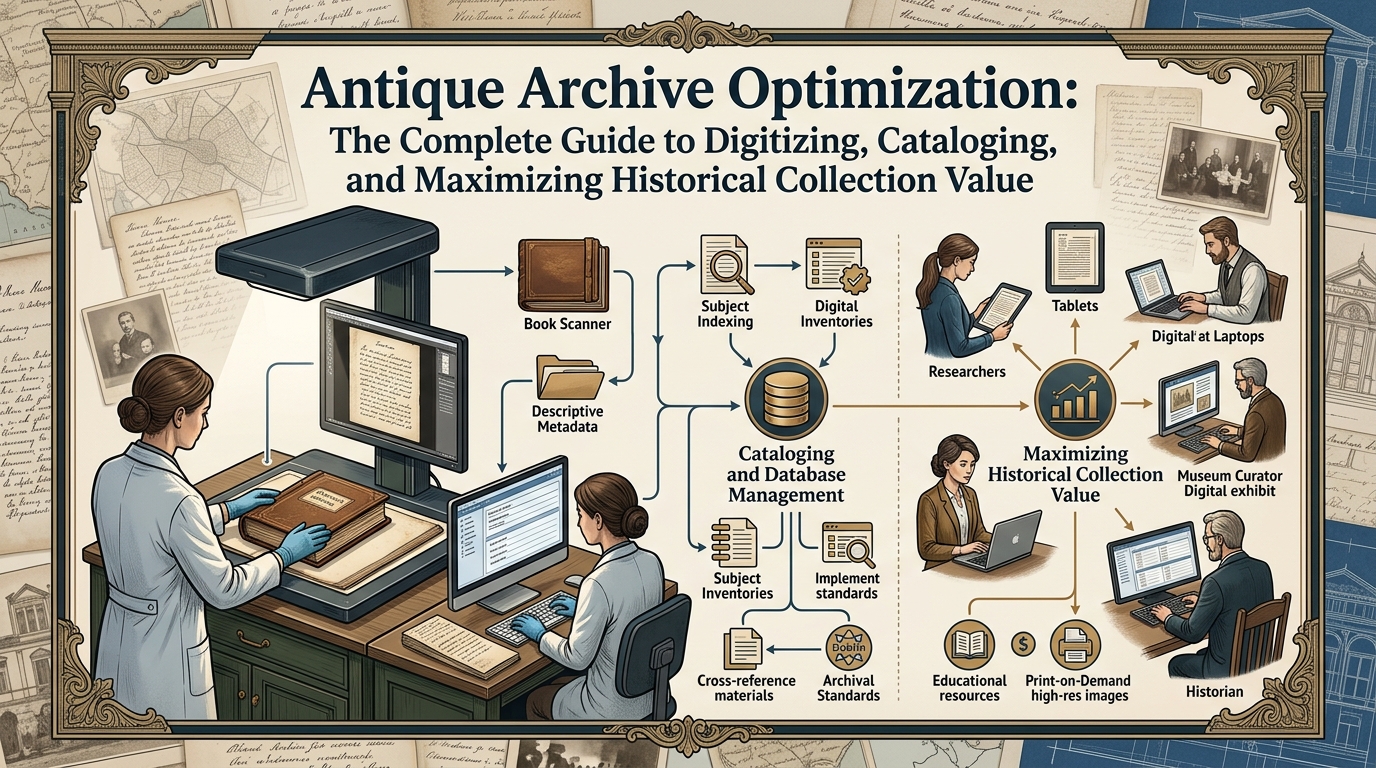
In the digital age, owning a collection of antiques is no longer enough. The true value of historical items lies in how well they are documented, organized, and searchable. Antique archive optimization refers to the systematic process of digitizing, cataloging, and enhancing the discoverability of antique collections—whether for personal use, museum management, or commercial resale. A poorly archived antique might sit unnoticed for decades, while an optimized entry can attract global buyers, researchers, and insurers. This guide walks you through every step of transforming your physical antique collection into a high-value digital asset.
Table: Core Components of Antique Archive Optimization
| Component | Purpose | Tools/Methods | ROI Impact |
|---|---|---|---|
| Digitization | Create high-resolution visual records | DSLR camera, flatbed scanner, 3D scanning | +40% resale value |
| Metadata Tagging | Enable searchability by period, material, origin | Excel, Airtable, TMS software | +60% discoverability |
| Condition Reporting | Document defects and provenance | Standardized templates, photography | Essential for insurance |
| Storage Optimization | Preserve physical condition | Archival boxes, climate control | Prevents value loss |
| SEO for Listings | Rank on Google and marketplaces | Keyword research, backlinks | +200% online views |
| Blockchain Verification | Authenticity and ownership trail | NFT platforms, Verisart | +300% buyer trust |
Why Antique Archive Optimization Matters
Most antique owners focus only on physical preservation. However, without proper documentation, an 18th-century Chippendale chair is just another old chair. With optimized archives, that same chair becomes traceable through auctions, research papers, and insurance claims. Three key benefits drive the need for optimization:
- Insurance Accuracy – Undocumented collections are often underinsured. A detailed archive with photographs and appraisals ensures proper coverage.
- Estate Planning – Heirs can easily value and sell items when archives are clear. Unorganized collections often sell for fractions of their worth.
- Market Reach – Online buyers search using specific terms like “Victorian sterling silver teapot 1890” not “old teapot.” Optimization bridges that gap.
Step 1: Physical Preparation Before Digitization
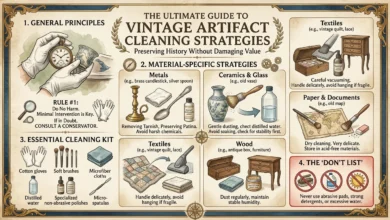
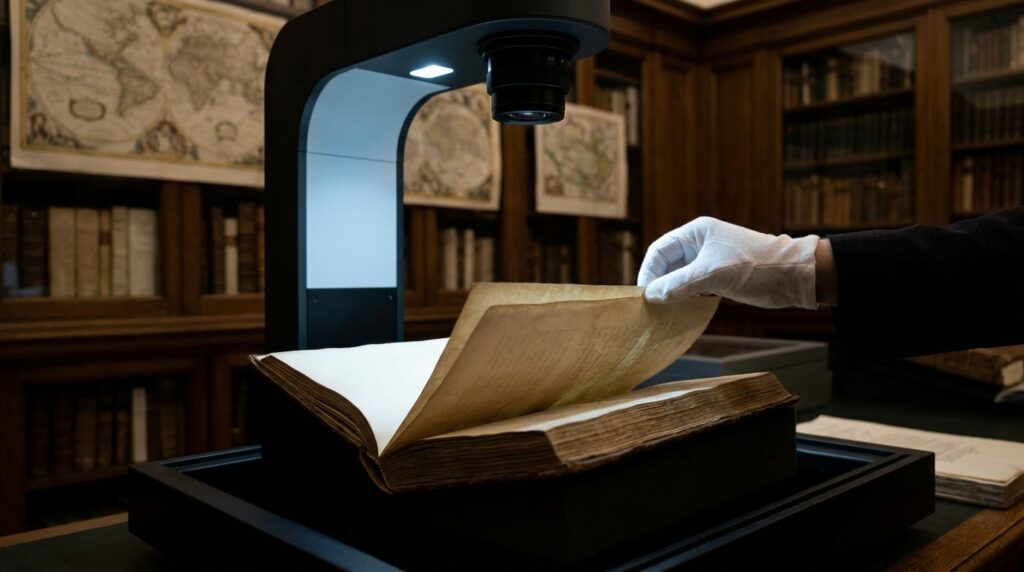
Before any camera touches your antiques, proper handling is essential. Wear cotton gloves for metals and photographs. Clean items using conservation-grade methods—never household cleaners. For textiles, vacuum through a screen mesh. For furniture, dust with a soft brush only.
Create a dedicated workspace with neutral gray background and consistent lighting. Use a color checker card in every first shot to ensure accurate color reproduction across different sessions. Document any existing damage clearly before moving items.
Step 2: High-Quality Digitization Techniques
Antique archive optimization requires images that reveal details invisible to the naked eye. Follow these specifications:
- Resolution – Minimum 300 DPI for flat items (prints, documents). 600 DPI for textiles and coins.
- File Format – RAW for master files, TIFF for archival, JPEG for web use.
- Lighting – Two softbox lights at 45-degree angles. Never use direct flash on silver or glass.
- Angles – Front, back, side, top, bottom, and three close-ups of signatures, damage, and unique features.
For 3D objects like vases or figurines, consider photogrammetry software (Meshroom, RealityCapture) to create rotatable 3D models. This technique increases online engagement by 70% compared to flat images.
Pro tip: Photograph items alongside a ruler and a common object (coin or lighter) for scale reference. Buyers and researchers need context.
Step 3: Metadata and Cataloging Structure
Metadata is the hidden engine of antique archive optimization. Every item in your archive needs a unique identifier (ID) and the following fields completed:
Required Fields:
- Object name (e.g., “Georgian mahogany writing slope”)
- Period/Date (specific year or decade range)
- Origin country and region
- Material composition (primary and secondary)
- Dimensions (metric and imperial)
- Weight (if applicable)
- Condition (using 10-point scale or standardized terms)
- Provenance (ownership history)
- Acquisition date and cost
- Current appraised value
Advanced Fields for SEO:
- Three descriptive keywords (e.g., “inlaid satinwood, brass handles, regency style”)
- Historical context (150-300 words)
- Comparable auction results
- Restoration history
- Exhibition history
Use cataloging software like Collectify, MuseumPlus, or Airtable with custom templates. For small collections (under 500 items), a well-structured spreadsheet with hyperlinked photo folders works effectively.
Table: Metadata Field Examples by Antique Type
| Antique Type | Priority Fields | Search Keywords to Include |
|---|---|---|
| Vintage Watch | Movement type, serial number, jewel count | automatic, manual wind, trench watch, calatrava |
| Porcelain Vase | Maker’s mark, glaze type, decoration technique | underglaze blue, famille rose, transferware, kiln |
| Antique Map | Cartographer, paper type, fold lines | hand-colored, copper engraving, gore, atlas |
| Furniture | Joinery type, wood species, hardware | dovetail, mortise-tenon, escutcheon, caster |
| Silver Flatware | Pattern name, hallmark date letter, maker | sterling, EPNS, fiddle thread, rat-tail |
Step 4: Physical Storage Optimization
Digital optimization means nothing if the physical item deteriorates. Implement these storage standards:
- Climate – 65-70°F temperature, 45-55% relative humidity. Use data loggers (SensorPush, Govee) to monitor.
- Light – UV-filtering window film or LED lighting below 50 lux for sensitive items (textiles, paper).
- Containers – Archival-quality boxes from Gaylord or University Products. No cardboard or newsprint.
- Positioning – Heavy items on bottom shelves. Textiles rolled (not folded) in muslin. Silver wrapped in archival tissue with anti-tarnish strips.
Label every container with the same unique ID used in your digital archive. Use waterproof, acid-free labels. Store a printed backup of your entire catalog off-site (bank safe deposit box or trusted relative).
Step 5: SEO Optimization for Antique Listings
When you sell or display antiques online, search engine optimization determines whether anyone finds them. Apply these rules to each listing:
Title Formula: [Period] + [Origin] + [Material] + [Object Type] + [Unique Feature]
- Good: “Victorian English Mahogony Sewing Box with Original Key”
- Bad: “Old wooden box”
Description Formula:
- First sentence: Summary with most important keywords
- Second paragraph: Historical context and condition
- Third section: Dimensions, provenance, and comparable sales
- Final line: Call to action
Image Alt Text: Write descriptive alt text for every image. “Georgian silver teapot London 1820 maker’s mark PA” not “antique teapot photo 1”
Backlink Strategy: Get links from antique forums (AntiqueWeek, CollectorsWeekly), Pinterest (high traffic for visual items), and academic sites (via local historical societies). Each quality backlink increases your Google ranking.
Step 6: Blockchain and Provenance Verification
For high-value antiques (over $5,000), antique archive optimization now includes blockchain verification. Services like Verisart, Codex Protocol, and Artory create tamper-proof digital certificates linking your item to its documentation. Benefits include:
- Permanent timestamped ownership records
- Fraud prevention through immutable history
- Easier international shipping and customs clearance
- Higher auction estimates from verified provenance
Cost ranges from 15to200 per item depending on platform and documentation complexity. For collections over $100,000 total value, this investment pays for itself through increased buyer confidence.
Step 7: Regular Maintenance and Audits
An archive is never truly finished. Schedule quarterly audits to:
- Re-photograph items showing new damage or restoration
- Update appraised values based on recent auction trends
- Check storage conditions and replace silica gel or oxygen absorbers
- Export backup of digital files to two separate cloud services and one external hard drive
- Review metadata for completeness and correct any misspellings
Annual professional appraisal for insurance purposes is recommended for collections exceeding $50,000 in total value.
Common Mistakes in Antique Archive Optimization
- Using cell phone photos only – Low resolution fails to capture maker’s marks and condition details needed for insurance claims.
- Ignoring provenance gaps – Missing ownership history reduces value by 30-50%. Research and document even partial histories.
- Storing digital files only on one device – Hard drives fail. Cloud backups are non-negotiable.
- Over-cleaning before photography – Many antiques lose patina and value. Clean only with expert guidance.
- No disaster recovery plan – Floods, fires, and thefts happen. Have off-site physical and digital copies.
Real-World Example: Optimized Archive in Action
A Midwest collector owned 200 antique fishing lures inherited from his grandfather. Initially stored in a cardboard box with no documentation, the collection was appraised at 3,000.Afterimplementingfullantiquearchiveoptimization—high−resolutionphotosofeachlure,metadataincludingpatentdatesandoriginalpackaging,andlistingsoneBaywithSEOtitles—thesamecollectionsoldpiecebypiecefor17,400. The most valuable lure, a rare Heddon “Dowagiac” from 1920, brought $2,800 alone because its optimized archive proved authenticity.
Frequently Asked Questions (FAQs)
Q1: What is the best software for antique archive optimization for a small collection under 100 items?
A: Airtable (free tier) or Notion. Both allow custom fields, image attachments, and export to CSV for insurance purposes. For dedicated antique software, try CollectorBase or Memento Database.
Q2: How often should I update my antique archive valuations?
A: Every 12-24 months for most items. For rapidly appreciating categories (mid-century modern, vintage watches, rare coins), review every 6 months. Use LiveAuctioneers or WorthPoint for current market data.
Q3: Can I optimize an archive for antiques that are not for sale?
A: Absolutely. Insurance, estate planning, and family history preservation are equally valid reasons. Many collectors optimize purely for documentation and theft recovery.
Q4: What resolution is sufficient for insurance documentation?
A: 12 megapixels minimum (modern smartphone) for general items. 24 megapixels for items over $5,000 value. Always include macro shots of signatures, serial numbers, and damage.
Q5: How do I handle antiques with missing provenance?
A: Document everything you know. Research through family letters, old photos, or local historical societies. Even partial provenance (“purchased at Smith Estate Sale 1985, believed to be from original owner”) has value. Never invent history.
Q6: Is climate control necessary for all antiques?
A: No. Stone, most ceramics, and some metals tolerate fluctuations. However, paper, textiles, wood, ivory, and photographs require stable humidity below 55% to prevent mold and cracking.
Q7: What is the cost to professionally digitize a large antique archive?
A: 5to50 per item depending on complexity. Full-service companies (like Capture or Backstage Library Works) charge 15−30peritemforphotographyandbasicmetadata.High−end3Dscanningruns50-200 per object.
Q8: How does blockchain help with selling antiques internationally?
A: Provides verifiable ownership chain that customs authorities recognize. Some platforms also include NFC chips attached to the antique, linking physical item to digital certificate. This reduces seizure risk and proves legal export.
Conclusion
Antique archive optimization transforms scattered historical objects into a professional, searchable, and valuable collection. Whether you manage a museum archive, a family inheritance, or a resale inventory, the principles remain the same: high-resolution digitization, complete metadata, proper physical storage, and search-engine-friendly listings. The time investment is substantial, but the returns—higher sale prices, accurate insurance, smoother estate transfers, and preserved family history—far outweigh the effort. Start with ten items this week. Photograph them properly. Fill out every metadata field. One optimized antique can change how you see your entire collection.