Vintage Object Market Analysis 2026: Trends, Valuations, and Future Growth Projections
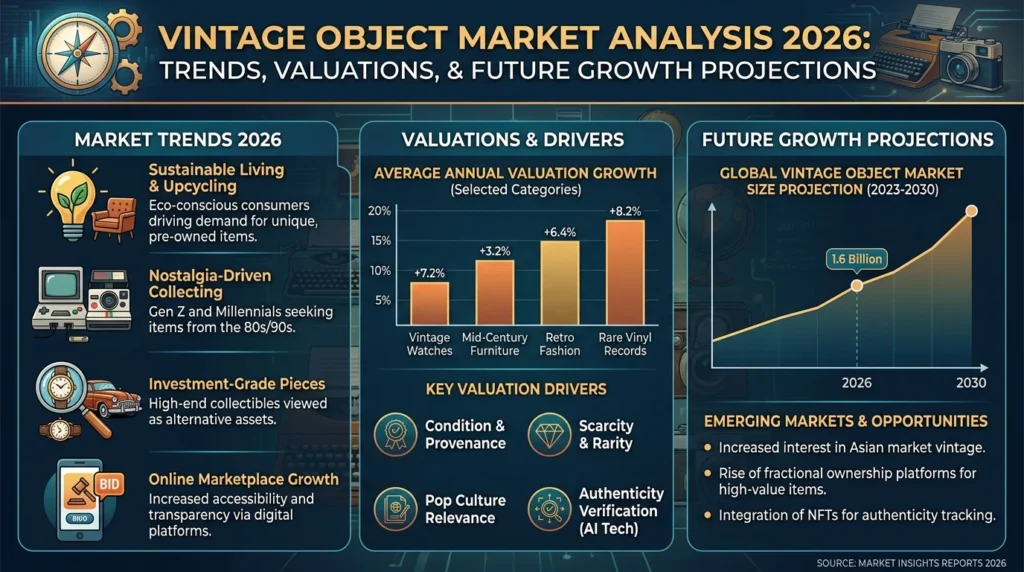
The vintage object market has transformed from a niche interest into a global economic force. In 2026, collectors, investors, and casual buyers are driving unprecedented demand for authentic, character-rich items from past eras. From mid-century furniture and Murano glass to first-edition trading cards and heritage luxury goods, the market for vintage objects is experiencing a renaissance fueled by sustainability concerns, generational shifts in taste, and the recognition of tangible assets as stores of value. This comprehensive market analysis examines current valuations, emerging trends, key player platforms, and growth projections through 2035.
Table of Contents
| Market Segment | 2025-2026 Value | Growth Rate | Key Driver |
|---|---|---|---|
| Global Collectibles Market | USD 320.30 Billion (2025) | 6.9% CAGR to 2033 | Scarcity + Cultural Heritage |
| Antiques & Collectibles Market | USD 150.2 Billion (2025) | 4.4% CAGR to 2035 | Digital Platforms + Gen Z |
| Recommerce Market (All Categories) | USD 228.6 Billion (2025) | 10.2% YoY | Sustainability + Unique Finds |
| Vintage Designer Jewelry | Heritage Houses (Cartier, VCA) | 7-Figure Auction Results | Artisanal Craftsmanship |
| Classic Cars | Ferrari 250 GTO: USD 38.5M (2026) | Variable | Provenance + Racing History |
| Luxury Handbags | Hermès Himalaya: USD 100K-500K+ | 90% Avg Appreciation | Scarcity + Brand Equity |
Market Overview: Size, Scope, and Growth Trajectory
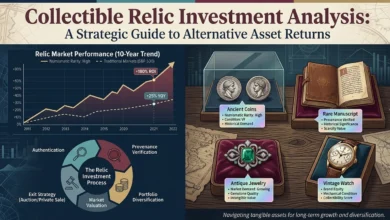
The vintage object market encompasses multiple overlapping sectors, each with distinct valuation metrics and growth patterns. According to industry research, the global collectibles market—including ancient, vintage, and modern categories—was valued at approximately USD 320.30 billion in 2025 and is projected to reach USD 535.50 billion by 2033, representing a compound annual growth rate (CAGR) of 6.9% . More narrowly, the antiques and collectibles market specifically was valued at USD 150.2 billion in 2025, with expectations to grow to USD 229.7 billion by 2035 at a 4.4% CAGR .
These figures reflect a broader economic phenomenon: the rise of the “collector economy,” where tangible assets are increasingly viewed through the dual lenses of emotional significance and long-term financial value . Unlike traditional investments tied to market indices, vintage objects offer intrinsic value through craftsmanship, historical narrative, and material scarcity—qualities that mass-produced contemporary items cannot replicate.
The Recommerce Revolution: Why Secondhand Has Become First Choice
The broader recommerce market—encompassing all secondhand goods from vintage furniture to used electronics—provides critical context for understanding vintage object demand. In 2025, the recommerce market reached USD 228.6 billion, up 10.2 percent from USD 207.8 billion in 2024, and is projected to reach USD 306.5 billion by 2030, accounting for 8 percent of total retail spending .
Consumer motivations for buying secondhand have shifted dramatically. While 79 percent of consumers cite saving money as a primary driver, more than half (54 percent) specifically seek out unique, vintage, or one-of-a-kind pieces that cannot be found in traditional retail channels . The stigma once attached to secondhand shopping is diminishing: 70 percent of respondents note that the stigma has lessened, partly due to growing focus on sustainability and reducing waste (cited by 56 percent) .
Generational Shift: Gen Z Leads the Charge
Younger consumers are driving the vintage object market’s expansion. More than half of Gen Z respondents (54 percent) report choosing secondhand when a suitable option is available, and approximately 49 percent sold a pre-owned item for the first time in the past year . This generation uses multiple resale platforms—51 percent utilize three or more—compared to 41 percent of millennials, indicating high engagement with digital marketplaces . The money from reselling is used to pay bills and expenses (57 percent), treat themselves or others (38 percent), or saved for the future (28 percent) .
High-Demand Vintage Categories in 2026
Market analysis reveals clear segmentation between appreciating and depreciating vintage categories. Understanding these distinctions is essential for collectors and sellers seeking to maximize value.
Top-Performing Categories
Vintage Furniture, Especially Mid-Century Modern and Art Deco
Mid-century modern and Art Deco pieces consistently rank among the most sought-after vintage categories . Within this segment, specific subcategories are gaining particular momentum. Surrealist-inspired furniture—pieces with unconventional forms that hint at faces, figures, or optical tricks—is experiencing renewed interest, reflecting a broader cultural shift toward expressive, personality-driven interiors . Original Surrealist pieces from the 1920s and 1930s are increasingly difficult to find, driving premium valuations for authenticated examples.
1970s Scandinavian Pine
A notable trend in 2026 is the rising demand for 1970s Scandinavian pine furniture. Moving away from the refined blonde woods of previous decades, this era produced solid pine pieces left visibly grained, untreated, or lightly oiled, often featuring scalloped edges, pierced details, and turned elements drawing on folk craft traditions . Lighting and dining chairs within this category are increasingly available through platforms like 1stDibs and Etsy, with demand expected to accelerate as supply diminishes .
Murano Glass
Italian Murano glassware has experienced a “renewed enthusiasm” in recent years, with 1stDibs reporting Murano chandeliers among the most purchased vintage lighting items . Table lamps, vases, and bowls are also performing strongly, with pieces by Venini particularly sought after. For buyers and sellers in 2026, signed examples, simpler shapes, and clear color palettes tend to be the easiest to live with and the easiest to resell .
Vintage Textiles and Wall-Mounted Decor
As interiors move toward “places of history, character, and irregularity—rather than newness and uniformity,” vintage quilts, wall hangings, and tapestries have become clear expressions of this shift . These textiles work across multiple functions: folded at the end of a bed, thrown over a sofa, or hung as artwork. Similarly, wall-mounted decor beyond traditional lighting—candle sconces, decorative plates, scroll shelves, and devotional objects like votives and holy water fonts—is gaining popularity for breaking up the predictable rhythm of wall art .
Collectibles and Memorabilia
The collectibles market is broad, but specific subcategories consistently drive competitive bidding in 2026 :
| Subcategory | Value Range | Key Factors |
|---|---|---|
| Sports memorabilia (signed, vintage cards, game-used) | USD 50 – 25,000+ | Authentication + Provenance |
| Military medals, uniforms, documents | USD 100 – 5,000 | Historical significance |
| Vintage toys (Hot Wheels, Star Wars, tin toys) | USD 20 – 3,000 | Original packaging + Condition |
| Disney collectibles and animation cels | USD 50 – 10,000 | Studio + Rarity |
| Trading cards (baseball, Pokemon, Magic) | USD 10 – 50,000+ | Grading + Scarcity |
Condition and authenticity are paramount in this category. Collectors pay significant premiums for verified items, and original packaging can multiply value .
Depreciating Categories: What to Donate or Toss
Not all vintage items appreciate. Market analysis identifies several categories that have fallen out of favor :
- Mass-produced collectibles (figurines, collector plates, Beanie Babies)
- VHS tapes and CDs
- Traditional china and crystal
- Common coins (non-collectible grades)
- Modern sports cards (mass-produced era)
- Generic or oversaturated art (widely reproduced prints)
- Bulky and mass-produced furniture
- Vintage magazines, newspapers, and encyclopedias
As JustAnswer appraisals expert Jeremiah Stansbury notes: “Overall, the 2026 resale market is shifting toward unique, high-quality character pieces over uniform, mass-produced items. At a time when people are being more intentional about both spending and selling, items with authenticity, craftsmanship, and story are commanding the most attention” .
Luxury Collectibles: The High-End Market
At the apex of the vintage object market, luxury collectibles function as alternative assets, with valuations reaching seven and eight figures.
Heritage Jewelry
Vintage and antique jewelry from houses like Cartier and Van Cleef & Arpels is enjoying a resurgence because it represents artisanal craftsmanship, scarcity, and historical narrative—qualities that modern mass-produced pieces cannot replicate . Cartier’s Tutti Frutti collection, dating to the 1920s and featuring carved colored gemstones set in platinum and diamonds, remains emblematic of Art Deco design. Original Tutti Frutti bracelets are extremely rare, with auction results regularly entering the seven-figure range depending on provenance and condition .
Similarly, Van Cleef & Arpels’ Alhambra collection, first launched in 1968, continues to perform strongly on the secondary market. Vintage Alhambra pieces in hardstones and precious materials are highly collectible, with rare examples selling at auction for well into five figures—a pavé-set 20-motif necklace fetched approximately USD 126,000 .
Classic Cars
Classic cars have matured into a recognized alternative asset class, supported by structured markets, specialist dealers, and major auction houses. The Ferrari 250 GTO remains the benchmark, with just 36 examples ever produced between 1962 and 1964. A rare 1962 example sold for USD 38.5 million at Mecum’s 2026 Kissimmee auction, with another reportedly trading privately for over USD 70 million in recent years .
Beyond 1960s icons, supercars from the 1980s and 1990s—including the Lamborghini Countach LP5000 QV—are now among the fastest-appreciating segments as younger collectors view them as future classics. Well-preserved examples have started trading above USD 1 million .
Luxury Handbags
Luxury handbags have emerged as one of the most resilient collectible categories. The Hermès Himalaya Birkin, produced in extremely limited numbers using Niloticus crocodile leather with diamond hardware, has become the definitive “trophy handbag,” with pristine examples surpassing USD 500,000 at auction . Hermès handbags have appreciated by an average of over 90 percent on the pre-owned market over the past decade, retaining more than 100 percent of original retail value due to sustained global demand .
The Chanel Classic Flap Bag—particularly vintage Karl Lagerfeld-era editions with 24k gold-plated hardware—continues to see steady appreciation, retaining approximately 70 to 90 percent of original purchase price .
Digital Marketplaces and Platform Dynamics
The vintage object market’s growth is inextricably linked to the rise of specialized digital platforms that connect buyers and sellers globally.
Etsy: The Vintage and Handmade Giant
Founded in 2005, Etsy has become the dominant marketplace for vintage products, with a mission to “keep commerce human” by offering alternatives to mass-market competitors like Amazon and Walmart . Annual gross merchandise sales reached nearly USD 5 billion by 2019, and despite recent fluctuations, the platform continues to attract over 95 million active buyers globally . While Etsy’s seller base decreased by approximately one million in 2024, the platform remains a critical channel for vintage object transactions.
1stDibs: The Designer’s Choice
For high-end vintage furniture and decor, 1stDibs serves as the primary platform for interior designers and serious collectors. According to the company’s 2026 designer survey, 36 percent of all items sourced for a given project in 2025 were vintage or antique—the highest proportion since 2021 . Eighty-five percent of designers sourced vintage pieces from between the 1920s and 2000, representing the strongest usage of vintage across designers’ projects in five years . The percentage of respondents employing antiques (pre-1920s) surged from 56 percent in 2024 to 63 percent in 2026, indicating growing appreciation for older pieces .
Emerging Platforms and Regional Variations
Globally, the recommerce market varies by region. In the United States, peer-to-peer platforms like Poshmark and Depop thrive among eco-conscious millennials and Gen Z. In China, rapid urbanization and a booming e-commerce landscape have led to the rise of second-hand marketplaces like Xianyu. In the United Kingdom, a rich heritage of vintage fashion drives demand for curated thrift stores, while Japan’s cultural appreciation for craftsmanship and minimalism fosters a vibrant market for pre-owned luxury goods .
Design Trends Shaping Vintage Demand in 2026
Interior design preferences directly influence which vintage objects appreciate. According to the 1stDibs designer survey, maximalism and eclecticism are the top design aesthetics likely to remain popular in 2026, with 39 percent and 34 percent of respondents respectively endorsing these styles . Curvy and irregular-shaped furniture will continue to be popular, with 43 percent of designers identifying these forms as trends for 2026 .
Color preferences are also shifting. Chocolate brown is anticipated to be used by 33 percent of designers in 2026, almost doubling since 2022 when it was at 17 percent. Burgundy saw a jump as well, up to 21 percent from 7 percent in 2025 . These color trends create demand for vintage objects featuring these hues.
The survey also noted that designers expect to lean less on customization and contemporary production and even more heavily into antiques and vintage items in the coming year . Tariffs have affected international sourcing, with the portion of items sourced domestically rising to 72 percent in 2025 from 68 percent previously .
Valuation Factors: What Determines Vintage Object Prices
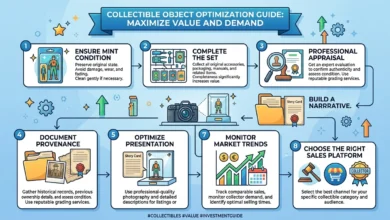
Understanding the drivers of vintage object valuation is essential for market participants. Across categories, several factors consistently influence price:
Authenticity and Provenance: Documented ownership history and certificates of authenticity can multiply value. For signed memorabilia, third-party authentication from services like PSA/DNA or JSA is essential .
Condition and Completeness: Original packaging, manuals, and accessories command significant premiums. For furniture, original finish and minimal restoration are preferred .
Scarcity and Production Numbers: Limited production runs, discontinued lines, and failed commercial products often become valuable precisely because few were made .
Cultural Relevance: Items featured in films, associated with specific aesthetic movements, or connected to historical events can see sudden price appreciation .
Craftsmanship and Materials: Handmade items, pieces using precious metals or gemstones, and objects demonstrating exceptional skill consistently outperform mass-produced alternatives .
Future Outlook: Projections Through 2035
Market analysts project continued growth for the vintage object sector, driven by multiple converging factors.
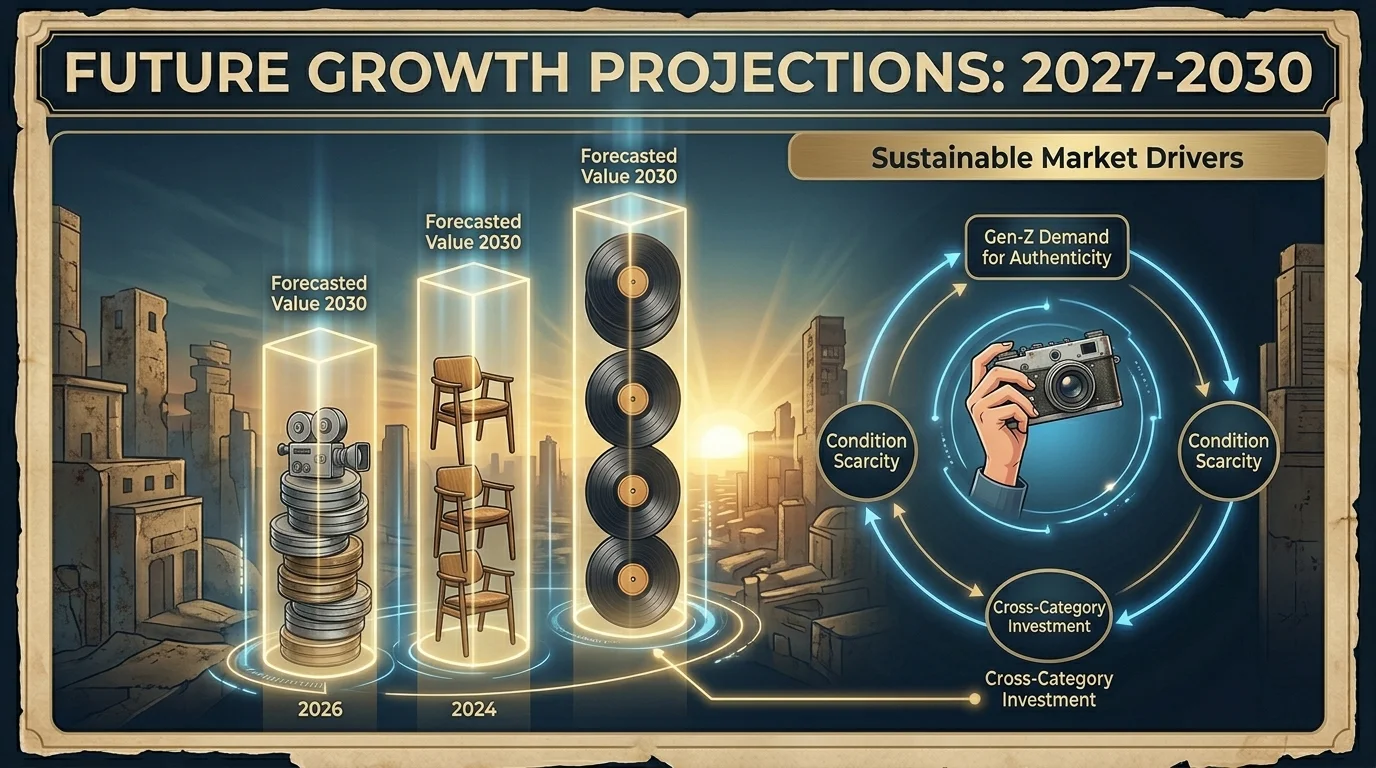
The antiques and collectibles market is expected to grow from USD 156.3 billion in 2026 to USD 229.7 billion by 2035, representing a 4.4 percent CAGR . The broader collectibles market, including modern and ancient categories, is projected to reach USD 535.50 billion by 2033 at a 6.9 percent CAGR .
Key growth drivers include:
- Sustainability Imperatives: As environmental awareness increases, consumers will continue shifting toward secondhand purchases as alternatives to new production .
- Generational Wealth Transfer: As younger generations inherit household contents, many items will enter the secondary market, increasing supply while simultaneously creating new collector cohorts .
- Digital Platform Maturation: Improved authentication services, better photography, and enhanced shipping logistics will reduce friction in online vintage transactions .
- Tangible Asset Demand: In times of economic uncertainty, collectors view vintage objects as stores of value uncorrelated with traditional financial markets .
FAQ
What vintage items are worth the most money in 2026?
The highest valuations are found in luxury categories: authenticated sports memorabilia can reach USD 25,000+; rare trading cards exceed USD 50,000; Hermès Himalaya Birkins sell for USD 100,000-500,000+; classic Ferraris trade for tens of millions; and original Tutti Frutti jewelry enters seven figures. In more accessible categories, mid-century modern furniture, Murano glass by Venini, and 1970s Scandinavian pine lighting are performing strongly .
What vintage items have no resale value?
Mass-produced collectibles (Beanie Babies, figurines, collector plates), VHS tapes and CDs, traditional china and crystal sets, common coins without numismatic value, modern mass-produced sports cards, and vintage magazines and encyclopedias generally have minimal resale value. These items are best donated or kept for personal sentimental value .
How fast is the vintage object market growing?
The global collectibles market is growing at 6.9 percent CAGR through 2033, while the narrower antiques and collectibles market is growing at 4.4 percent CAGR through 2035. The broader recommerce market, which includes all secondhand goods, grew 10.2 percent year-over-year in 2025 .
Which generations are driving vintage demand?
Gen Z is the most active demographic, with 54 percent choosing secondhand when available and 49 percent selling pre-owned items. They use multiple platforms (51 percent use three or more) and are motivated by sustainability, uniqueness, and affordability. Millennials also participate strongly, while older generations provide supply through estate sales .
Where is the best place to sell vintage objects?
Etsy dominates for handmade and vintage goods with 95 million active buyers. 1stDibs is preferred for high-end furniture and designer pieces. Specialized auction houses (Sotheby’s, Heritage Auctions) are best for luxury collectibles. Peer-to-peer platforms like Depop and Poshmark work well for vintage fashion. Estate sales remain effective for liquidating household contents .
What design trends are increasing vintage furniture values?
Maximalism and eclecticism (preferred by 39 percent and 34 percent of designers) drive demand for statement vintage pieces. Curvy and irregular-shaped furniture is popular with 43 percent of designers. Color trends toward chocolate brown and burgundy create demand for vintage objects in these hues. Designers are sourcing 36 percent of project items as vintage or antique—the highest proportion since 2021 .