The Ultimate Guide to Vintage Artifact Cleaning Strategies: Preserving History Without Damaging Value
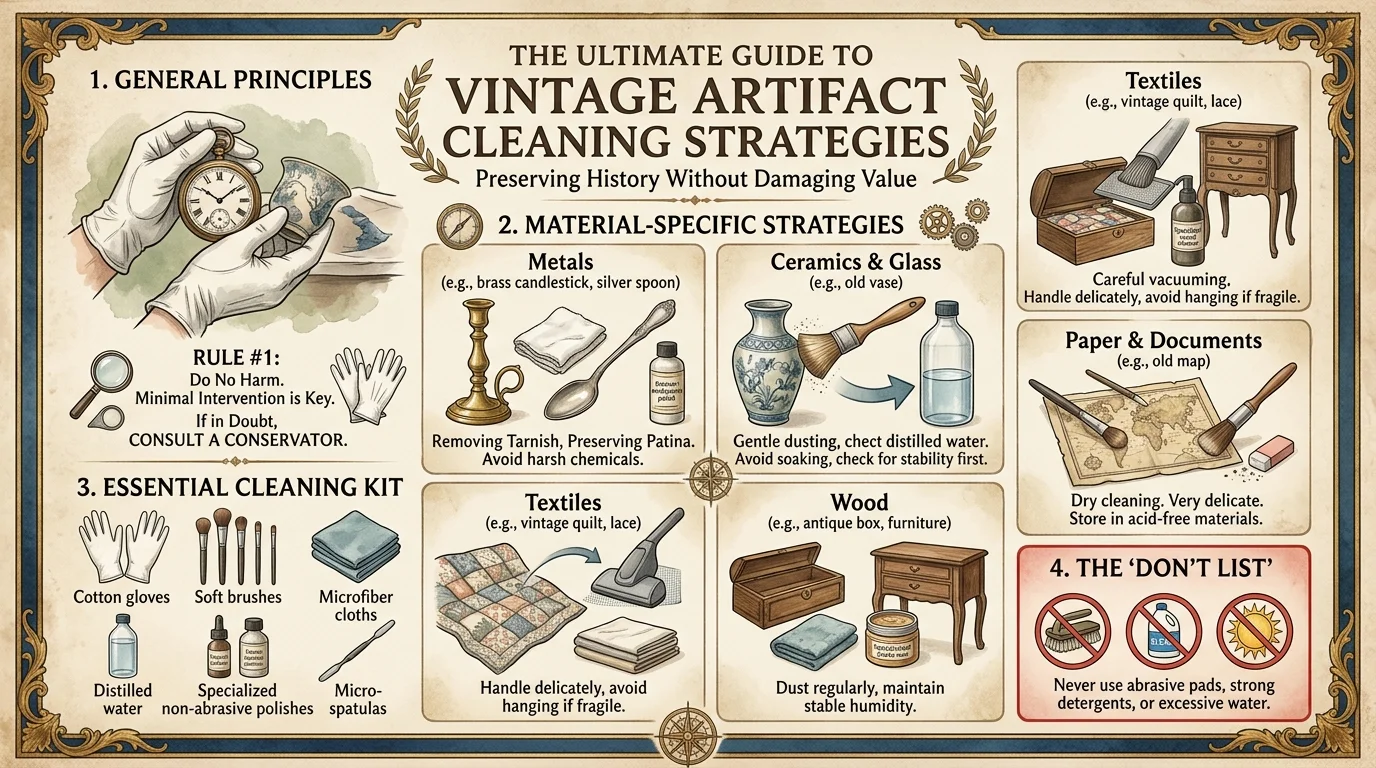
Vintage artifacts are tangible links to our past, each carrying unique historical significance and often substantial monetary value. However, cleaning these delicate items requires a fundamentally different approach than modern household chores. The primary goal is not to make an antique look “brand new”—in fact, over-cleaning can destroy the very qualities that make an item valuable, such as patina, original finishes, and historical evidence. This comprehensive guide provides professional-grade strategies for safely cleaning various vintage artifacts while adhering to the conservation ethics of reversibility and minimal intervention.
Understanding the Core Principles of Artifact Conservation
Before touching any antique, it is crucial to understand that professional conservators follow a strict code of ethics. The most important rule is that all treatments should be fully reversible . This means never using substances or methods that permanently alter the artifact. The second key principle is to start with the least invasive method possible and only progress if necessary . Aggressive cleaning should always be a last resort.
Many collectors mistakenly believe that a shiny, polished object is preferable. However, natural patina—the surface change that occurs over decades or centuries—often adds character, value, and even protection to an artifact . Removing patina can slash an antique’s value by 50% or more in some cases. Therefore, the cleaning strategies outlined here emphasize preservation over restoration.
Material-Specific Cleaning Strategies
Different materials require completely different cleaning approaches. Using the wrong method can cause irreversible damage, from surface scratching to chemical reactions that degrade the material.
Cleaning Vintage Silver and Metals
Silver tarnish, scientifically known as silver sulphide or acanthite, forms when silver reacts with oxygen and hydrogen sulphide in the air . Professional conservators distinguish between removing tarnish and preserving the underlying metal.
For silver artifacts in good condition, mechanical cleaning using a silver polish cloth is preferred over chemical methods. These cloths contain very fine abrasive powders that erode the tarnish layer through gentle circular motions . However, this process does remove microscopic amounts of silver, so it must be done sparingly. For intricate areas with detailed engravings or recesses, a silver polish paste applied with a soft brush works better than cloths .
Chemical cleaning using products like Silver Dip can produce rapid results, but this method requires extreme caution. After application, the chemical must be thoroughly rinsed off to prevent residue from causing further damage . This method is unsuitable for artifacts with hollow areas or porous components where residue could become trapped. For gilt surfaces or pieces with special finishes, testing on an inconspicuous area is absolutely essential before proceeding.
After cleaning silver, applying a protective coating such as Renaissance Micro-Crystalline Wax helps prevent future tarnishing. This wax can be applied cold with a microfiber cloth or hot by warming the metal surface first. The hot waxing method generally provides better adhesion and longer-lasting protection .
For rusted iron artifacts, chemical approaches are often safer than mechanical abrasion. Products like Evaporust work by chemically converting rust without damaging the underlying sound metal. Unlike sanding or steel wool, which removes good metal along with the oxidation, this method preserves fine details and original surfaces . If mechanical cleaning is necessary, use 0000-grade super-fine steel wool or brass wool as a gentler alternative to standard steel wool. Lanolin-based products can also serve as effective metal preservatives that prevent future rust formation .
Cleaning Ceramics and Pottery
Antique ceramics present unique challenges due to their porous nature. Pottery, being more porous than porcelain, can absorb water and any contaminants dissolved in it. Therefore, pottery should only be cleaned with a soft damp cloth or briefly immersed in cool water—never left to soak .
Porcelain is slightly more resilient and can be washed gently in warm water with a mild dish soap. However, abrasive cleaners are strictly prohibited as they can permanently damage enamel decorations and glossy surfaces . For both pottery and porcelain, never use adhesive tape for temporary repairs, as the adhesive binds tightly to enamel and gilding, causing permanent damage upon removal. Reusable putty like blu-tack is a safer alternative for temporary holds .
When handling ceramic artifacts, remove jewelry that could scratch the surface, and always lift pieces by the main body rather than by handles or spouts, which may be structurally weak .
Cleaning Wood Artifacts
Wood cleaning requires identifying the finish type before selecting any cleaning product. A simple test using denatured alcohol on an inconspicuous area can reveal the finish: if the surface becomes sticky or dissolves, it indicates shellac or wax . These finishes require professional attention for major cleaning, as improper treatment can destroy the original surface permanently.
For wood finished with lacquer, oil, polyurethane, or varnish, a highly diluted solution of mild biodegradable cleaner—approximately one tablespoon per quart of water—can be used. Always wipe with the grain to maximize dirt removal and minimize visible scratching . Avoid any products containing silicone, wax blends, or harsh chemicals that can penetrate and damage wood fibers over time.
Cleaning Ivory and Bone
Ivory artifacts are among the most sensitive to cleaning due to their organic composition. Water is potentially very damaging to ivory, as it can cause cracking, warping, and material degradation . Never immerse ivory in water or apply moisture to cracked or porous surfaces.
If wet cleaning is absolutely necessary, use only minimal moisture applied with a rolled cotton swab, and dry the surface immediately with another swab or soft tissue. Solvent options include 50:50 water and alcohol mixtures, white spirit, or specialized leather cleaners that have low water content . However, consultation with a professional conservator is strongly recommended before any wet cleaning of ivory, as even damp swabs can cause damage.
Step-by-Step Cleaning Process for Most Artifacts
Following a systematic approach ensures the safest possible cleaning outcome. Professional conservators follow this general workflow for most artifact types.
The first step is always examination. Before any cleaning, inspect the artifact under good lighting, preferably with magnification. Note the presence of cracks, old repairs, surface deterioration, and any painted or decorated areas that could be vulnerable . Documenting the artifact’s condition through photographs before starting provides a reference point and valuable records.
Next, remove loose dirt through dry cleaning methods. Use a soft, natural-bristle brush to gently dust the surface. For intricate areas, soft cosmetic brushes or paintbrushes work well. A microfiber cloth can wipe flat surfaces but should be used gently to avoid scratching . Compressed air can be used for hard-to-reach crevices, but hold the nozzle at a safe distance to prevent moisture or pressure damage.
If dry cleaning proves insufficient, proceed to wet cleaning with the gentlest method first. This involves applying minimal solvent or cleaning solution to a cotton swab or soft cloth and testing on an inconspicuous area. Work in small sections, drying immediately after cleaning each area. Never allow liquid to pool or soak into the artifact .
Products and Solutions Recommended by Professionals
Professional conservators rely on specific products that have demonstrated safety over decades of use. Renaissance Wax is the industry standard for protecting metal, wood, and painted surfaces after cleaning. It creates a reversible protective barrier that does not yellow or degrade over time .
Vulpex soap, a non-ionic detergent in a non-polar solvent base, is effective for removing grime from various surfaces while leaving no residue. However, it has a high pH and must be diluted properly—concentrations above 1:100 can damage oil paints and sensitive finishes . White spirit or mineral spirits are neutral-pH solvents that completely evaporate and are safe for many surfaces .
For specialized applications, Nevek rigid gel (made from agar-agar) allows controlled application of water or solvents to water-sensitive surfaces. The gel releases moisture gradually and can absorb dissolved dirt like a sponge, making it valuable for cleaning archaeological finds and painted surfaces .
Common Mistakes to Avoid
The most destructive cleaning mistakes often come from good intentions. Never use household cleaners like bleach, ammonia, vinegar (for most surfaces), or citrus-based cleaners on antiques. These chemicals can etch surfaces, remove patina, and cause chemical reactions that continue damaging the artifact long after cleaning.
Avoid abrasive tools including steel wool, wire brushes, sandpaper, and even stiff-bristled toothbrushes. These create visible scratches and remove original surface material permanently . Similarly, never soak artifacts in any solution—water, oil, or chemical baths can penetrate porous materials and cause swelling, cracking, or chemical degradation .
Do not attempt to remove patina thinking it is dirt. Patina is often a stable surface layer that protects the underlying material. Removing it exposes fresh material to further deterioration and typically destroys collector value .
When to Call a Professional Conservator
Certain situations demand expert intervention. Artifacts with flaking paint, active corrosion, structural instability, or those made from multiple materials with different cleaning requirements should be referred to a professional . Items of significant monetary or sentimental value—especially those over 200 years old—warrant professional assessment before any cleaning attempt .
Professional conservators have access to specialized equipment including binocular microscopes for examination, UV lights for detecting previous repairs, and fume hoods for safe chemical application . They also maintain detailed documentation and use only reversible, tested methods that preserve both the artifact and its historical integrity.
Frequently Asked Questions
Q: Can I use olive oil or other household oils to clean antiques?
A: No. Oils like olive oil leave residues that become sticky, attract dust, and can eventually go rancid. They also cannot be fully removed later, violating the conservation principle of reversibility .
Q: How often should I clean my vintage artifacts?
A: Minimal cleaning is best. Dust gently with a soft brush every few months. Deep cleaning should only occur when necessary—typically every few years for displayed items or when active deterioration is observed. Over-cleaning causes cumulative damage.
Q: Is it safe to wash antique china in the dishwasher?
A: Never. The high heat, harsh detergents, and water pressure will damage decorations, cause crazing in glazes, and can crack or discolor ceramic bodies. Always hand wash with mild soap and lukewarm water .
Q: What is the best way to remove rust from a vintage tool I want to keep using?
A: For functional tools where preservation is secondary to use, chemical rust removers like Evaporust are safer than abrasives. For collectible tools, consult a conservator—mechanical cleaning removes metal and reduces value significantly .
Q: How can I tell if an antique has been over-cleaned before I buy it?
A: Look for unnatural uniformity in color, a “new” appearance inconsistent with the item’s age, lack of patina in crevices, visible scratch marks, or hazy surfaces that indicate abrasive damage. Original surfaces typically show slight color variations and softer highlights.
Q: Can I use toothpaste to clean silver or brass?
A: No. Toothpaste contains abrasives that are too harsh for antique metals. It will leave visible scratching under magnification and can strip thin plating or original finishes completely .
Q: What should I do if I accidentally damage an antique while cleaning?
A: Stop immediately. Do not attempt to repair the damage yourself. Contact a professional conservator who can assess the damage and perform appropriate reversible repairs. Document what happened and what products you used.